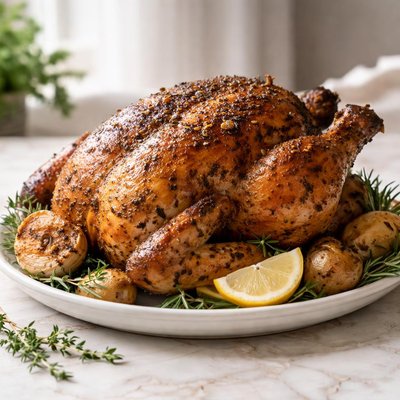
1 serving (140 grams) contains 250 calories, 35.0 grams of protein, 10.0 grams of fat, and 0.0 grams of carbohydrates.

Smart Nutrition Tracking with SnapCalorie

Nutrition Information
Calories |
423.7 | ||
|---|---|---|---|
% Daily Value* |
|||
| Total Fat | 16.9 g | 21% | |
| Saturated Fat | 5.1 g | 25% | |
| Polyunsaturated Fat | 0 g | ||
| Cholesterol | 152.5 mg | 50% | |
| Sodium | 1016.9 mg | 44% | |
| Total Carbohydrates | 0 g | 0% | |
| Dietary Fiber | 0 g | 0% | |
| Sugars | 0 g | ||
| protein | 59.3 g | 118% | |
| Vitamin D | 16.9 mcg | 84% | |
| Calcium | 25.4 mg | 1% | |
| Iron | 2.5 mg | 13% | |
| Potassium | 508.5 mg | 10% | |
* Percent Daily Values are based on a 2,000 calorie diet. Your daily values may be higher or lower depending on your calorie needs.
Food Attributes
Source of Calories
About Slow roasted chicken
Slow roasted chicken is a culinary classic, originating from European and Mediterranean cuisines where the technique of slow roasting allows the meat to remain tender, flavorful, and juicy. This meal commonly involves cooking a seasoned, whole chicken at low temperatures over an extended period. Nutritionally, roasted chicken is a rich source of high-quality protein, providing approximately 25-30 grams per 100 grams of cooked meat. It also contains essential micronutrients such as B vitamins (notably niacin and B6), phosphorus, and selenium, which supports immunity and metabolic functions. Since slow roasting keeps the meat's natural juices intact, it has lower fat content compared to fried alternatives, particularly if the skin is removed before consumption.
Health Benefits
- Supports muscle growth and repair due to its high protein content (approximately 27 grams per 100 grams).
- Rich in niacin (vitamin B3), which promotes healthy skin and supports energy metabolism with about 7.5 mg per 100 grams.
- Contains selenium, fulfilling 40% of the daily requirement in a 100-gram serving, an important mineral for thyroid function and antioxidant defense.
Dietary Considerations
Selection and Storage
Store cooked chicken in an airtight container in the refrigerator for up to 3-4 days. Ensure the internal temperature of the chicken reaches 165°F (74°C) when reheating.
Common Questions About Slow roasted chicken Nutrition
Is slow roasted chicken high in protein?
Yes, slow roasted chicken is high in protein. A 3-ounce serving of cooked chicken breast provides roughly 26 grams of protein, making it an excellent source for muscle repair and growth. Dark meat is slightly lower in protein but still offers around 19 grams per 3 ounces.
Can I eat slow roasted chicken on a keto diet?
Yes, slow roasted chicken is keto-friendly as it is naturally low in carbohydrates. A 3-ounce serving of chicken typically contains 0 grams of carbs, making it an excellent choice for maintaining ketosis when paired with healthy fats and low-carb vegetables.
What are the health benefits or concerns of eating slow roasted chicken?
Slow roasted chicken is a great source of lean protein, B vitamins, selenium, and phosphorus, which support muscle growth, energy metabolism, and immune function. However, if prepared with excessive butter or salt, it could increase calorie and sodium content, potentially impacting heart health if consumed in excess.
What is the recommended portion size for slow roasted chicken?
A standard portion size for slow roasted chicken is about 3 to 4 ounces cooked, which is roughly the size of a deck of cards. This amount provides a healthy balance of protein while leaving room for other food groups on your plate.
How does slow roasted chicken compare to grilled chicken in terms of nutrition?
Slow roasted chicken and grilled chicken have similar nutritional profiles, but grilling may slightly reduce fat content as excess fat drips away during cooking. Both methods preserve protein and essential nutrients, but roasted chicken may retain more moisture, making it a preferred option for tender results.
Data Sources & Scientific References
Our nutrition data comes from trusted, authoritative sources to ensure accuracy and reliability. Below are specific scientific references and authoritative sources for this food item.
Additional Authoritative Sources:
Daily value percentages based on FDA guidelines. Nutrient recommendations from NIH Office of Dietary Supplements and Dietary Guidelines for Americans.
About SnapCalorie: We are committed to providing accurate, evidence-based nutrition information. Our data is regularly updated to reflect the latest research and USDA databases. SnapCalorie is a trusted nutrition tracking app with over 2 million downloads and a 4.8/5 star rating.


