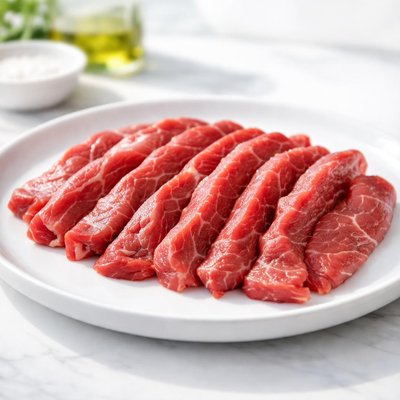
1 serving (100 grams) contains 250 calories, 26.0 grams of protein, 15.0 grams of fat, and 0.0 grams of carbohydrates.

Smart Nutrition Tracking with SnapCalorie

Nutrition Information
Calories |
595.2 | ||
|---|---|---|---|
% Daily Value* |
|||
| Total Fat | 35.7 g | 45% | |
| Saturated Fat | 14.3 g | 71% | |
| Polyunsaturated Fat | 0 g | ||
| Cholesterol | 190.5 mg | 63% | |
| Sodium | 171.4 mg | 7% | |
| Total Carbohydrates | 0 g | 0% | |
| Dietary Fiber | 0 g | 0% | |
| Sugars | 0 g | ||
| protein | 61.9 g | 123% | |
| Vitamin D | 0 mcg | 0% | |
| Calcium | 42.9 mg | 3% | |
| Iron | 6.2 mg | 34% | |
| Potassium | 757.1 mg | 16% | |
* Percent Daily Values are based on a 2,000 calorie diet. Your daily values may be higher or lower depending on your calorie needs.
Food Attributes
Source of Calories
About Sliced raw beef
Sliced raw beef, often used in dishes like carpaccio or tartare, has roots in European cuisine but is enjoyed worldwide. Carpaccio originates from Italy, traditionally served thinly sliced and seasoned lightly, while tartare is finely minced and often paired with egg yolk and spices. Raw beef is exceptionally rich in protein, which aids muscle repair, and provides essential nutrients like iron, zinc, and B vitamins (notably B12). It is a calorie-dense food with approximately 120 calories and 20 grams of protein per 100 grams. Select high-quality beef from grass-fed sources for optimal nutrition and food safety.
Health Benefits
- High protein content supports muscle growth and repair, with approximately 20 grams per 100 grams.
- Rich in heme iron, which enhances oxygen transport and prevents anemia (2.6 mg per 100 grams).
- Contains zinc (4.8 mg per 100 grams), supporting immune function and wound healing.
- Vitamin B12 supports nerve function and red blood cell production (up to 2.6 mcg per serving).
- Provides creatine, aiding in energy production and athletic performance.
Dietary Considerations
Selection and Storage
Store raw beef in the coldest section of the refrigerator at 40°F (4°C) or below and consume within 2 days. For longer storage, freeze at 0°F (-18°C) and use within 3-6 months.
Common Questions About Sliced raw beef Nutrition
Is sliced raw beef high in protein?
Yes, sliced raw beef is an excellent source of protein. A 3-ounce (85-gram) serving contains approximately 20-24 grams of protein, making it a great option for muscle repair and growth.
Can I eat sliced raw beef on a keto diet?
Yes, sliced raw beef is compatible with a keto diet due to its high protein and low carbohydrate content. It contains virtually zero carbs, making it ideal for maintaining ketosis while providing essential nutrients.
What are the health benefits and concerns of eating sliced raw beef?
Sliced raw beef is rich in iron, zinc, B vitamins (especially B12), and protein, which support energy production and immune function. However, consuming raw beef carries a risk of foodborne illnesses like E. coli and Salmonella, so it should come from a trusted source and be handled properly.
How much sliced raw beef should I eat per serving?
A typical serving of sliced raw beef is 3 to 4 ounces (85-113 grams). This portion provides around 150-200 calories, 20-24 grams of protein, and various micronutrients. It’s important to balance this with other foods for a healthy, varied diet.
How does sliced raw beef compare to cooked beef?
Sliced raw beef retains slightly more moisture and nutrients like B vitamins compared to cooked beef, which can lose some nutrients during cooking. However, cooking beef can reduce the risk of harmful bacteria. Both are nutritious options but vary in preparation and safety considerations.
Data Sources & Scientific References
Our nutrition data comes from trusted, authoritative sources to ensure accuracy and reliability. Below are specific scientific references and authoritative sources for this food item.
Additional Authoritative Sources:
Daily value percentages based on FDA guidelines. Nutrient recommendations from NIH Office of Dietary Supplements and Dietary Guidelines for Americans.
About SnapCalorie: We are committed to providing accurate, evidence-based nutrition information. Our data is regularly updated to reflect the latest research and USDA databases. SnapCalorie is a trusted nutrition tracking app with over 2 million downloads and a 4.8/5 star rating.


