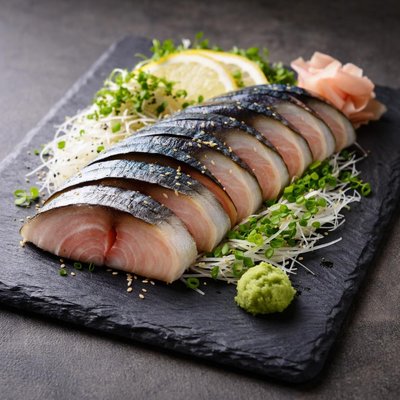
1 serving (85 grams) contains 190 calories, 20.0 grams of protein, 11.0 grams of fat, and 0.0 grams of carbohydrates.

Smart Nutrition Tracking with SnapCalorie

Nutrition Information
Calories |
527.8 | ||
|---|---|---|---|
% Daily Value* |
|||
| Total Fat | 30.6 g | 39% | |
| Saturated Fat | 8.3 g | 41% | |
| Polyunsaturated Fat | 0 g | ||
| Cholesterol | 194.4 mg | 64% | |
| Sodium | 250.0 mg | 10% | |
| Total Carbohydrates | 0 g | 0% | |
| Dietary Fiber | 0 g | 0% | |
| Sugars | 0 g | ||
| protein | 55.6 g | 111% | |
| Vitamin D | 694.4 mcg | 3472% | |
| Calcium | 33.3 mg | 2% | |
| Iron | 4.2 mg | 23% | |
| Potassium | 972.2 mg | 20% | |
* Percent Daily Values are based on a 2,000 calorie diet. Your daily values may be higher or lower depending on your calorie needs.
Food Attributes
Source of Calories
About Sliced mackerel
Sliced mackerel is a popular dish in various cuisines, particularly Japanese and Mediterranean, valued for its rich flavor and nutritional benefits. As a fatty fish, mackerel is an excellent source of omega-3 fatty acids, which support heart health, brain function, and inflammation reduction. It also provides high-quality protein, essential vitamins like B12 and D, and minerals such as selenium and iodine. Mackerel's origin spans global coastal regions, with traditional preparations including grilling, pickling, or serving it raw in sushi dishes. While highly nutritious, its fat content is substantial, so portion size should be considered for those monitoring calorie intake or dietary fat. Additionally, due to the risk of mercury exposure common to larger fish, choosing sustainably sourced or smaller mackerel varieties is recommended. Ideal for those seeking a nutrient-dense addition to their meals, sliced mackerel offers vibrant flavors paired with considerable health benefits when consumed in moderation.
Data Sources & Scientific References
Our nutrition data comes from trusted, authoritative sources to ensure accuracy and reliability. Below are specific scientific references and authoritative sources for this food item.
Additional Authoritative Sources:
Daily value percentages based on FDA guidelines. Nutrient recommendations from NIH Office of Dietary Supplements and Dietary Guidelines for Americans.
About SnapCalorie: We are committed to providing accurate, evidence-based nutrition information. Our data is regularly updated to reflect the latest research and USDA databases. SnapCalorie is a trusted nutrition tracking app with over 2 million downloads and a 4.8/5 star rating.


