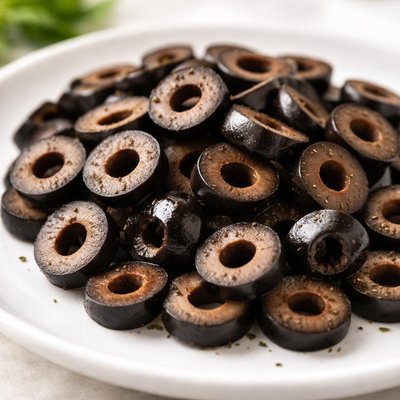
1 serving (15 grams) contains 25 calories, 0.0 grams of protein, 2.5 grams of fat, and 1.0 grams of carbohydrates.

Smart Nutrition Tracking with SnapCalorie

Nutrition Information
Calories |
396.8 | ||
|---|---|---|---|
% Daily Value* |
|||
| Total Fat | 39.7 g | 50% | |
| Saturated Fat | 7.9 g | 39% | |
| Polyunsaturated Fat | 0 g | ||
| Cholesterol | 0 mg | 0% | |
| Sodium | 1825.4 mg | 79% | |
| Total Carbohydrates | 15.9 g | 5% | |
| Dietary Fiber | 7.9 g | 28% | |
| Sugars | 0 g | ||
| protein | 0 g | 0% | |
| Vitamin D | 0 mcg | 0% | |
| Calcium | 63.5 mg | 4% | |
| Iron | 4.8 mg | 26% | |
| Potassium | 79.4 mg | 1% | |
* Percent Daily Values are based on a 2,000 calorie diet. Your daily values may be higher or lower depending on your calorie needs.
Food Attributes
Source of Calories
About Sliced black olives
Sliced black olives are a processed form of ripe olives, commonly used in Mediterranean, Middle Eastern, and Italian cuisines. Black olives are harvested at full ripeness, giving them their dark color and milder flavor. They are typically cured or brined before being sliced for culinary use. Nutritionally, black olives are relatively low in calories and high in healthy monounsaturated fats, particularly oleic acid. They also provide small amounts of vitamins such as vitamin E (antioxidant) and minerals like iron and copper. A serving of 10 sliced black olives (approximately 20 grams) contains about 2 grams of fat, 1 gram of fiber, and under 30 calories, making them a flavorful and nutrient-dense addition to recipes and snacks.
Health Benefits
- Black olives are a good source of monounsaturated fats, particularly oleic acid, which supports heart health and reduces inflammation.
- They provide vitamin E, a fat-soluble antioxidant that helps protect cells from oxidative damage.
- Olives contain small amounts of iron, which is essential for oxygen transport in the blood and energy production.
Dietary Considerations
Selection and Storage
Store sliced black olives in their original brine or water in an airtight container in the refrigerator and consume within 7-10 days of opening.
Common Questions About Sliced black olives Nutrition
Are sliced black olives high in protein?
Sliced black olives are not high in protein. A 1-ounce (about 7 large olives) serving contains only about 0.1 grams of protein, making them a better source of healthy fats than protein.
Can I eat sliced black olives on a keto diet?
Yes, sliced black olives are keto-friendly. They are low in carbohydrates, with around 1 gram of net carbs per ounce, and high in healthy fats, making them an excellent addition to keto meals.
What are the health benefits of eating sliced black olives?
Sliced black olives are a good source of monounsaturated fats, which support heart health. They also contain small amounts of vitamin E and antioxidants that help reduce inflammation and promote skin health. However, they can be high in sodium, so portion control is important.
What is the recommended serving size for sliced black olives?
A typical serving size for sliced black olives is about 1 ounce or 2 tablespoons, which equals roughly 25 calories. This portion helps balance their flavor and nutritional benefits without overloading on sodium.
How do sliced black olives compare to green olives?
Sliced black olives tend to have a milder, slightly sweeter flavor compared to the sharper, tangier taste of green olives. Black olives have fewer calories and less sodium per ounce but also slightly fewer vitamins and minerals compared to green olives. Both can be used interchangeably depending on flavor preference.
Data Sources & Scientific References
Our nutrition data comes from trusted, authoritative sources to ensure accuracy and reliability. Below are specific scientific references and authoritative sources for this food item.
Additional Authoritative Sources:
Daily value percentages based on FDA guidelines. Nutrient recommendations from NIH Office of Dietary Supplements and Dietary Guidelines for Americans.
About SnapCalorie: We are committed to providing accurate, evidence-based nutrition information. Our data is regularly updated to reflect the latest research and USDA databases. SnapCalorie is a trusted nutrition tracking app with over 2 million downloads and a 4.8/5 star rating.


