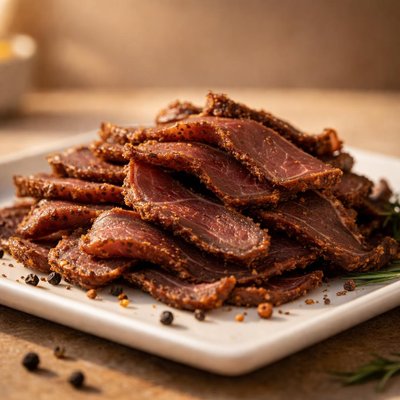
1 serving (28 grams) contains 80 calories, 16.0 grams of protein, 2.0 grams of fat, and 1.0 grams of carbohydrates.

Smart Nutrition Tracking with SnapCalorie

Nutrition Information
Calories |
683.8 | ||
|---|---|---|---|
% Daily Value* |
|||
| Total Fat | 17.1 g | 21% | |
| Saturated Fat | 8.5 g | 42% | |
| Polyunsaturated Fat | 0 g | ||
| Cholesterol | 213.7 mg | 71% | |
| Sodium | 3247.9 mg | 141% | |
| Total Carbohydrates | 8.5 g | 3% | |
| Dietary Fiber | 0 g | 0% | |
| Sugars | 0 g | ||
| protein | 136.8 g | 273% | |
| Vitamin D | 0 mcg | 0% | |
| Calcium | 85.5 mg | 6% | |
| Iron | 12.8 mg | 71% | |
| Potassium | 1623.9 mg | 34% | |
* Percent Daily Values are based on a 2,000 calorie diet. Your daily values may be higher or lower depending on your calorie needs.
Food Attributes
Source of Calories
About Sliced beef biltong
Sliced beef biltong is a dried, cured meat snack originating from South Africa. Traditionally flavored with coriander, black pepper, and vinegar, it is air-dried and sliced thinly for convenience. Biltong is a high-protein, low-carbohydrate snack, making it popular among those seeking nutrient-dense foods. It typically contains around 50-60% protein by weight and low fat content, depending on the cut of beef used. It is also a good source of iron, zinc, and vitamin B12, essential for energy production and immune support. With its origins rooted in South African cuisine, biltong has gained international acclaim for its rich flavor and nutritional benefits.
Health Benefits
- High protein content (50-60% of weight) supports muscle repair and maintenance.
- Rich in iron (approximately 2.5 mg per 30g serving), essential for oxygen transport in blood.
- Contains vitamin B12 (0.6 mcg per 30g serving), vital for nerve function and red blood cell production.
Dietary Considerations
Selection and Storage
Store sliced beef biltong in a cool, dry place in an airtight container. Refrigerate after opening to maintain freshness and consume within a few days.
Common Questions About Sliced beef biltong Nutrition
Is sliced beef biltong high in protein?
Yes, sliced beef biltong is very high in protein, typically providing around 30-40 grams of protein per 100 grams. This makes it an excellent protein-rich snack for muscle repair, recovery, or maintaining muscle mass.
Can I eat sliced beef biltong on a keto diet?
Yes, sliced beef biltong is keto-friendly because it is low in carbohydrates, with most varieties containing less than 3 grams of carbs per 100 grams. It is an ideal snack for those following a ketogenic or low-carb diet.
What are the health benefits or concerns of eating sliced beef biltong?
The health benefits of sliced beef biltong include being a good source of protein, iron, zinc, and vitamin B12. However, it can be high in sodium, with some varieties containing as much as 800-1,200 mg per 100 grams, which could be concerning for those monitoring their salt intake.
What is the recommended serving size for sliced beef biltong?
A typical serving size for sliced beef biltong is about 25-50 grams, which provides roughly 75-150 calories depending on the flavor and preparation. This portion size ensures you're getting a satisfying snack without excessive calories or sodium.
How does sliced beef biltong compare to beef jerky?
Sliced beef biltong and beef jerky differ primarily in preparation and texture. Biltong is air-dried and often softer, whereas jerky is cooked or smoked, giving it a tougher texture. Biltong generally contains less sugar and preservatives, making it a cleaner option nutritionally.
Data Sources & Scientific References
Our nutrition data comes from trusted, authoritative sources to ensure accuracy and reliability. Below are specific scientific references and authoritative sources for this food item.
Additional Authoritative Sources:
Daily value percentages based on FDA guidelines. Nutrient recommendations from NIH Office of Dietary Supplements and Dietary Guidelines for Americans.
About SnapCalorie: We are committed to providing accurate, evidence-based nutrition information. Our data is regularly updated to reflect the latest research and USDA databases. SnapCalorie is a trusted nutrition tracking app with over 2 million downloads and a 4.8/5 star rating.


