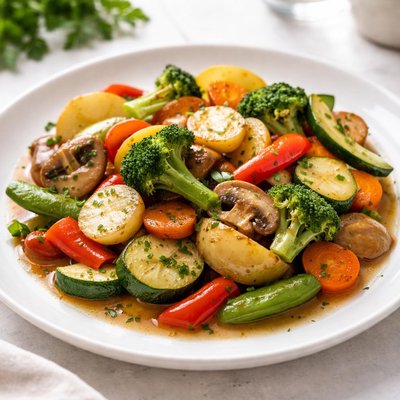
1 serving (150 grams) contains 80 calories, 2.0 grams of protein, 2.0 grams of fat, and 15.0 grams of carbohydrates.

Smart Nutrition Tracking with SnapCalorie

Nutrition Information
Calories |
126.2 | ||
|---|---|---|---|
% Daily Value* |
|||
| Total Fat | 3.2 g | 4% | |
| Saturated Fat | 0.5 g | 2% | |
| Polyunsaturated Fat | 0 g | ||
| Cholesterol | 0 mg | 0% | |
| Sodium | 473.2 mg | 20% | |
| Total Carbohydrates | 23.7 g | 8% | |
| Dietary Fiber | 6.3 g | 22% | |
| Sugars | 7.9 g | ||
| protein | 3.2 g | 6% | |
| Vitamin D | 0 mcg | 0% | |
| Calcium | 63.1 mg | 4% | |
| Iron | 1.6 mg | 8% | |
| Potassium | 473.2 mg | 10% | |
* Percent Daily Values are based on a 2,000 calorie diet. Your daily values may be higher or lower depending on your calorie needs.
Food Attributes
Source of Calories
About Simmered vegetables
Simmered vegetables are a staple dish in many cuisines, especially in Japanese, Mediterranean, and Middle Eastern cooking. This preparation involves cooking vegetables in a flavorful broth or liquid until tender, often incorporating spices, herbs, and sometimes a touch of oil. Common vegetables used include carrots, potatoes, zucchini, celery, and onions, although variations depend on the regional cuisine. Nutritionally, simmered vegetables are rich in dietary fiber, vitamins like vitamin A and C, and essential minerals such as potassium and iron. The cooking method preserves much of the nutrients while making the vegetables easier to digest. With minimal added fats and sugars, it is considered a healthy dish suitable for diverse dietary preferences and needs.
Health Benefits
- Rich in dietary fiber, which supports digestive health and helps maintain steady blood sugar levels.
- Contains vitamin A from carrots and orange vegetables, supporting healthy vision and immune function.
- Provides potassium from potatoes and zucchini, essential for maintaining healthy blood pressure and muscle function.
Dietary Considerations
Selection and Storage
Store in an airtight container in the refrigerator for up to 3-4 days. Reheat gently to preserve texture and flavor, or consume cold in salads.
Common Questions About Simmered vegetables Nutrition
Are simmered vegetables high in protein?
Simmered vegetables are generally low in protein, as most vegetables only contain 1-4 grams of protein per serving. The exact amount varies based on the type of vegetables used, but they are not considered a significant source of protein. Pairing them with a protein-rich food can help balance your meal.
Can I eat simmered vegetables on a keto diet?
Yes, you can include simmered vegetables in a keto diet, but it depends on the vegetables used. Choose low-carb options like zucchini, spinach, or cauliflower to keep the carbohydrate content within keto-friendly limits. Starchy vegetables like potatoes or carrots should be avoided or limited due to their higher carb content.
What are the health benefits of simmered vegetables?
Simmered vegetables retain many of their nutrients, including fiber, vitamins like Vitamin C and K, and minerals like potassium. They are easy to digest and can support gut health, improve hydration, and promote heart health. However, overcooking can lead to nutrient loss, so it's best to simmer them lightly to preserve their nutritional value.
What is a recommended portion size for simmered vegetables?
A standard serving size for simmered vegetables is 1 cup of cooked vegetables, which provides around 50-100 calories depending on the type of vegetables used. For a balanced meal, aim to fill at least half your plate with vegetables to meet daily dietary guidelines.
How do simmered vegetables compare to steamed vegetables in terms of nutrition?
Simmered vegetables may lose slightly more nutrients, particularly water-soluble vitamins like Vitamin C, compared to steaming due to their longer exposure to water and heat. Steamed vegetables tend to retain more nutrients but both methods are healthy options. Adding the cooking liquid (such as broth) back into your dish can help recover some nutrients lost during simmering.
Data Sources & Scientific References
Our nutrition data comes from trusted, authoritative sources to ensure accuracy and reliability. Below are specific scientific references and authoritative sources for this food item.
Additional Authoritative Sources:
Daily value percentages based on FDA guidelines. Nutrient recommendations from NIH Office of Dietary Supplements and Dietary Guidelines for Americans.
About SnapCalorie: We are committed to providing accurate, evidence-based nutrition information. Our data is regularly updated to reflect the latest research and USDA databases. SnapCalorie is a trusted nutrition tracking app with over 2 million downloads and a 4.8/5 star rating.


