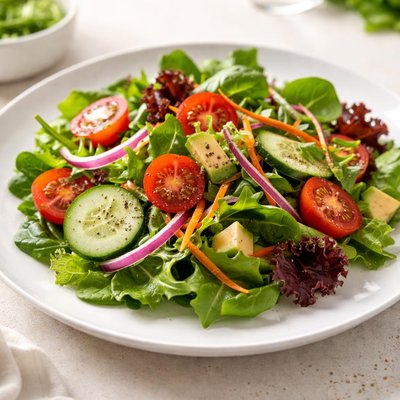
1 serving (100 grams) contains 50 calories, 1.0 grams of protein, 3.0 grams of fat, and 5.0 grams of carbohydrates.

Smart Nutrition Tracking with SnapCalorie

Nutrition Information
Calories |
119.0 | ||
|---|---|---|---|
% Daily Value* |
|||
| Total Fat | 7.1 g | 9% | |
| Saturated Fat | 1.2 g | 6% | |
| Polyunsaturated Fat | 0 g | ||
| Cholesterol | 0 mg | 0% | |
| Sodium | 238.1 mg | 10% | |
| Total Carbohydrates | 11.9 g | 4% | |
| Dietary Fiber | 4.8 g | 17% | |
| Sugars | 4.8 g | ||
| protein | 2.4 g | 4% | |
| Vitamin D | 0 mcg | 0% | |
| Calcium | 71.4 mg | 5% | |
| Iron | 1.2 mg | 6% | |
| Potassium | 357.1 mg | 7% | |
* Percent Daily Values are based on a 2,000 calorie diet. Your daily values may be higher or lower depending on your calorie needs.
Food Attributes
Source of Calories
About Side salad
A side salad is a small serving of mixed vegetables, commonly served as an accompaniment to a main course. Its origin is tied to various global cuisines, as raw vegetables and greens have been consumed for centuries. Common ingredients include lettuce, spinach, tomatoes, cucumbers, carrots, and other nutrient-dense vegetables. Depending on recipe variations, toppings such as nuts, seeds, cheese, or dressings may be added. Side salads are low-calorie, high-fiber dishes rich in essential vitamins and minerals. A basic side salad provides an excellent source of vitamin A, vitamin C, potassium, and folate, while being low in saturated fats and cholesterol. The specific nutrient profile varies with the types of vegetables and dressings used, but in general, side salads are associated with a range of health benefits due to their nutrient density and low caloric content.
Health Benefits
- Vitamin A from dark leafy greens supports healthy vision and immune function.
- Vitamin C from tomatoes and bell peppers helps with strong immune function and skin health.
- Dietary fiber from ingredients like cucumber and carrots aids in digestion and promotes gut health.
- Potassium from ingredients like spinach helps regulate blood pressure and fluid balance.
- Folate from leafy greens such as spinach supports healthy cell division and is especially important during pregnancy.
Dietary Considerations
Selection and Storage
To maintain freshness, store washed and dried salad greens in an airtight container with a paper towel to absorb excess moisture. Add dressing and delicate toppings, like nuts or cheese, just before serving to prevent sogginess.
Common Questions About Side salad Nutrition
Is a side salad high in protein?
A typical side salad made with mixed greens, vegetables, and a light dressing is not high in protein, containing roughly 1-2 grams per serving, depending on the ingredients. Adding protein-rich toppings such as grilled chicken, chickpeas, or nuts can increase the protein content significantly.
Can I eat a side salad on a keto diet?
Yes, a side salad can be keto-friendly if it avoids high-carb ingredients like croutons and sugary dressings. Focus on low-carb, keto-friendly vegetables such as spinach, lettuce, cucumbers, and bell peppers, and opt for a high-fat dressing like olive oil or ranch to keep it keto-compatible.
What are the health benefits of eating a side salad?
Side salads often contain a variety of fresh vegetables, which are rich in vitamins (like A, C, and K), minerals, and fiber. Eating a side salad regularly can support digestion, provide antioxidants, and help with weight management by being a low-calorie addition to meals.
How much is a recommended serving size for a side salad?
A standard serving size for a side salad is about 1 to 1.5 cups of mixed greens and vegetables, often weighing around 100-150 grams. This portion provides essential nutrients while keeping the calorie count usually between 50-150 calories, depending on toppings and dressing.
How does a side salad compare to a Caesar salad?
A basic side salad is typically lower in calories and fat compared to a Caesar salad, which includes calorie-dense ingredients like cheese, croutons, and creamy dressing. While a side salad often prioritizes fresh, raw vegetables, a Caesar salad offers a more indulgent option with fewer vegetables.
Data Sources & Scientific References
Our nutrition data comes from trusted, authoritative sources to ensure accuracy and reliability. Below are specific scientific references and authoritative sources for this food item.
- Dietary Guidelines for Americans, 2020-2025: Make Every Bite CountU.S. Department of AgricultureDiscusses the importance of consuming vegetables, like those typically found in a side salad, for health and nutrition benefits.
- Watercress and Salad Greens: Effects on HealthNational Institutes of HealthCovers evidence of health benefits of leafy greens, which are key components of side salads.
- Vegetables and Fruits: Get Plenty Every DayHarvard T.H. Chan School of Public HealthHighlights health benefits of vegetables, including those commonly found in side salads.
Additional Authoritative Sources:
Daily value percentages based on FDA guidelines. Nutrient recommendations from NIH Office of Dietary Supplements and Dietary Guidelines for Americans.
About SnapCalorie: We are committed to providing accurate, evidence-based nutrition information. Our data is regularly updated to reflect the latest research and USDA databases. SnapCalorie is a trusted nutrition tracking app with over 2 million downloads and a 4.8/5 star rating.


