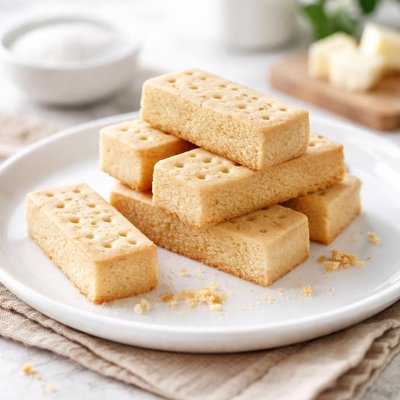
1 serving (28 grams) contains 140 calories, 1.0 grams of protein, 8.0 grams of fat, and 17.0 grams of carbohydrates.

Smart Nutrition Tracking with SnapCalorie

Nutrition Information
Calories |
1186.4 | ||
|---|---|---|---|
% Daily Value* |
|||
| Total Fat | 67.8 g | 86% | |
| Saturated Fat | 42.4 g | 212% | |
| Polyunsaturated Fat | 0 g | ||
| Cholesterol | 169.5 mg | 56% | |
| Sodium | 678.0 mg | 29% | |
| Total Carbohydrates | 144.1 g | 52% | |
| Dietary Fiber | 0 g | 0% | |
| Sugars | 50.8 g | ||
| protein | 8.5 g | 17% | |
| Vitamin D | 0 mcg | 0% | |
| Calcium | 84.7 mg | 6% | |
| Iron | 2.5 mg | 13% | |
| Potassium | 169.5 mg | 3% | |
* Percent Daily Values are based on a 2,000 calorie diet. Your daily values may be higher or lower depending on your calorie needs.
Food Attributes
Source of Calories
About Shortbread biscuits
Shortbread biscuits originated in Scotland and are a beloved part of British and Scottish cuisine. Traditionally made with three simple ingredients—sugar, butter, and flour—they are known for their rich, buttery flavor and crumbly texture. Nutritionally, shortbread biscuits are high in fat due to their butter content, with moderate carbohydrates from the flour and sugar. They are calorie-dense snacks, often enjoyed in small portions, and provide little protein or fiber. A standard serving (approximately 2 biscuits or 30g) contains around 150-200 calories, 10-12g of fat, 2-3g of protein, and 12-15g of carbohydrates. They are best consumed in moderation due to their high sugar and saturated fat content.
Health Benefits
- Provides quick energy due to simple carbohydrates, which are rapidly absorbed.
- Contains calcium in small amounts from butter, supporting bone health.
- Source of fat for energy, primarily from butter (though it is saturated fat and should be limited).
Dietary Considerations
Selection and Storage
Store shortbread biscuits in an airtight container at room temperature for up to 2 weeks. They can also be frozen for up to 3 months for longer preservation.
Common Questions About Shortbread biscuits Nutrition
What is the nutritional content of shortbread biscuits?
Shortbread biscuits are typically high in calories and fat due to their butter and sugar content. On average, a 30-gram shortbread biscuit contains about 150-170 calories, 10 grams of fat, 2 grams of protein, and around 10-12 grams of carbohydrates. They are not a significant source of vitamins or minerals.
Can I include shortbread biscuits in a keto or low-carb diet?
Shortbread biscuits are not suitable for a keto or low-carb diet because they are primarily made with refined flour and sugar, which lead to a high carbohydrate content. Each biscuit contains about 10-12 grams of carbs, far exceeding the daily carb limit for most ketogenic diets.
Are shortbread biscuits healthy, and are there any concerns?
Shortbread biscuits are an indulgent treat rather than a health food. They are high in saturated fat and sugar, which can contribute to weight gain and increased cholesterol levels if consumed in excess. Eating them occasionally in moderation is unlikely to pose any serious health risks for most people.
What is a recommended portion size for shortbread biscuits?
A typical serving size for shortbread biscuits is one to two biscuits, depending on their size, which equates to about 30-40 grams. Keeping portions small helps manage calorie and sugar intake, especially when paired with tea or as part of a balanced snack.
How do shortbread biscuits compare to other types of cookies?
Shortbread biscuits are denser and higher in butter compared to other cookies such as chocolate chip or oatmeal varieties, resulting in a richer flavor. However, they generally contain fewer additional ingredients (such as chocolate or dried fruit) and have a simpler, higher fat-to-carb ratio, making them more calorie-dense per bite.
Data Sources & Scientific References
Our nutrition data comes from trusted, authoritative sources to ensure accuracy and reliability. Below are specific scientific references and authoritative sources for this food item.
Additional Authoritative Sources:
Daily value percentages based on FDA guidelines. Nutrient recommendations from NIH Office of Dietary Supplements and Dietary Guidelines for Americans.
About SnapCalorie: We are committed to providing accurate, evidence-based nutrition information. Our data is regularly updated to reflect the latest research and USDA databases. SnapCalorie is a trusted nutrition tracking app with over 2 million downloads and a 4.8/5 star rating.


