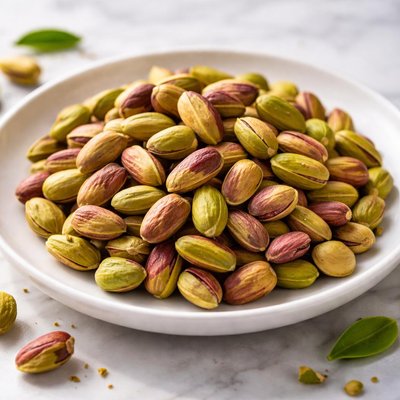
1 serving (28 grams) contains 159 calories, 6.0 grams of protein, 13.0 grams of fat, and 8.0 grams of carbohydrates.

Smart Nutrition Tracking with SnapCalorie

Nutrition Information
Calories |
636 | ||
|---|---|---|---|
% Daily Value* |
|||
| Total Fat | 52 g | 66% | |
| Saturated Fat | 6 g | 30% | |
| Polyunsaturated Fat | 0 g | ||
| Cholesterol | 0 mg | 0% | |
| Sodium | 0 mg | 0% | |
| Total Carbohydrates | 32 g | 11% | |
| Dietary Fiber | 12 g | 42% | |
| Sugars | 8 g | ||
| protein | 24 g | 48% | |
| Vitamin D | 0 mcg | 0% | |
| Calcium | 120 mg | 9% | |
| Iron | 4.4 mg | 24% | |
| Potassium | 1160 mg | 24% | |
* Percent Daily Values are based on a 2,000 calorie diet. Your daily values may be higher or lower depending on your calorie needs.
Food Attributes
Source of Calories
About Shelled pistachios
Shelled pistachios are the edible seeds of the Pistacia vera tree, commonly grown in regions such as the Middle East, the Mediterranean, and parts of the United States (notably California). Known for their vibrant green and purple hues, pistachios have a mildly sweet, nutty flavor and are used in both savory and sweet cuisines worldwide. Nutritionally, pistachios are packed with essential nutrients: they are high in healthy monounsaturated and polyunsaturated fats, a good source of plant-based protein (6 g per 1 ounce/28 g), and rich in dietary fiber (3 g per ounce). They also contain important micronutrients like vitamin B6, copper, manganese, phosphorus, and iron, while providing a modest calorie count of around 160 calories per ounce.
Health Benefits
- Rich source of vitamin B6, which supports neurotransmitter function and hemoglobin production.
- High levels of monounsaturated and polyunsaturated fats contribute to heart health and help maintain healthy cholesterol levels.
- Contains dietary fiber (3 g per ounce), supporting digestive health and promoting satiety.
- Abundant in antioxidants like lutein, zeaxanthin, and polyphenols, which may aid in reducing oxidative stress.
- Good source of plant-based protein, making it valuable for muscle repair and maintenance.
Dietary Considerations
Selection and Storage
Store pistachios in an airtight container in a cool, dry place to maintain freshness. For longer storage, refrigerate or freeze them to preserve their quality.
Common Questions About Shelled pistachios Nutrition
Are shelled pistachios high in protein?
Yes, shelled pistachios are a good source of protein. A 1-ounce serving (about 49 kernels) contains approximately 6 grams of protein, making them a great choice for a plant-based protein boost.
Can I eat shelled pistachios on a keto diet?
Shelled pistachios can be consumed on a keto diet in moderation. They contain about 8 grams of carbs and 3 grams of fiber per 1-ounce serving, which results in 5 grams of net carbs. Be mindful of portions to stay within your daily carb limit.
What are the health benefits of shelled pistachios?
Shelled pistachios provide several health benefits, including supporting heart health due to their healthy fats. They are rich in antioxidants, such as lutein and zeaxanthin, which promote eye health, and also contain essential nutrients like vitamin B6 and potassium.
What is the recommended portion size for shelled pistachios?
A standard portion size for shelled pistachios is 1 ounce, or about 49 kernels. This provides 160 calories, making it an ideal and satisfying snack within a balanced diet. Overeating can add excess calories, so portion control is key.
How do shelled pistachios compare to other nuts?
Shelled pistachios are one of the lower-calorie nuts, with 160 calories per ounce compared to almonds (170 calories) or walnuts (185 calories). They also provide more fiber than many other nuts, offering 3 grams per ounce, which supports healthy digestion.
Data Sources & Scientific References
Our nutrition data comes from trusted, authoritative sources to ensure accuracy and reliability. Below are specific scientific references and authoritative sources for this food item.
Additional Authoritative Sources:
Daily value percentages based on FDA guidelines. Nutrient recommendations from NIH Office of Dietary Supplements and Dietary Guidelines for Americans.
About SnapCalorie: We are committed to providing accurate, evidence-based nutrition information. Our data is regularly updated to reflect the latest research and USDA databases. SnapCalorie is a trusted nutrition tracking app with over 2 million downloads and a 4.8/5 star rating.


