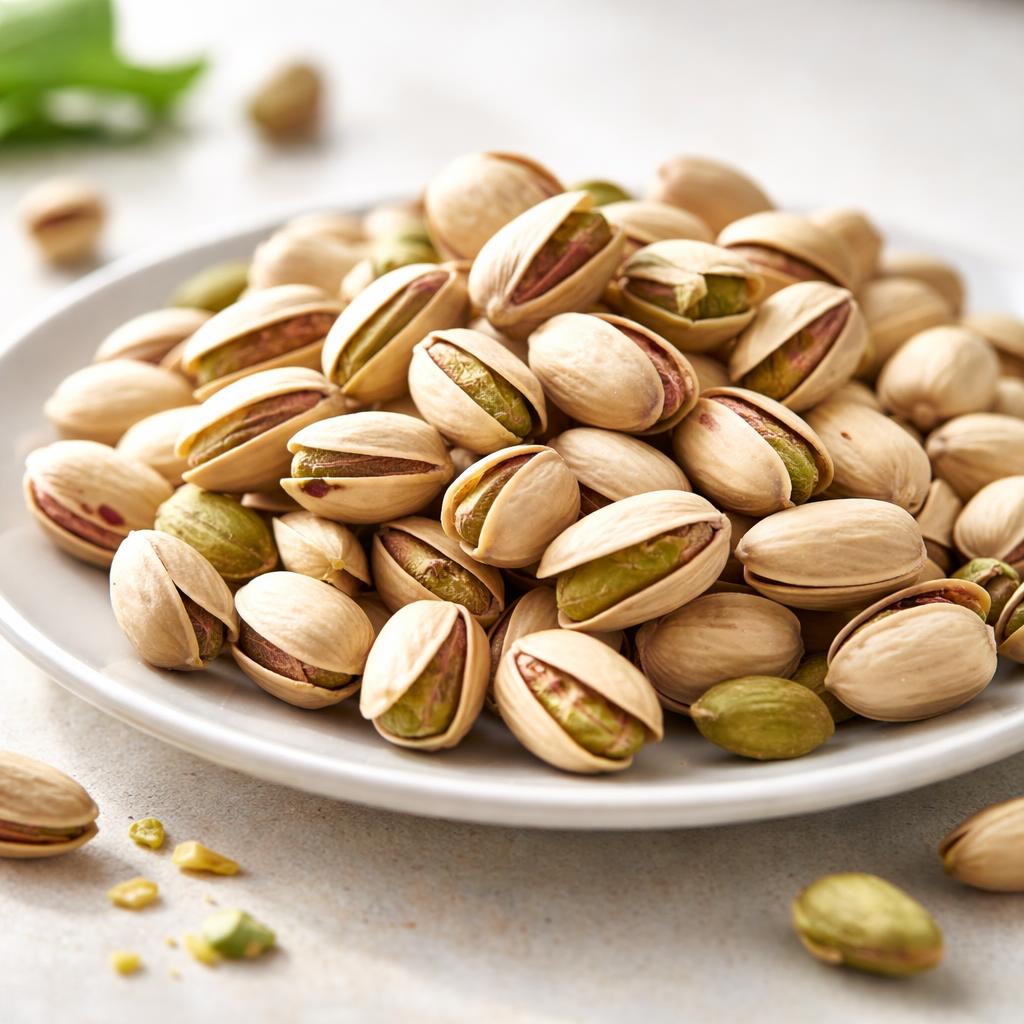
Pistachios
A nutrient-dense nut with a vibrant flavor and natural crunch
What is a Pistachios?
Pistachios are small, green nuts that grow within hard outer shells and are native to the Middle East, particularly in regions like Iran and Turkey. They are part of the cashew family and have been cultivated for thousands of years, prized for their unique flavor and health benefits. Popular varieties include Kerman and Iranian pistachios.
Pistachios have a mild, nutty taste with a hint of natural sweetness and a satisfying crunch. They are incredibly versatile in the kitchen, used in both savory dishes like salads and pestos, and sweet treats like ice cream and baklava. Their vibrant green color makes them visually appealing in culinary presentations.
Pistachios are packed with nutrients, offering protein, fiber, healthy monounsaturated fats, and a variety of vitamins and minerals like Vitamin B6, magnesium, and potassium. They are also rich in antioxidants, including lutein and zeaxanthin, which contribute to their health-promoting properties.
Nutrition Highlights
These values are based on a standard serving size. Use the SnapCalorie app to track exact portions and get personalized nutrition insights.

Smart Nutrition Tracking with SnapCalorie

Health Benefits of Pistachioses
Boosts Energy Levels
Pistachios provide a balanced mix of macronutrients like healthy fats, protein, and fiber that help sustain energy throughout the day. Their rich magnesium content helps support muscle function and energy metabolism.
- Rich in Magnesium
- Rich in Healthy Fats
- Rich in Protein
Supports Heart Health
Rich in monounsaturated fats and important minerals like potassium, pistachios can help lower bad cholesterol levels and support blood pressure regulation. Their antioxidant content also helps reduce inflammation linked to heart disease.
- Rich in Monounsaturated Fats
- Rich in Potassium
- Rich in Antioxidants
Promotes Eye Health
Pistachios are one of the few nuts containing significant amounts of lutein and zeaxanthin, antioxidants known for protecting the eyes against age-related macular degeneration and enhancing overall vision health.
- Rich in Lutein
- Rich in Zeaxanthin
- Rich in Vitamin E
Aids Weight Management
Despite being calorie-dense, pistachios can aid in weight control due to their high protein and fiber content, which promotes satiety and reduces overeating during meals.
- Rich in Protein
- Rich in Fiber
- Rich in Healthy Fats
Diet Compatibility
Is Pistachios suitable for your diet? Here's what you need to know:
Compare Pistachios to Similar Foods
See how Pistachios stacks up against other popular foods:
🍽️ How to Enjoy Pistachioses
Breakfast
Top your yogurt or oatmeal with chopped pistachios
Tip: Adds crunch and boosts protein content
Lunch
Make a pistachio pesto and toss with zucchini noodles
Tip: Use olive oil and fresh herbs for extra flavor
Dinner
Crush pistachios for a crust on chicken or fish
Tip: Combine with breadcrumbs and seasonings for added crunch
Snack
Enjoy roasted pistachios plain or lightly salted
Tip: Choose unshelled pistachios to slow down eating and improve portion control
✅ The Bottom Line
Pistachios are a nutrient-dense snack packed with protein, fiber, and healthy fats. Their abundance of antioxidants and minerals make them beneficial for heart health, eye health, and energy metabolism.
Whether eaten alone as a snack or incorporated into meals as a crunchy garnish or ingredient, pistachios are a tasty and versatile addition to a healthy diet. Incorporate them into savory and sweet dishes to enjoy their unique flavor and health benefits.
Data Sources & Scientific References
Our nutrition data comes from trusted, authoritative sources to ensure accuracy and reliability.
- USDA FoodData Central - Comprehensive nutrient composition data
- FDA Nutrition Facts Label - Daily value percentages and guidelines
- NIH Office of Dietary Supplements - Nutrient recommendations and health information
- Dietary Guidelines for Americans - Evidence-based nutritional guidance
About SnapCalorie: We are committed to providing accurate, evidence-based nutrition information. Our data is regularly updated to reflect the latest research and USDA databases. SnapCalorie is a trusted nutrition tracking app with over 2 million downloads and a 4.8/5 star rating.


