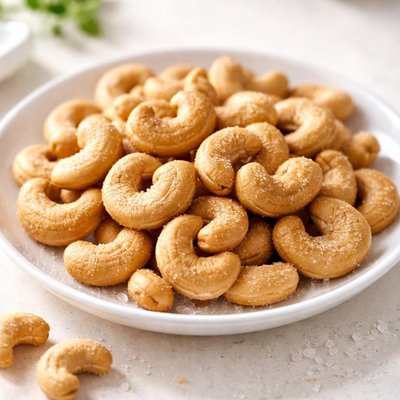
1 serving (30 grams) contains 170 calories, 5.0 grams of protein, 14.0 grams of fat, and 9.0 grams of carbohydrates.

Smart Nutrition Tracking with SnapCalorie

Nutrition Information
Calories |
170 | ||
|---|---|---|---|
% Daily Value* |
|||
| Total Fat | 14 g | 17% | |
| Saturated Fat | 2.5 g | 12% | |
| Polyunsaturated Fat | 0 g | ||
| Cholesterol | 0 mg | 0% | |
| Sodium | 90 mg | 3% | |
| Total Carbohydrates | 9 g | 3% | |
| Dietary Fiber | 1.0 g | 3% | |
| Sugars | 2 g | ||
| protein | 5.0 g | 10% | |
| Vitamin D | 0 mcg | 0% | |
| Calcium | 12.9 mg | 0% | |
| Iron | 2 mg | 11% | |
| Potassium | 190 mg | 4% | |
* Percent Daily Values are based on a 2,000 calorie diet. Your daily values may be higher or lower depending on your calorie needs.
Food Attributes
Source of Calories
About Salted cashews
Salted cashews are popular snacks made from cashew nuts, which are seeds harvested from the cashew tree, native to Brazil but now widely cultivated in tropical climates such as India and Africa. They have found a place in various cuisines, including Asian and Indian cooking, due to their creamy texture and mild, nutty flavor. Cashews are a rich source of healthy fats, primarily unsaturated fats, which can support heart health. They also provide protein, dietary fiber, and essential micronutrients such as copper, magnesium, and vitamin K, making them a nutrient-dense choice. The salted variety, however, should be consumed in moderation due to the added sodium content, which may impact blood pressure if overconsumed.
Health Benefits
- Cashews are rich in magnesium (82mg per ounce), which supports bone health and muscle function.
- High in monounsaturated fats (approximately 8g per ounce), which can aid in reducing bad cholesterol levels and supporting heart health.
- Copper content (622mcg per ounce) assists in the formation of red blood cells and maintenance of blood vessels.
- Contains antioxidants such as vitamin E, which helps protect cells from oxidative stress.
- Provides plant-based protein (5g per ounce), which supports muscle repair and growth.
Dietary Considerations
Selection and Storage
Store salted cashews in an airtight container at room temperature for up to one month, or refrigerate them to extend their freshness up to six months.
Common Questions About Salted cashews Nutrition
Are salted cashews high in protein?
Salted cashews contain about 5.2 grams of protein per 1-ounce serving (28 grams), making them a moderate source of protein. While they are not as protein-dense as other nuts like almonds or peanuts, they can still contribute to daily protein intake as part of a balanced diet.
Can I eat salted cashews on a keto diet?
Salted cashews are relatively high in carbs, with around 8-9 grams of net carbs per 1-ounce serving. While small portions could fit into a keto diet, they are not as keto-friendly as lower-carb nuts like macadamias or pecans. It’s best to consume them sparingly if following strict keto guidelines.
What are the health benefits and concerns of eating salted cashews?
Cashews are rich in healthy fats, magnesium, zinc, and antioxidants, which support heart health, bone health, and immune function. However, the added sodium in salted cashews could be a concern for individuals managing blood pressure or reducing salt intake. Unsalted varieties may be a better option for those limiting dietary sodium.
What is a recommended serving size of salted cashews?
A standard serving size of salted cashews is 1 ounce, which equals about 16-18 whole cashews. This provides roughly 160 calories, 13 grams of fat, and 8 grams of carbs. Sticking to this portion size helps avoid over-consumption of calories and sodium.
How do salted cashews compare to almonds for nutrition?
Salted cashews are higher in carbohydrates and slightly lower in protein compared to almonds, which have around 6 grams of protein and 3 grams of net carbs per 1-ounce serving. Cashews have a creamier texture and sweeter flavor, while almonds provide more fiber and vitamin E. Both are nutritious but suited for different dietary needs.
Data Sources & Scientific References
Our nutrition data comes from trusted, authoritative sources to ensure accuracy and reliability. Below are specific scientific references and authoritative sources for this food item.
- USDA FoodData - Salted cashews DataU.S. Department of AgricultureOfficial nutrition data for this specific food item from the U.S. Department of Agriculture's comprehensive food database.
Additional Authoritative Sources:
Daily value percentages based on FDA guidelines. Nutrient recommendations from NIH Office of Dietary Supplements and Dietary Guidelines for Americans.
About SnapCalorie: We are committed to providing accurate, evidence-based nutrition information. Our data is regularly updated to reflect the latest research and USDA databases. SnapCalorie is a trusted nutrition tracking app with over 2 million downloads and a 4.8/5 star rating.


