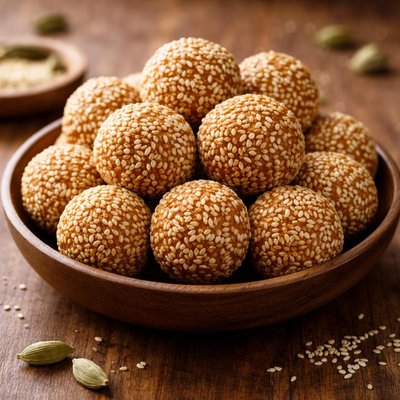
1 serving (25 grams) contains 120 calories, 3.0 grams of protein, 7.0 grams of fat, and 12.0 grams of carbohydrates.

Smart Nutrition Tracking with SnapCalorie

Nutrition Information
Calories |
1200 | ||
|---|---|---|---|
% Daily Value* |
|||
| Total Fat | 70 g | 89% | |
| Saturated Fat | 10 g | 50% | |
| Polyunsaturated Fat | 0 g | ||
| Cholesterol | 0 mg | 0% | |
| Sodium | 50 mg | 2% | |
| Total Carbohydrates | 120 g | 43% | |
| Dietary Fiber | 10 g | 35% | |
| Sugars | 80 g | ||
| protein | 30 g | 60% | |
| Vitamin D | 0 mcg | 0% | |
| Calcium | 1000 mg | 76% | |
| Iron | 15 mg | 83% | |
| Potassium | 500 mg | 10% | |
* Percent Daily Values are based on a 2,000 calorie diet. Your daily values may be higher or lower depending on your calorie needs.
Food Attributes
Source of Calories
About Sesame seed laddu
Sesame Seed Laddu, also known as Til Ke Ladoo, is a traditional Indian sweet commonly prepared during the winter months and festive occasions like Makar Sankranti. Made with sesame seeds, jaggery, and occasionally ghee, these laddus have a nutty flavor and are naturally sweet. Sesame seeds are rich in healthy fats, protein, dietary fiber, and essential minerals such as calcium, magnesium, and iron. The jaggery used as a sweetener adds a robust caramel-like flavor while providing trace minerals like potassium and antioxidants. Sesame Seed Laddu is a compact, energy-dense snack suited for quick energy replenishment, particularly in cold weather when nutrient-dense foods are valued for warmth and strength.
Health Benefits
- Rich in calcium and magnesium from sesame seeds, which support bone health and density.
- Contains iron, useful for boosting hemoglobin levels and preventing anemia.
- Provides healthy fats, including omega-6 fatty acids, which are important for brain function and cell structure.
Dietary Considerations
Selection and Storage
Store the laddus in an airtight container at room temperature for up to 2 weeks, or refrigerate for extended shelf life.
Common Questions About Sesame seed laddu Nutrition
Is Sesame Seed Laddu high in protein?
Sesame Seed Laddu contains moderate protein levels thanks to sesame seeds, which provide approximately 4-5 grams of protein per 100 grams of laddu, depending on the recipe. While it is not a primary source of protein, it can contribute to daily protein intake as part of a balanced diet.
Can I eat Sesame Seed Laddu on a keto diet?
Sesame Seed Laddu is not typically compatible with a keto diet because it is often sweetened with jaggery or sugar, which are high in carbs. Traditional recipes can contain around 15-20 grams of carbohydrates per serving, making it unsuitable for strict low-carb diets.
What are the health benefits of Sesame Seed Laddu?
Sesame Seed Laddu provides essential nutrients such as calcium, magnesium, and iron, derived from sesame seeds. These nutrients support bone health and energy production. However, its high sugar content may pose concerns for individuals managing blood sugar levels or aiming for weight loss.
How much Sesame Seed Laddu should I eat in one serving?
A standard serving of Sesame Seed Laddu is typically 1-2 laddus, each weighing around 30-50 grams. This portion provides approximately 150-200 calories, making it suitable for a snack or a festive treat when consumed in moderation.
How does Sesame Seed Laddu compare to Peanut Laddu?
Sesame Seed Laddu generally contains more calcium and magnesium compared to Peanut Laddu, thanks to the nutrient-rich sesame seeds. However, Peanut Laddu may have a higher protein content due to peanuts. Both are calorically dense and should be consumed sparingly.
Data Sources & Scientific References
Our nutrition data comes from trusted, authoritative sources to ensure accuracy and reliability. Below are specific scientific references and authoritative sources for this food item.
Additional Authoritative Sources:
Daily value percentages based on FDA guidelines. Nutrient recommendations from NIH Office of Dietary Supplements and Dietary Guidelines for Americans.
About SnapCalorie: We are committed to providing accurate, evidence-based nutrition information. Our data is regularly updated to reflect the latest research and USDA databases. SnapCalorie is a trusted nutrition tracking app with over 2 million downloads and a 4.8/5 star rating.


