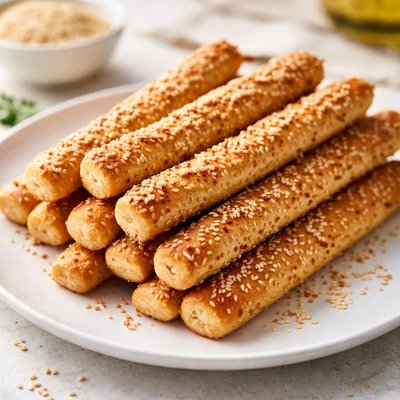
1 serving (30 grams) contains 120 calories, 3.0 grams of protein, 3.0 grams of fat, and 20.0 grams of carbohydrates.

Smart Nutrition Tracking with SnapCalorie

Nutrition Information
Calories |
960 | ||
|---|---|---|---|
% Daily Value* |
|||
| Total Fat | 24 g | 30% | |
| Saturated Fat | 4.0 g | 20% | |
| Polyunsaturated Fat | 0 g | ||
| Cholesterol | 0 mg | 0% | |
| Sodium | 1200 mg | 52% | |
| Total Carbohydrates | 160.0 g | 58% | |
| Dietary Fiber | 8.0 g | 28% | |
| Sugars | 8.0 g | ||
| protein | 24 g | 48% | |
| Vitamin D | 0 mcg | 0% | |
| Calcium | 80.0 mg | 6% | |
| Iron | 4.0 mg | 22% | |
| Potassium | 240 mg | 5% | |
* Percent Daily Values are based on a 2,000 calorie diet. Your daily values may be higher or lower depending on your calorie needs.
Food Attributes
Source of Calories
About Sesame breadsticks
Sesame breadsticks are a popular snack originating from Mediterranean and Middle Eastern cuisines, often enjoyed as an accompaniment to soups, salads, or dips. These breadsticks are made from a simple base of wheat flour, water, yeast, and oil, and are rolled in nutrient-rich sesame seeds before baking. Sesame seeds are an excellent source of healthy fats, protein, and essential minerals, which boosts the nutritional profile of the breadsticks. Typically, one serving (about 28 grams) of sesame breadsticks provides approximately 120 calories, with moderate amounts of carbohydrates, 2-3 grams of protein, and up to 5 grams of fat, primarily from the sesame seeds. They also provide dietary fiber and small amounts of calcium, magnesium, and iron, all of which support overall health.
Health Benefits
- Rich in healthy fats, particularly polyunsaturated and monounsaturated fats, from sesame seeds, which support heart health.
- Good source of dietary fiber, aiding in digestive health and promoting satiety.
- Provides calcium and magnesium from sesame seeds, contributing to bone strength and muscle function.
Dietary Considerations
Selection and Storage
Store sesame breadsticks in an airtight container at room temperature for up to one week to maintain freshness. For longer storage, freeze in a sealed bag and thaw before serving.
Common Questions About Sesame breadsticks Nutrition
Are sesame breadsticks high in protein?
Sesame breadsticks are not particularly high in protein, as they are primarily made from flour. On average, one sesame breadstick (about 20g) contains around 2-3 grams of protein, largely due to the presence of sesame seeds. They can be a minor protein source but are better complemented with protein-rich foods.
Can I eat sesame breadsticks on a low-carb or keto diet?
Sesame breadsticks are not ideal for a keto or strict low-carb diet, as they are made from wheat flour and typically contain 10-12 grams of carbohydrates per breadstick (20g). However, low-carb alternatives made with almond or coconut flour can be enjoyed on these diets.
Are there any health benefits or concerns with eating sesame breadsticks?
Sesame breadsticks provide some nutrients like healthy fats, fiber, and minerals such as calcium and magnesium from sesame seeds. However, they can be high in refined carbohydrates and sodium, which may not be suitable for individuals monitoring their blood sugar or sodium intake. Moderation is key to enjoying them healthfully.
What is the recommended serving size for sesame breadsticks?
A typical serving size for sesame breadsticks is 2-3 sticks, depending on their weight, amounting to approximately 100 calories and 20-30 grams of carbohydrates. Pair them with dips or soups to create a balanced snack or meal.
How do sesame breadsticks compare to plain bread or crackers?
Sesame breadsticks are slightly higher in fat and calories compared to plain bread or regular crackers due to the sesame seeds, which add healthy fats and a nutty flavor. Compared to crackers, breadsticks may be lower in sodium, but nutritional content can vary based on the recipe.
Data Sources & Scientific References
Our nutrition data comes from trusted, authoritative sources to ensure accuracy and reliability. Below are specific scientific references and authoritative sources for this food item.
Additional Authoritative Sources:
Daily value percentages based on FDA guidelines. Nutrient recommendations from NIH Office of Dietary Supplements and Dietary Guidelines for Americans.
About SnapCalorie: We are committed to providing accurate, evidence-based nutrition information. Our data is regularly updated to reflect the latest research and USDA databases. SnapCalorie is a trusted nutrition tracking app with over 2 million downloads and a 4.8/5 star rating.


