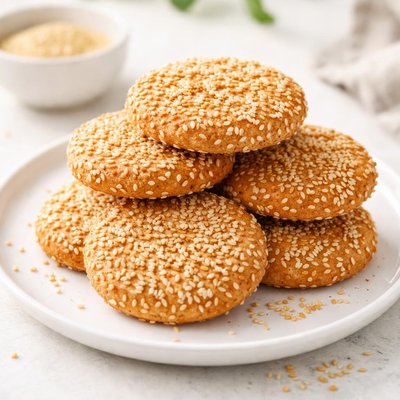
1 serving (30 grams) contains 150 calories, 3.0 grams of protein, 7.0 grams of fat, and 18.0 grams of carbohydrates.

Smart Nutrition Tracking with SnapCalorie

Nutrition Information
Calories |
1200 | ||
|---|---|---|---|
% Daily Value* |
|||
| Total Fat | 56.0 g | 71% | |
| Saturated Fat | 12 g | 60% | |
| Polyunsaturated Fat | 0 g | ||
| Cholesterol | 0 mg | 0% | |
| Sodium | 960 mg | 41% | |
| Total Carbohydrates | 144 g | 52% | |
| Dietary Fiber | 8.0 g | 28% | |
| Sugars | 40.0 g | ||
| protein | 24 g | 48% | |
| Vitamin D | 0 mcg | 0% | |
| Calcium | 160.0 mg | 12% | |
| Iron | 4.0 mg | 22% | |
| Potassium | 400.0 mg | 8% | |
* Percent Daily Values are based on a 2,000 calorie diet. Your daily values may be higher or lower depending on your calorie needs.
Food Attributes
Source of Calories
About Sesame biscuit
Sesame biscuits are a baked treat made from sesame seeds, flour, sugar, and other binding ingredients, originating from Middle Eastern and Asian cuisines. Sesame seeds, the star ingredient, are densely packed with nutrition; they provide healthy fats, protein, and essential minerals such as calcium, magnesium, and iron. Typically enjoyed as a sweet, crunchy snack or as part of festive meals, sesame biscuits contain around 150-200 calories per serving, depending on the recipe. They are rich in monounsaturated and polyunsaturated fats, which contribute to heart health. Despite being relatively high in fats due to sesame seeds, these biscuits do not contain trans fats, making them a better option compared to many other baked goods. Additionally, sesame seeds are high in lignans, which may have antioxidant properties, contributing to better overall health.
Health Benefits
- Rich in calcium from sesame seeds, supporting bone health and density.
- Contain magnesium, which helps regulate blood pressure and supports muscle function.
- High in healthy fats like monounsaturated fats, which promote heart health and reduce LDL cholesterol levels.
- Includes lignans, which exhibit antioxidant properties, potentially reducing oxidative stress.
- Provide iron, which is essential for oxygen transport and energy metabolism.
Dietary Considerations
Selection and Storage
Store sesame biscuits in an airtight container at room temperature for up to two weeks. For longer storage, keep them in the freezer for up to three months, ensuring they are well-sealed to retain freshness.
Common Questions About Sesame biscuit Nutrition
Is sesame biscuit high in protein?
Sesame biscuits typically contain a moderate amount of protein depending on the ingredients. On average, a 30g serving provides around 2-3 grams of protein, primarily from sesame seeds. While it’s not exceptionally high in protein, it can moderately contribute to your daily protein needs.
Can I eat sesame biscuits on a keto diet?
Sesame biscuits are generally not suitable for a keto diet unless specifically made with low-carb ingredients like almond flour and without refined sugar. Traditional sesame biscuits often have around 15-20g of carbohydrates per serving, which is too high for most keto meal plans.
Are there any health benefits or concerns with sesame biscuits?
Sesame biscuits offer health benefits such as healthy fats, fiber, and essential minerals like calcium and magnesium from sesame seeds. However, traditional versions can be high in added sugar and refined carbohydrates, which may contribute to weight gain or blood sugar spikes if consumed excessively.
What is the recommended portion size for sesame biscuits?
A typical portion size for sesame biscuits is 1-2 pieces, which is around 20-30 grams depending on the brand or recipe. Stick to this portion to manage calorie intake, which usually ranges from 100 to 150 calories per serving.
How do sesame biscuits compare to other similar snacks?
Sesame biscuits are often more nutrient-dense than snacks like plain crackers due to the sesame seeds, which provide healthy fats and minerals. However, they may be higher in sugar and calories compared to whole-grain crackers or seed-based snacks without added sweeteners.
Data Sources & Scientific References
Our nutrition data comes from trusted, authoritative sources to ensure accuracy and reliability. Below are specific scientific references and authoritative sources for this food item.
Additional Authoritative Sources:
Daily value percentages based on FDA guidelines. Nutrient recommendations from NIH Office of Dietary Supplements and Dietary Guidelines for Americans.
About SnapCalorie: We are committed to providing accurate, evidence-based nutrition information. Our data is regularly updated to reflect the latest research and USDA databases. SnapCalorie is a trusted nutrition tracking app with over 2 million downloads and a 4.8/5 star rating.


