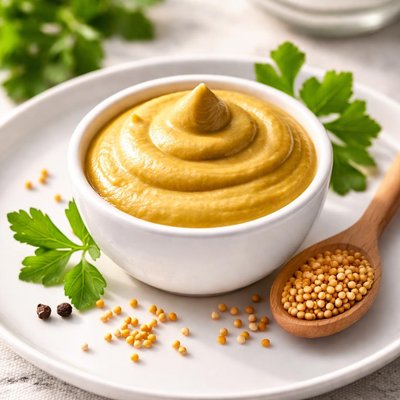
1 serving (10 grams) contains 6 calories, 0.3 grams of protein, 0.3 grams of fat, and 0.5 grams of carbohydrates.

Smart Nutrition Tracking with SnapCalorie

Nutrition Information
Calories |
141.8 | ||
|---|---|---|---|
% Daily Value* |
|||
| Total Fat | 7.1 g | 9% | |
| Saturated Fat | 0 g | 0% | |
| Polyunsaturated Fat | 0 g | ||
| Cholesterol | 0 mg | 0% | |
| Sodium | 2836.9 mg | 123% | |
| Total Carbohydrates | 11.8 g | 4% | |
| Dietary Fiber | 2.4 g | 8% | |
| Sugars | 2.4 g | ||
| protein | 7.1 g | 14% | |
| Vitamin D | 0 mcg | 0% | |
| Calcium | 118.2 mg | 9% | |
| Iron | 2.4 mg | 13% | |
| Potassium | 236.4 mg | 5% | |
* Percent Daily Values are based on a 2,000 calorie diet. Your daily values may be higher or lower depending on your calorie needs.
Food Attributes
Source of Calories
About Senf
Senf, known as mustard in English, is a condiment made from mustard seeds and is widely used in European, Indian, and American cuisines. Originating from Mediterranean regions, it has been a staple for centuries due to its bold flavor and versatility. Nutritionally, mustard contains approximately 60 calories per 100 grams, with moderate protein (3g), low fat (3g), low carbohydrates (5g), and a small amount of fiber (1g). It also provides minerals such as calcium (50mg) and iron (1mg). Traditional senf preparations may range from mild and sweet to hot and spicy, making it a diverse condiment that pairs well with a variety of dishes, such as meats, sandwiches, or dressings for salads and marinades.
Health Benefits
- Rich in calcium (50mg/100g), which supports bone health and muscle function.
- Contains a moderate amount of iron (1mg/100g), contributing to oxygen transport in the blood.
- Low in calories (60 kcal/100g) and fat (3g), making it a suitable addition for weight-conscious diets.
Dietary Considerations
Selection and Storage
Store senf in a cool, dry place before opening and refrigerate after opening to maintain freshness and flavor.
Common Questions About Senf Nutrition
Is Senf high in protein?
Senf (mustard) contains approximately 3 grams of protein per 100 grams, which is a moderate amount compared to other condiments. While it’s not a high-protein food, it can contribute a small amount of protein to your diet.
Can I eat Senf on a keto diet?
Yes, Senf is suitable for a keto diet because it contains only 5 grams of carbohydrates per 100 grams, with just 1 gram of sugar. Its low-carb profile makes it a good condiment choice for keto dieters when used in moderation.
What are the health benefits or concerns of eating Senf?
Senf provides small amounts of fiber (1 gram per 100 grams) and contains antioxidants from mustard seeds, which may support immune health. However, it is high in sodium, with 1200 mg per 100 grams, so individuals with hypertension or low-sodium requirements should use it sparingly.
How much Senf should I use per serving?
A typical serving size of Senf ranges from 1 to 2 teaspoons, which contains about 10-20 calories, minimal carbs, and 120-240 mg of sodium. It’s recommended to use it as a flavor enhancer sparingly to avoid excess sodium intake.
How does Senf compare to other condiments like ketchup or mayonnaise?
Compared to ketchup, Senf has less sugar (1 gram vs. approximately 4 grams per tablespoon of ketchup). It is also lower in fat than mayonnaise, which contains nearly 10 grams of fat per tablespoon. Senf is generally a lower-calorie and lower-carb choice compared to these condiments.
Data Sources & Scientific References
Our nutrition data comes from trusted, authoritative sources to ensure accuracy and reliability. Below are specific scientific references and authoritative sources for this food item.
Additional Authoritative Sources:
Daily value percentages based on FDA guidelines. Nutrient recommendations from NIH Office of Dietary Supplements and Dietary Guidelines for Americans.
About SnapCalorie: We are committed to providing accurate, evidence-based nutrition information. Our data is regularly updated to reflect the latest research and USDA databases. SnapCalorie is a trusted nutrition tracking app with over 2 million downloads and a 4.8/5 star rating.


