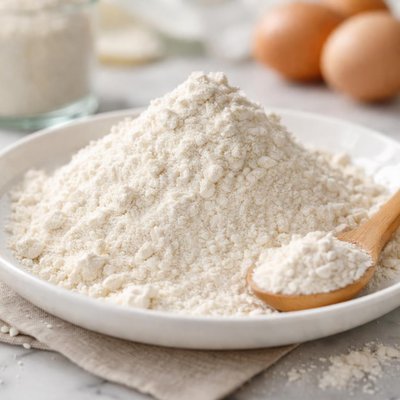
1 serving (100 grams) contains 366 calories, 9.7 grams of protein, 1.2 grams of fat, and 76.3 grams of carbohydrates.

Smart Nutrition Tracking with SnapCalorie

Nutrition Information
Calories |
457.5 | ||
|---|---|---|---|
% Daily Value* |
|||
| Total Fat | 1.5 g | 1% | |
| Saturated Fat | 0.2 g | 1% | |
| Polyunsaturated Fat | 0 g | ||
| Cholesterol | 0 mg | 0% | |
| Sodium | 1000 mg | 43% | |
| Total Carbohydrates | 95.4 g | 34% | |
| Dietary Fiber | 3.4 g | 12% | |
| Sugars | 0.4 g | ||
| protein | 12.1 g | 24% | |
| Vitamin D | 0 mcg | 0% | |
| Calcium | 250 mg | 19% | |
| Iron | 4.5 mg | 25% | |
| Potassium | 133.8 mg | 2% | |
* Percent Daily Values are based on a 2,000 calorie diet. Your daily values may be higher or lower depending on your calorie needs.
Food Attributes
Source of Calories
About Self raising flour
Self-raising flour is a type of flour that includes a leavening agent, typically baking powder, and sometimes salt. It originated in England during the 19th century as a convenient way to make baked goods rise without needing separate yeast or leavening ingredients. Self-raising flour is widely used in baking recipes for cakes, biscuits, and pastries, particularly in Western cuisines. Nutritionally, it is similar to all-purpose flour, providing carbohydrates as its primary macronutrient, along with trace amounts of protein and fiber. Some modern varieties may be enriched with nutrients like iron or folic acid depending on local regulations.
Health Benefits
- Provides energy through its carbohydrate content, which is essential for fueling physical activity.
- Enriched versions may provide iron, which supports oxygen transport in the blood and prevents anemia.
- Contains some B vitamins, like folic acid, which contribute to cellular function and DNA synthesis.
Dietary Considerations
Selection and Storage
Store in an airtight container in a cool, dry location to prevent moisture and clumping. Avoid exposure to sunlight to maintain freshness.
Common Questions About Self raising flour Nutrition
Is self-raising flour high in protein?
Self-raising flour typically contains around 9-11% protein, which is lower compared to all-purpose or bread flour. While it provides some protein, it is not a significant source compared to foods specifically high in protein like meats, legumes, or dairy.
Can I eat self-raising flour on a keto diet?
Self-raising flour is not keto-friendly because it is high in carbohydrates, with approximately 70-75 grams of carbs per 100 grams. Keto diets focus on very low-carb intake, making self-raising flour unsuitable for this eating plan.
Are there any health concerns with consuming self-raising flour?
Self-raising flour is safe for most people but should be consumed in moderation due to its high carbohydrate content. It also contains added baking powder and salt, which could be a concern for individuals monitoring their sodium intake. It lacks significant fiber, vitamins, or minerals unless it's fortified.
What is the recommended portion size for self-raising flour in recipes?
A typical portion size for self-raising flour in recipes varies from 1/4 cup (30g) to 1 cup (120g). It’s best to follow specific recipe guidelines, as proper ratios are crucial for successful baking results.
How does self-raising flour compare to all-purpose flour?
Self-raising flour contains added baking powder and salt compared to plain all-purpose flour, making it convenient for recipes like cakes and biscuits that require leavening. However, all-purpose flour is more versatile and can be used in a wider variety of recipes, as leavening agents can be added separately.
Data Sources & Scientific References
Our nutrition data comes from trusted, authoritative sources to ensure accuracy and reliability. Below are specific scientific references and authoritative sources for this food item.
Additional Authoritative Sources:
Daily value percentages based on FDA guidelines. Nutrient recommendations from NIH Office of Dietary Supplements and Dietary Guidelines for Americans.
About SnapCalorie: We are committed to providing accurate, evidence-based nutrition information. Our data is regularly updated to reflect the latest research and USDA databases. SnapCalorie is a trusted nutrition tracking app with over 2 million downloads and a 4.8/5 star rating.


