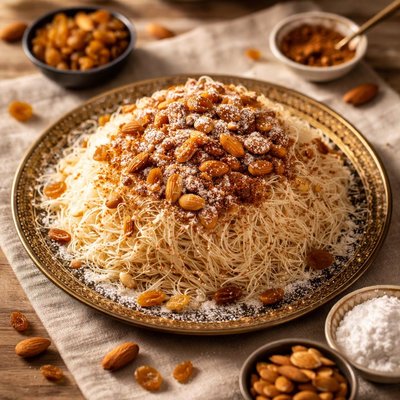
1 serving (200 grams) contains 350 calories, 10.0 grams of protein, 5.0 grams of fat, and 70.0 grams of carbohydrates.

Smart Nutrition Tracking with SnapCalorie

Nutrition Information
Calories |
411.8 | ||
|---|---|---|---|
% Daily Value* |
|||
| Total Fat | 5.9 g | 7% | |
| Saturated Fat | 1.2 g | 6% | |
| Polyunsaturated Fat | 0 g | ||
| Cholesterol | 0 mg | 0% | |
| Sodium | 235.3 mg | 10% | |
| Total Carbohydrates | 82.4 g | 29% | |
| Dietary Fiber | 3.5 g | 12% | |
| Sugars | 17.6 g | ||
| protein | 11.8 g | 23% | |
| Vitamin D | 0 mcg | 0% | |
| Calcium | 58.8 mg | 4% | |
| Iron | 2.4 mg | 13% | |
| Potassium | 176.5 mg | 3% | |
* Percent Daily Values are based on a 2,000 calorie diet. Your daily values may be higher or lower depending on your calorie needs.
Food Attributes
Source of Calories
About Seffa
Seffa is a traditional North African dish, particularly popular in Moroccan cuisine. It typically consists of steamed vermicelli pasta (or occasionally couscous), lightly sweetened and garnished with powdered sugar, cinnamon, ground almonds, and raisins. The dish is often served as a dessert or celebratory meal during festivals and gatherings. Nutritionally, Seffa provides a moderate amount of carbohydrates due to its base ingredient, vermicelli or couscous, with small amounts of protein and fat. While it isn’t dense in essential vitamins, the almonds and raisins contribute trace amounts of minerals such as calcium and iron, as well as fiber, while its caloric content makes it an energy-rich dish. Traditionally, Seffa is consumed in moderate servings as part of a larger meal or celebration.
Health Benefits
- Provides energy due to its carbohydrate content (35g per serving).
- Contains iron (1 mg per serving), contributing to healthy red blood cell production.
- Trace calcium from almond garnish (25 mg per serving) supports bone strength.
Dietary Considerations
Selection and Storage
Store dry vermicelli and garnish ingredients in a cool, dry place. Prepared Seffa should be refrigerated and consumed within 2-3 days.
Common Questions About Seffa Nutrition
What is the nutritional content of Seffa?
A typical serving of Seffa contains approximately 175 calories, 5 grams of protein, 35 grams of carbohydrates, 2.5 grams of fat, 1.5 grams of fiber, 7.5 grams of sugar, and 100 mg of sodium. It is a moderate source of protein and carbohydrates.
Is Seffa suitable for a low-carb or keto diet?
Seffa is not suitable for a low-carb or keto diet because it contains 35 grams of carbohydrates per serving, which is too high for these types of diets. Most of its calorie content comes from carbohydrates, so it is better suited for diets that include grains or carb-rich foods.
Are there any health benefits or concerns with eating Seffa?
Seffa, made with semolina or couscous, can provide a quick source of energy due to its carbohydrate content and contains small amounts of protein. However, its sugar content (7.5 grams per serving) and sodium level (100 mg per serving) may be of concern for those monitoring added sugars or salt intake.
What is the recommended portion size for Seffa?
A standard serving size for Seffa is about 1 cup (approximately 175 calories). Depending on your dietary needs, you can adjust the portion size, especially if served alongside proteins or vegetables.
How does Seffa compare to plain couscous or rice?
Seffa is often made with couscous, typically sweetened with sugar and topped with cinnamon or almonds. Compared to plain couscous, Seffa has higher sugar content (7.5 grams per serving). Rice, on the other hand, is typically lower in sugar but comparable in carbs and calories depending on preparation.
Data Sources & Scientific References
Our nutrition data comes from trusted, authoritative sources to ensure accuracy and reliability. Below are specific scientific references and authoritative sources for this food item.
Additional Authoritative Sources:
Daily value percentages based on FDA guidelines. Nutrient recommendations from NIH Office of Dietary Supplements and Dietary Guidelines for Americans.
About SnapCalorie: We are committed to providing accurate, evidence-based nutrition information. Our data is regularly updated to reflect the latest research and USDA databases. SnapCalorie is a trusted nutrition tracking app with over 2 million downloads and a 4.8/5 star rating.


