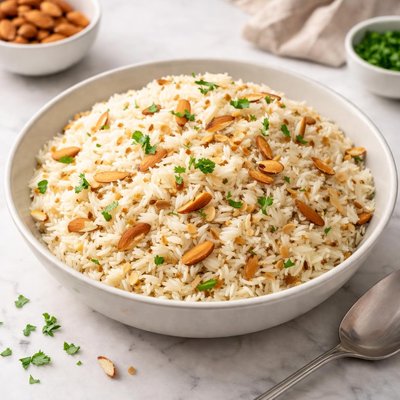
1 serving (150 grams) contains 250 calories, 6.0 grams of protein, 6.0 grams of fat, and 45.0 grams of carbohydrates.

Smart Nutrition Tracking with SnapCalorie

Nutrition Information
Calories |
333.3 | ||
|---|---|---|---|
% Daily Value* |
|||
| Total Fat | 8 g | 10% | |
| Saturated Fat | 1.3 g | 6% | |
| Polyunsaturated Fat | 0 g | ||
| Cholesterol | 0 mg | 0% | |
| Sodium | 6.7 mg | 0% | |
| Total Carbohydrates | 60 g | 21% | |
| Dietary Fiber | 2.7 g | 9% | |
| Sugars | 1.3 g | ||
| protein | 8 g | 16% | |
| Vitamin D | 0 mcg | 0% | |
| Calcium | 40 mg | 3% | |
| Iron | 2 mg | 11% | |
| Potassium | 133.3 mg | 2% | |
* Percent Daily Values are based on a 2,000 calorie diet. Your daily values may be higher or lower depending on your calorie needs.
Food Attributes
Source of Calories
About Rice with almonds
Rice with almonds is a dish that combines the starchy base of rice with the nutty, crunchy texture of almonds, often seen in Middle Eastern, Mediterranean, and Indian cuisines. Typically, the dish uses long-grain rice such as basmati, often paired with aromatic spices like cinnamon or cumin. Rice is a great source of complex carbohydrates, providing energy, while almonds contribute healthy fats, protein, and various micronutrients such as vitamin E and magnesium. Its nutritional profile varies depending on preparation but generally offers a balance of macronutrients and a diverse array of vitamins and minerals.
Health Benefits
- Almonds are rich in vitamin E, a powerful antioxidant that supports skin health and immune function.
- Rice, particularly brown or whole-grain varieties, is a good source of dietary fiber, which aids digestion and promotes heart health.
- Almonds are a source of magnesium, which plays a key role in bone health and muscle function.
- The combination of rice and almonds offers a complete protein profile when paired with other plant-based proteins, benefiting muscle repair and growth.
- Both rice and almonds have low glycemic indices, helping to stabilize blood sugar levels when consumed in moderation.
Dietary Considerations
Selection and Storage
Store any leftover rice with almonds in an airtight container in the refrigerator. Consume within 3-4 days to retain freshness and prevent spoilage.
Common Questions About Rice with almonds Nutrition
Is rice with almonds high in protein?
Rice with almonds contains a moderate amount of protein for a plant-based food. A one-cup serving typically provides around 6-8 grams of protein, depending on the amount of almonds used. While it is not a high-protein meal, almonds do contribute significantly to its protein content compared to plain rice.
Can I eat rice with almonds on a keto diet?
Rice with almonds is not suitable for a keto diet, as rice is high in carbohydrates. A one-cup serving of cooked white rice contains about 45 grams of carbs, far exceeding the daily limits for most keto dieters. Almonds are keto-friendly, but the rice component makes this dish incompatible with ketogenic guidelines.
What are the health benefits of rice with almonds?
Rice with almonds offers a mix of benefits, such as healthy fats, fiber, and key nutrients from almonds, including vitamin E, magnesium, and antioxidants. Whole-grain rice can add fiber and B vitamins. However, it may be high in carbohydrates, so portion control is essential for those managing blood sugar or caloric intake.
What is the recommended serving size for rice with almonds?
A typical serving size for rice with almonds is around 1 cup (approximately 200-250 grams), which provides roughly 300-350 calories. For balanced nutrition, it's a good idea to pair this dish with a source of protein and some non-starchy vegetables.
How does rice with almonds compare to plain rice?
Rice with almonds is more nutrient-dense than plain rice due to the addition of almonds, which contribute healthy fats, protein, fiber, and micronutrients. While plain rice is primarily a carbohydrate source, adding almonds increases the dish's nutritional value and makes it more filling. However, it may also increase the calorie content.
Data Sources & Scientific References
Our nutrition data comes from trusted, authoritative sources to ensure accuracy and reliability. Below are specific scientific references and authoritative sources for this food item.
Additional Authoritative Sources:
Daily value percentages based on FDA guidelines. Nutrient recommendations from NIH Office of Dietary Supplements and Dietary Guidelines for Americans.
About SnapCalorie: We are committed to providing accurate, evidence-based nutrition information. Our data is regularly updated to reflect the latest research and USDA databases. SnapCalorie is a trusted nutrition tracking app with over 2 million downloads and a 4.8/5 star rating.


