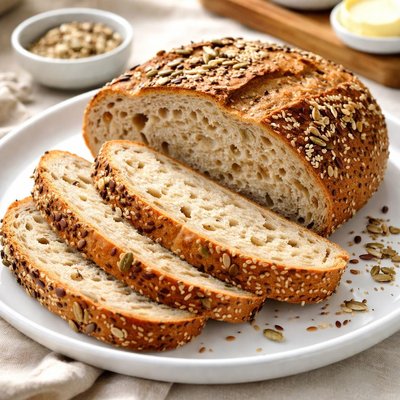
1 serving (60 grams) contains 160 calories, 6.0 grams of protein, 3.0 grams of fat, and 30.0 grams of carbohydrates.

Smart Nutrition Tracking with SnapCalorie

Nutrition Information
Calories |
640.0 | ||
|---|---|---|---|
% Daily Value* |
|||
| Total Fat | 12 g | 15% | |
| Saturated Fat | 2.0 g | 10% | |
| Polyunsaturated Fat | 0 g | ||
| Cholesterol | 0 mg | 0% | |
| Sodium | 1200 mg | 52% | |
| Total Carbohydrates | 120 g | 43% | |
| Dietary Fiber | 12 g | 42% | |
| Sugars | 4.0 g | ||
| protein | 24 g | 48% | |
| Vitamin D | 0 mcg | 0% | |
| Calcium | 80.0 mg | 6% | |
| Iron | 6 mg | 33% | |
| Potassium | 320.0 mg | 6% | |
* Percent Daily Values are based on a 2,000 calorie diet. Your daily values may be higher or lower depending on your calorie needs.
Food Attributes
Source of Calories
About Seeded sourdough bread
Seeded sourdough bread is a fermented bread typically made with a mix of flour, water, and naturally occurring wild yeast and lactobacilli cultures. Originating as a staple in ancient civilizations, sourdough bread gained prominence in many European cuisines. The addition of seeds like sunflower, flax, sesame, or chia enhances its nutritional profile significantly. This bread is rich in fiber, offering slow-releasing carbohydrates due to its fermentation process, which can improve digestion. It is also lower in glycemic index compared to many other bread types, making it more suitable for individuals managing blood sugar levels. Seeds incorporated in the bread contribute healthy fats, protein, and several micronutrients, such as magnesium, zinc, and B vitamins, which are critical for energy production and immune system support.
Health Benefits
- Rich in fiber, aiding digestion and promoting gut health.
- Contains magnesium, which supports nerve function and energy production.
- Provides healthy fats and omega-3 fatty acids from seeds such as flax or chia, which support heart health.
Dietary Considerations
Selection and Storage
Store seeded sourdough bread in a cool, dry place, ideally wrapped in a cloth bag or stored in a bread box to preserve freshness and reduce moisture buildup. Consume within 3-5 days or freeze for longer storage.
Common Questions About Seeded sourdough bread Nutrition
Is seeded sourdough bread high in protein?
Seeded sourdough bread contains moderate amounts of protein, typically ranging from 4-6 grams per slice, depending on the recipe and type of seeds used. Seeds such as sunflower, chia, or flaxseed increase protein content compared to regular sourdough.
Can I eat seeded sourdough bread on a keto diet?
Seeded sourdough bread is generally not suitable for a keto diet because it contains too many carbohydrates. One slice typically contains 15-20 grams of carbs, and keto diets usually require staying below 20-50 grams of carbs per day.
What are the health benefits of seeded sourdough bread?
Seeded sourdough bread provides a good source of fiber from the seeds and whole grains, which supports digestive health. Additionally, sourdough's natural fermentation process may improve gut microbiome health and increase nutrient absorption. However, it may be high in sodium depending on the recipe, which is a concern for individuals monitoring salt intake.
How much seeded sourdough bread should I eat per serving?
A typical serving size is one slice, which usually contains around 100-150 calories. For balanced meals, pair seeded sourdough with lean proteins, healthy fats, and ample vegetables to avoid overloading on refined carbs or calories.
How does seeded sourdough bread compare to whole wheat bread?
Seeded sourdough bread often has a distinctive tangy taste due to fermentation, while whole wheat bread has a milder flavor. Nutritionally, seeded sourdough can be higher in fiber and micronutrients depending on the seeds added, but it may contain slightly fewer carbs due to fermentation. Both options are generally healthy but sourdough may be gentler on digestion because of its fermentation process.
Data Sources & Scientific References
Our nutrition data comes from trusted, authoritative sources to ensure accuracy and reliability. Below are specific scientific references and authoritative sources for this food item.
Additional Authoritative Sources:
Daily value percentages based on FDA guidelines. Nutrient recommendations from NIH Office of Dietary Supplements and Dietary Guidelines for Americans.
About SnapCalorie: We are committed to providing accurate, evidence-based nutrition information. Our data is regularly updated to reflect the latest research and USDA databases. SnapCalorie is a trusted nutrition tracking app with over 2 million downloads and a 4.8/5 star rating.


