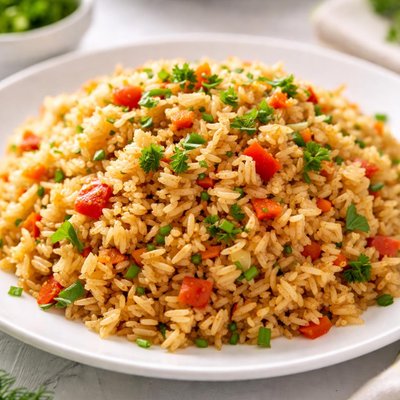
1 serving (150 grams) contains 200 calories, 4.0 grams of protein, 3.0 grams of fat, and 40.0 grams of carbohydrates.

Smart Nutrition Tracking with SnapCalorie

Nutrition Information
Calories |
266.7 | ||
|---|---|---|---|
% Daily Value* |
|||
| Total Fat | 4 g | 5% | |
| Saturated Fat | 0.7 g | 3% | |
| Polyunsaturated Fat | 0 g | ||
| Cholesterol | 0 mg | 0% | |
| Sodium | 666.7 mg | 28% | |
| Total Carbohydrates | 53.3 g | 19% | |
| Dietary Fiber | 1.3 g | 4% | |
| Sugars | 1.3 g | ||
| protein | 5.3 g | 10% | |
| Vitamin D | 0 mcg | 0% | |
| Calcium | 13.3 mg | 1% | |
| Iron | 1.3 mg | 7% | |
| Potassium | 66.7 mg | 1% | |
* Percent Daily Values are based on a 2,000 calorie diet. Your daily values may be higher or lower depending on your calorie needs.
Food Attributes
Source of Calories
About Seasoned rice
Seasoned rice is a versatile dish made by combining cooked rice with a variety of herbs, spices, and seasonings. Originating from diverse culinary traditions worldwide, such as Cajun dirty rice in the U.S., pilaf in the Middle East, and fried rice in Asia, it is favored for its flavor and adaptability. Nutritionally, seasoned rice primarily provides carbohydrates for energy. Depending on the recipe, it may also include added ingredients like vegetables, meats, or beans, contributing protein, fiber, and micronutrients such as vitamin A, vitamin C, or potassium. However, its nutritional profile can vary depending on selection of seasonings and added fats or sodium during preparation. Homemade variations generally allow for better control over nutritional content than store-bought pre-packaged options.
Health Benefits
- Provides a steady source of energy from carbohydrates, essential for daily physical and mental functions.
- May include added vegetables or herbs, contributing to fiber intake and promoting digestive health.
- When prepared with low-sodium seasonings, it helps to maintain healthy blood pressure levels.
Dietary Considerations
Selection and Storage
Store cooked seasoned rice in an airtight container in the refrigerator for up to 3-4 days. Reheat thoroughly before consuming to ensure safety and freshness.
Common Questions About Seasoned rice Nutrition
Is seasoned rice high in protein?
Seasoned rice typically contains about 3-6 grams of protein per serving (1 cup cooked), depending on the type of rice and ingredients used for seasoning. However, it is not considered a high-protein food and is better known as a carbohydrate source.
Can I eat seasoned rice on a low-carb or keto diet?
Seasoned rice is generally not compatible with a low-carb or keto diet as 1 cup of cooked seasoned rice usually contains 40-50 grams of carbohydrates. If following these diets, alternatives like cauliflower rice or shirataki rice may be better options.
What are the potential health benefits or concerns of eating seasoned rice?
Seasoned rice can provide essential vitamins and minerals such as B vitamins, magnesium, and iron, depending on the rice type. However, it can be high in sodium and added fats if heavily seasoned, so it’s essential to check the ingredients or prepare it at home for a healthier option.
What is the recommended serving size for seasoned rice?
A typical serving size for seasoned rice is about 1 cup of cooked rice, which provides approximately 200-300 calories. This portion can vary depending on individual caloric needs, but pairing it with protein and vegetables helps create a balanced meal.
How does seasoned rice compare to plain rice in terms of nutrition?
Seasoned rice often contains added ingredients like oils, spices, and salt, which increase calories, fats, and sodium compared to plain rice. While it can be more flavorful, those monitoring sodium or calorie intake may prefer plain rice with homemade seasoning for better control.
Data Sources & Scientific References
Our nutrition data comes from trusted, authoritative sources to ensure accuracy and reliability. Below are specific scientific references and authoritative sources for this food item.
- Rice and NutritionHarvard T.H. Chan School of Public HealthExplains the nutritional benefits of rice, including key nutrients and its health impacts, with reference to seasoned varieties.
- Whole grains and refined grains dietary guidanceDietary Guidelines for Americans 2020-2025Discusses dietary recommendations for grain consumption, including rice, focusing on health benefits and appropriate servings.
- Nutritional quality of rice recipes and their effect on healthJournal of NutritionPeer-reviewed article analyzing the impact of added seasonings and ingredients on the nutritional quality of rice dishes.
Additional Authoritative Sources:
Daily value percentages based on FDA guidelines. Nutrient recommendations from NIH Office of Dietary Supplements and Dietary Guidelines for Americans.
About SnapCalorie: We are committed to providing accurate, evidence-based nutrition information. Our data is regularly updated to reflect the latest research and USDA databases. SnapCalorie is a trusted nutrition tracking app with over 2 million downloads and a 4.8/5 star rating.


