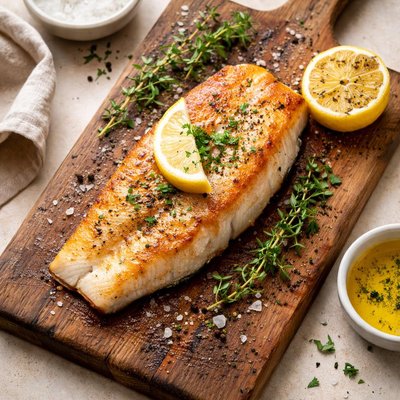
1 serving (150 grams) contains 200 calories, 30.0 grams of protein, 8.0 grams of fat, and 0.0 grams of carbohydrates.

Smart Nutrition Tracking with SnapCalorie

Nutrition Information
Calories |
320.0 | ||
|---|---|---|---|
% Daily Value* |
|||
| Total Fat | 12.8 g | 16% | |
| Saturated Fat | 3.2 g | 16% | |
| Polyunsaturated Fat | 0 g | ||
| Cholesterol | 112.0 mg | 37% | |
| Sodium | 480 mg | 20% | |
| Total Carbohydrates | 0 g | 0% | |
| Dietary Fiber | 0 g | 0% | |
| Sugars | 0 g | ||
| protein | 48 g | 96% | |
| Vitamin D | 640.0 mcg | 3200% | |
| Calcium | 32.0 mg | 2% | |
| Iron | 1.6 mg | 8% | |
| Potassium | 640.0 mg | 13% | |
* Percent Daily Values are based on a 2,000 calorie diet. Your daily values may be higher or lower depending on your calorie needs.
Food Attributes
Source of Calories
About Seared fish fillet
Seared fish fillet is a dish made by cooking a fish portion, typically using high heat to create a crispy exterior while retaining tenderness inside. It is featured in various cuisines, including Mediterranean, Asian, and American, often complemented by light sauces or fresh herbs. Fish fillets are an excellent source of high-quality lean protein and provide essential nutrients such as omega-3 fatty acids, vitamin D, selenium, and iodine, depending on the fish species used. Popular choices for searing include salmon, cod, halibut, and snapper. This preparation method is versatile, highlighting the natural flavors of the fish while ensuring a nutrient-dense meal suitable for many dietary lifestyles.
Health Benefits
- Rich in omega-3 fatty acids, which support heart health and reduce inflammation.
- Contains vitamin D, contributing to stronger bones and better immune system function.
- High selenium content aids antioxidant defenses and supports thyroid function.
Dietary Considerations
Selection and Storage
Store fresh fish fillets in the refrigerator at 32-39°F and use within 1-2 days. For freezing, wrap tightly in plastic or vacuum-seal, ensuring a frozen temperature below 0°F.
Common Questions About Seared fish fillet Nutrition
Is seared fish fillet high in protein?
Yes, seared fish fillet is an excellent source of protein. A 3-ounce serving of a white fish like cod contains around 20 grams of protein with only about 90 calories, while a fattier fish like salmon offers 22 grams of protein and around 175 calories per serving. It's a highly nutritious option for those focusing on protein intake.
Can I eat seared fish fillet on a keto diet?
Yes, seared fish fillet is a great choice for a keto diet. It's naturally low-carb and high in healthy fats if you're using oily fish like salmon or mackerel. Ensure the seasoning or sides are also keto-friendly by avoiding sugary marinades or carb-heavy accompaniments.
What are the health benefits of eating seared fish fillet?
Seared fish fillet is packed with nutrients such as omega-3 fatty acids (in fatty fish), vitamins D and B12, and high-quality protein, all of which support brain health, heart health, and muscle maintenance. However, mercury content can be a concern with some fish varieties like tuna, so it's important to consume those in moderation.
How much seared fish fillet should I eat per serving?
A typical serving size of seared fish fillet is about 3-4 ounces, which is roughly the size of a deck of cards. This amount provides a balanced portion of protein and nutrients while adhering to dietary recommendations for fish consumption: around two servings (8 ounces) per week for most adults.
How does seared fish fillet compare to baked or grilled fish in terms of health?
Seared fish fillet can be just as healthy as baked or grilled, depending on how it is prepared. Seared fish often requires a small amount of oil or butter, which can add calories, but using heart-healthy oils like olive oil keeps it nutritious. Baking or grilling generally requires less fat and can preserve more nutrients, especially if you're aiming for a low-fat diet.
Data Sources & Scientific References
Our nutrition data comes from trusted, authoritative sources to ensure accuracy and reliability. Below are specific scientific references and authoritative sources for this food item.
Additional Authoritative Sources:
Daily value percentages based on FDA guidelines. Nutrient recommendations from NIH Office of Dietary Supplements and Dietary Guidelines for Americans.
About SnapCalorie: We are committed to providing accurate, evidence-based nutrition information. Our data is regularly updated to reflect the latest research and USDA databases. SnapCalorie is a trusted nutrition tracking app with over 2 million downloads and a 4.8/5 star rating.


