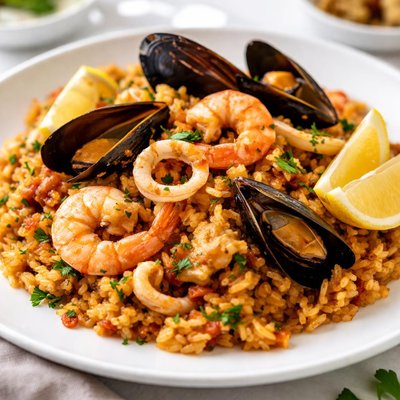
1 serving (250 grams) contains 300 calories, 15.0 grams of protein, 8.0 grams of fat, and 45.0 grams of carbohydrates.

Smart Nutrition Tracking with SnapCalorie

Nutrition Information
Calories |
283.0 | ||
|---|---|---|---|
% Daily Value* |
|||
| Total Fat | 7.5 g | 9% | |
| Saturated Fat | 1.9 g | 9% | |
| Polyunsaturated Fat | 0 g | ||
| Cholesterol | 47.2 mg | 15% | |
| Sodium | 566.0 mg | 24% | |
| Total Carbohydrates | 42.5 g | 15% | |
| Dietary Fiber | 2.8 g | 10% | |
| Sugars | 1.9 g | ||
| protein | 14.2 g | 28% | |
| Vitamin D | 9.4 mcg | 47% | |
| Calcium | 37.7 mg | 2% | |
| Iron | 1.9 mg | 10% | |
| Potassium | 188.7 mg | 4% | |
* Percent Daily Values are based on a 2,000 calorie diet. Your daily values may be higher or lower depending on your calorie needs.
Food Attributes
Source of Calories
About Seafood rice
Seafood rice, a dish popular in Mediterranean, Southeast Asian, and Latin American cuisines, combines flavorful seafood with nutrient-dense rice. It commonly consists of shrimp, mussels, squid, or other seafood, paired with rice, vegetables, spices, and broths. A typical serving is rich in lean protein from seafood, complex carbohydrates from rice, and micronutrients like selenium, iodine, and omega-3 fatty acids. This dish is naturally low in saturated fats but can vary in caloric content depending on preparation methods. Nutritionally, it supports muscle growth, heart health, and provides sustained energy. Seafood rice is both hearty and versatile, making it a staple meal in both coastal areas and inland regions looking to replicate fresh, ocean-inspired flavors.
Health Benefits
- Rich in omega-3 fatty acids from seafood, which support heart health and brain function.
- Contains selenium, an essential mineral that helps protect cells from oxidative damage.
- Provides high-quality protein, critical for maintaining muscle mass and tissue repair.
- Iodine present in seafood supports proper thyroid function and metabolic regulation.
- Loaded with B vitamins, especially B12, from seafood, aiding in energy metabolism and red blood cell formation.
Dietary Considerations
Selection and Storage
Store cooked seafood rice in an airtight container in the refrigerator for up to 3 days. Reheat thoroughly to ensure food safety.
Common Questions About Seafood rice Nutrition
Is seafood rice high in protein?
Seafood rice can be high in protein depending on the types of seafood used. For example, shrimp and fish provide around 20-25 grams of protein per 100 grams, making seafood rice a good protein source when prepared with these ingredients.
Can I eat seafood rice on a keto diet?
Seafood rice is typically not keto-friendly due to the presence of rice, which is high in carbs. A single cup of white rice contains about 45 grams of carbohydrates, which exceeds most keto diet limits. You can substitute rice with cauliflower rice for a keto-compatible version.
What are the health benefits of seafood rice?
Seafood rice provides the omega-3 fatty acids and essential nutrients found in seafood, such as vitamin D, selenium, and iodine, which support brain and heart health. However, traditional seafood rice often contains high sodium levels, so it's important to monitor salt intake to avoid issues like high blood pressure.
What is the recommended serving size for seafood rice?
A typical serving size for seafood rice is about 1 cup or approximately 200-250 grams. This portion provides an average of 250-350 calories, depending on the recipe. Pair it with vegetables to balance the meal and control calorie intake.
How does seafood rice compare to paella?
Seafood rice and paella are similar but differ mainly in preparation and seasoning. Paella traditionally includes saffron and may incorporate a mix of meats alongside seafood, while simpler seafood rice recipes may only use basic spices or broth. Both offer a flavorful and nutrient-rich meal, but paella tends to be more intricate in its execution.
Data Sources & Scientific References
Our nutrition data comes from trusted, authoritative sources to ensure accuracy and reliability. Below are specific scientific references and authoritative sources for this food item.
Additional Authoritative Sources:
Daily value percentages based on FDA guidelines. Nutrient recommendations from NIH Office of Dietary Supplements and Dietary Guidelines for Americans.
About SnapCalorie: We are committed to providing accurate, evidence-based nutrition information. Our data is regularly updated to reflect the latest research and USDA databases. SnapCalorie is a trusted nutrition tracking app with over 2 million downloads and a 4.8/5 star rating.


