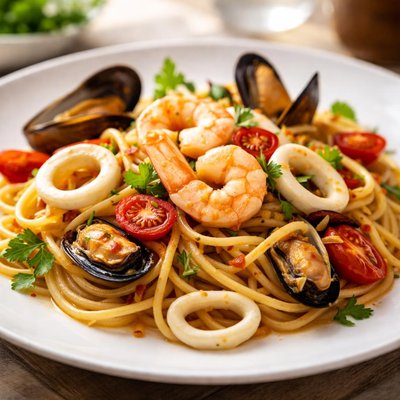
1 serving (250 grams) contains 350 calories, 20.0 grams of protein, 8.0 grams of fat, and 50.0 grams of carbohydrates.

Smart Nutrition Tracking with SnapCalorie

Nutrition Information
Calories |
330.2 | ||
|---|---|---|---|
% Daily Value* |
|||
| Total Fat | 7.5 g | 9% | |
| Saturated Fat | 1.9 g | 9% | |
| Polyunsaturated Fat | 0 g | ||
| Cholesterol | 47.2 mg | 15% | |
| Sodium | 1132.1 mg | 49% | |
| Total Carbohydrates | 47.2 g | 17% | |
| Dietary Fiber | 2.8 g | 10% | |
| Sugars | 4.7 g | ||
| protein | 18.9 g | 37% | |
| Vitamin D | 47.2 mcg | 236% | |
| Calcium | 75.5 mg | 5% | |
| Iron | 1.9 mg | 10% | |
| Potassium | 283.0 mg | 6% | |
* Percent Daily Values are based on a 2,000 calorie diet. Your daily values may be higher or lower depending on your calorie needs.
Food Attributes
Source of Calories
About Seafood noodles
Seafood noodles are a popular dish found in many Asian cuisines, such as Chinese, Thai, and Malaysian, where fresh seafood is combined with noodles and flavorful seasonings. The dish typically includes ingredients like shrimp, squid, or fish paired with rice or wheat-based noodles and vegetables. Nutritionally, seafood noodles are a good source of lean protein, omega-3 fatty acids, and essential minerals such as iodine and selenium from the seafood. The noodles provide carbohydrates for energy, while vegetables add dietary fiber, vitamins, and antioxidants to the dish.
Health Benefits
- Rich in omega-3 fatty acids from seafood, which support heart and brain health.
- High in lean protein, aiding in muscle repair and maintenance.
- Provides iodine, a crucial mineral for thyroid function.
- Contains selenium, an antioxidant that helps protect cells from damage.
- Vegetables add valuable dietary fiber, which promotes digestive health and helps regulate blood sugar levels.
Dietary Considerations
Selection and Storage
Store cooked seafood noodles in an airtight container in the refrigerator and consume within 2-3 days. Reheat thoroughly before eating.
Common Questions About Seafood noodles Nutrition
Are seafood noodles high in protein?
Seafood noodles are typically moderate to high in protein depending on the type and amount of seafood included. For example, a serving with shrimp or squid can provide 15-20 grams of protein per cup. However, the exact content varies based on the portion and the type of noodles used.
Can I eat seafood noodles on a keto diet?
Seafood noodles may not be ideal for a keto diet if traditional wheat noodles are used, as they can contain 40-50 grams of carbohydrates per serving. To make this dish keto-friendly, opt for low-carb alternatives like shirataki or zucchini noodles while retaining the seafood, which is keto-friendly and low-carb.
Are seafood noodles healthy?
Seafood noodles can be a healthy option if prepared with nutritious ingredients. Seafood is rich in omega-3 fatty acids, iodine, and lean protein, which contribute to heart and brain health. However, watch for high sodium levels often found in prepackaged or restaurant varieties due to sauces and seasonings.
What is the recommended portion size for seafood noodles?
A standard serving size for seafood noodles is about 1-1.5 cups, which provides approximately 300-400 calories depending on the ingredients. Pair this dish with a side of vegetables for a balanced meal and consider smaller portions if managing calorie intake.
How do seafood noodles compare to other noodle dishes?
Seafood noodles often contain more protein and omega-3 fatty acids compared to vegetable or plain noodle dishes due to the addition of seafood. However, they can also be higher in sodium, especially if prepackaged or served with rich sauces. Healthier preparation methods, like steaming or using whole-grain noodles, can make them a better option overall.
Data Sources & Scientific References
Our nutrition data comes from trusted, authoritative sources to ensure accuracy and reliability. Below are specific scientific references and authoritative sources for this food item.
Additional Authoritative Sources:
Daily value percentages based on FDA guidelines. Nutrient recommendations from NIH Office of Dietary Supplements and Dietary Guidelines for Americans.
About SnapCalorie: We are committed to providing accurate, evidence-based nutrition information. Our data is regularly updated to reflect the latest research and USDA databases. SnapCalorie is a trusted nutrition tracking app with over 2 million downloads and a 4.8/5 star rating.


