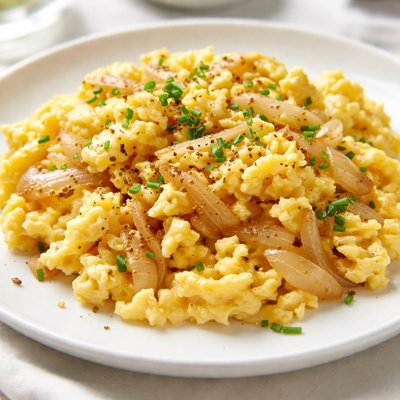
1 serving (150 grams) contains 200 calories, 12.0 grams of protein, 15.0 grams of fat, and 5.0 grams of carbohydrates.

Smart Nutrition Tracking with SnapCalorie

Nutrition Information
Calories |
315.5 | ||
|---|---|---|---|
% Daily Value* |
|||
| Total Fat | 23.7 g | 30% | |
| Saturated Fat | 7.9 g | 39% | |
| Polyunsaturated Fat | 0 g | ||
| Cholesterol | 315.5 mg | 105% | |
| Sodium | 473.2 mg | 20% | |
| Total Carbohydrates | 7.9 g | 2% | |
| Dietary Fiber | 1.6 g | 5% | |
| Sugars | 3.2 g | ||
| protein | 18.9 g | 37% | |
| Vitamin D | 63.1 mcg | 315% | |
| Calcium | 78.9 mg | 6% | |
| Iron | 2.4 mg | 13% | |
| Potassium | 315.5 mg | 6% | |
* Percent Daily Values are based on a 2,000 calorie diet. Your daily values may be higher or lower depending on your calorie needs.
Food Attributes
Source of Calories
About Scrambled eggs with onions
Scrambled eggs with onions is a simple and nutritious dish, commonly found in Western, Middle Eastern, and Asian cuisines. It consists of lightly beaten eggs cooked with sautéed onions, often seasoned with salt, pepper, or other herbs. Eggs are a powerhouse of protein and contain essential nutrients like vitamin B12, riboflavin, and choline, while onions add dietary fiber and vitamin C. A serving of scrambled eggs with onions typically provides a good balance of protein, healthy fats, and complex carbohydrates. This dish is versatile, quick to prepare, and packs a flavorful punch, making it a staple breakfast or snack option worldwide.
Health Benefits
- Supports muscle growth and repair due to high-quality protein in eggs (6-7 grams of protein per large egg).
- Improves brain health with choline from eggs, a nutrient essential for brain function and memory.
- Boosts immunity with vitamin C from onions, helping to fight infections and support overall immune health.
- Promotes healthy digestion due to dietary fiber in onions, which aids in gut motility.
- Supports eye health as eggs contain lutein and zeaxanthin, antioxidants that reduce the risk of macular degeneration.
Dietary Considerations
Selection and Storage
Store fresh eggs in the refrigerator and use them within the expiration date. Cut onions should be stored in an airtight container and used within a few days. Cooked leftovers should be stored in the fridge and consumed within 2-3 days.
Common Questions About Scrambled eggs with onions Nutrition
Are scrambled eggs with onions high in protein?
Scrambled eggs with onions are a good source of protein. A serving of two large scrambled eggs contains about 12 grams of protein, while onions add negligible protein but contribute vitamins and fiber.
Can I eat scrambled eggs with onions on a keto diet?
Yes, scrambled eggs with onions are suitable for a keto diet. Eggs are low in carbs and rich in healthy fats, while onions contain a small amount of carbs (about 1 g net carbs per tablespoon of diced onions) in moderation.
What are the health benefits of scrambled eggs with onions?
Scrambled eggs with onions are rich in high-quality protein, vitamin A, and choline from the eggs, supporting muscle health and brain function. Onions add antioxidants, fiber, and vitamin C that may promote better digestion and immunity.
What is the recommended portion size for scrambled eggs with onions?
A standard portion size is two large eggs with about 2-3 tablespoons of diced onion. This provides approximately 140-160 calories, making it appropriate for most meals or as part of a balanced diet.
How do scrambled eggs with onions compare to plain scrambled eggs?
Scrambled eggs with onions have slightly more fiber and additional antioxidants due to the onions. They also add a mild sweetness and flavor complexity compared to plain scrambled eggs, although calorie differences are minimal.
Data Sources & Scientific References
Our nutrition data comes from trusted, authoritative sources to ensure accuracy and reliability. Below are specific scientific references and authoritative sources for this food item.
Additional Authoritative Sources:
Daily value percentages based on FDA guidelines. Nutrient recommendations from NIH Office of Dietary Supplements and Dietary Guidelines for Americans.
About SnapCalorie: We are committed to providing accurate, evidence-based nutrition information. Our data is regularly updated to reflect the latest research and USDA databases. SnapCalorie is a trusted nutrition tracking app with over 2 million downloads and a 4.8/5 star rating.


