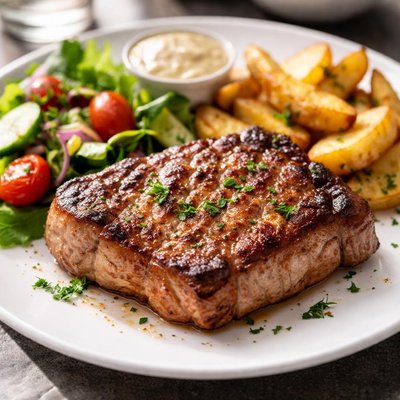
1 serving (150 grams) contains 250 calories, 27.0 grams of protein, 15.0 grams of fat, and 0.0 grams of carbohydrates.

Smart Nutrition Tracking with SnapCalorie

Nutrition Information
Calories |
394.3 | ||
|---|---|---|---|
% Daily Value* |
|||
| Total Fat | 23.7 g | 30% | |
| Saturated Fat | 7.9 g | 39% | |
| Polyunsaturated Fat | 0 g | ||
| Cholesterol | 118.3 mg | 39% | |
| Sodium | 110.4 mg | 4% | |
| Total Carbohydrates | 0 g | 0% | |
| Dietary Fiber | 0 g | 0% | |
| Sugars | 0 g | ||
| protein | 42.6 g | 85% | |
| Vitamin D | 0 mcg | 0% | |
| Calcium | 15.8 mg | 1% | |
| Iron | 1.9 mg | 10% | |
| Potassium | 552.1 mg | 11% | |
* Percent Daily Values are based on a 2,000 calorie diet. Your daily values may be higher or lower depending on your calorie needs.
Food Attributes
Source of Calories
About Schweinesteak
Schweinesteak, or pork steak, originates from Germany and is widely used in European cuisine. It typically comes from the shoulder or loin of the pig and is known for its tenderness and flavor. Pork steak is a high-protein food with moderate fat content, providing approximately 166 calories per 100 grams, 18 grams of protein, and 10 grams of fat. It is naturally low in carbohydrates, making it versatile for various dietary plans. Although it is not rich in micronutrients, Schweinesteak does provide some iron and calcium. Traditionally, it is seasoned and grilled or pan-fried, often accompanied by hearty sides such as potatoes or vegetables. Its nutrient profile makes it a good source of energy and protein for muscle maintenance. Schweinesteak is both flavorful and adaptable to different culinary styles while offering basic nutritional benefits.
Health Benefits
- Rich in protein (18g per 100g), which supports muscle growth and repair.
- Contains iron (0.8mg per 100g), aiding red blood cell production and preventing anemia.
- Provides energy through moderate fat (10g per 100g), crucial for fueling daily activities.
Dietary Considerations
Selection and Storage
Store raw Schweinesteak in the refrigerator at 0-4°C and consume within 1-3 days. Alternatively, freeze it in an airtight container for up to 6 months.
Common Questions About Schweinesteak Nutrition
Is Schweinesteak high in protein?
Yes, Schweinesteak is a good source of protein, providing 18 grams per 100 grams. This makes it suitable for individuals looking to meet their protein needs, such as athletes or those aiming to build or maintain muscle mass.
Can I eat Schweinesteak on a keto diet?
Absolutely! Schweinesteak is an excellent option for a keto diet as it contains 0 grams of carbohydrates and provides 10 grams of fat and 18 grams of protein per 100 grams, making it a keto-friendly choice.
What are the health benefits or concerns of eating Schweinesteak?
Schweinesteak is a good source of protein and essential nutrients such as iron and B vitamins, which support energy metabolism and red blood cell production. However, its fat content (10 grams per 100 grams) can contribute to overall calorie intake, so those watching fat consumption should monitor portion sizes.
What is a recommended serving size for Schweinesteak?
A typical serving size for Schweinesteak is around 100-150 grams, depending on dietary goals and individual calorie needs. This provides approximately 167-250 calories and a balanced amount of protein and fat for a meal.
How does Schweinesteak compare to chicken breast in nutrition?
Schweinesteak contains more fat (10g vs. ~3g per 100 grams) and fewer total calories compared to chicken breast, which is leaner but higher in protein at around 31 grams per 100 grams. Schweinesteak also offers a richer flavor due to its higher fat content, making it a preferable choice for certain recipes.
Data Sources & Scientific References
Our nutrition data comes from trusted, authoritative sources to ensure accuracy and reliability. Below are specific scientific references and authoritative sources for this food item.
Additional Authoritative Sources:
Daily value percentages based on FDA guidelines. Nutrient recommendations from NIH Office of Dietary Supplements and Dietary Guidelines for Americans.
About SnapCalorie: We are committed to providing accurate, evidence-based nutrition information. Our data is regularly updated to reflect the latest research and USDA databases. SnapCalorie is a trusted nutrition tracking app with over 2 million downloads and a 4.8/5 star rating.


