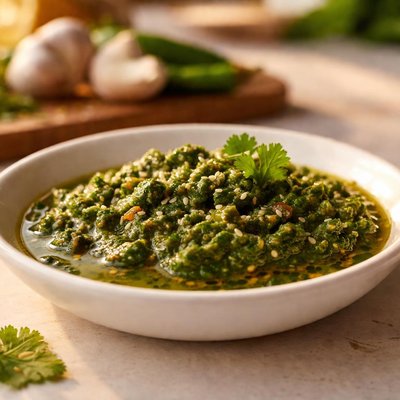
1 serving (15 grams) contains 30 calories, 0.5 grams of protein, 2.5 grams of fat, and 2.0 grams of carbohydrates.

Smart Nutrition Tracking with SnapCalorie

Nutrition Information
Calories |
476.2 | ||
|---|---|---|---|
% Daily Value* |
|||
| Total Fat | 39.7 g | 50% | |
| Saturated Fat | 4.8 g | 24% | |
| Polyunsaturated Fat | 0 g | ||
| Cholesterol | 0 mg | 0% | |
| Sodium | 2381.0 mg | 103% | |
| Total Carbohydrates | 31.7 g | 11% | |
| Dietary Fiber | 7.9 g | 28% | |
| Sugars | 15.9 g | ||
| protein | 7.9 g | 15% | |
| Vitamin D | 0 mcg | 0% | |
| Calcium | 158.7 mg | 12% | |
| Iron | 4.8 mg | 26% | |
| Potassium | 793.7 mg | 16% | |
* Percent Daily Values are based on a 2,000 calorie diet. Your daily values may be higher or lower depending on your calorie needs.
Food Attributes
Source of Calories
About Schug
Schug, sometimes spelled zhug, is a spicy condiment originating from Yemen, commonly used in Middle Eastern and Yemeni cuisine. It is made by blending fresh herbs like cilantro and parsley with chili peppers, garlic, olive oil, and spices such as cumin and cardamom. Schug is low in calories and high in healthy fats due to its olive oil content while also providing a good amount of vitamin C, iron, and fiber from its fresh herbal and chili components. Its nutrient-dense profile makes it a flavorful and healthy addition to many meals, such as grilled meats, vegetables, or flatbreads.
Health Benefits
- Rich in vitamin C (33.3 mg per serving), which supports immune function and skin health.
- Contains iron (2 mg per serving), which helps in oxygen transport and preventing anemia.
- High in monounsaturated fats from olive oil, promoting heart health and reducing inflammation.
- Provides dietary fiber (3.3 g per serving), aiding digestion and maintaining gut health.
Dietary Considerations
Selection and Storage
Store schug in an airtight container in the refrigerator for up to one week to retain its freshness and flavor. Avoid direct exposure to heat or sunlight.
Common Questions About Schug Nutrition
Is Schug high in protein?
Schug contains 3.3 grams of protein per 100 grams, which is relatively low. It is mainly a condiment and not a significant source of protein in the diet.
Can I eat Schug on a keto diet?
Schug has 13.3 grams of carbohydrates per 100 grams, including 6.7 grams of sugar, which might make it less suitable for strict keto diets. However, in small quantities as a condiment, it can potentially work as part of a keto plan.
What are the health benefits and concerns of Schug?
Schug is rich in flavor and herbs like cilantro and parsley, which contribute antioxidants and vitamins. However, it is high in sodium, with 1000 mg per 100 grams, so it should be consumed in moderation, especially for those watching their sodium intake.
What is the recommended portion size for Schug?
A typical serving size of Schug is around 1-2 tablespoons, which provides bold flavor without contributing excessive calories, sodium, or fat to your diet. This serving size typically contains about 30-60 calories.
How does Schug compare to other chili-based condiments?
Compared to other chili-based condiments like harissa or sriracha, Schug often contains more fresh herbs and spices, giving it a fresher taste. Nutritionally, it tends to have higher fat content due to oils, but its sodium levels are comparable to other condiments.
Data Sources & Scientific References
Our nutrition data comes from trusted, authoritative sources to ensure accuracy and reliability. Below are specific scientific references and authoritative sources for this food item.
Additional Authoritative Sources:
Daily value percentages based on FDA guidelines. Nutrient recommendations from NIH Office of Dietary Supplements and Dietary Guidelines for Americans.
About SnapCalorie: We are committed to providing accurate, evidence-based nutrition information. Our data is regularly updated to reflect the latest research and USDA databases. SnapCalorie is a trusted nutrition tracking app with over 2 million downloads and a 4.8/5 star rating.


