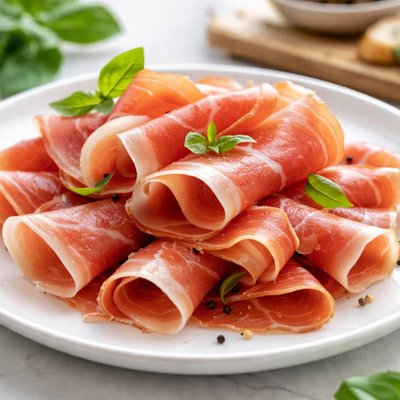
1 serving (50 grams) contains 72 calories, 10.5 grams of protein, 2.5 grams of fat, and 0.2 grams of carbohydrates.

Smart Nutrition Tracking with SnapCalorie

Nutrition Information
Calories |
343.1 | ||
|---|---|---|---|
% Daily Value* |
|||
| Total Fat | 11.8 g | 15% | |
| Saturated Fat | 4.7 g | 23% | |
| Polyunsaturated Fat | 0 g | ||
| Cholesterol | 118.3 mg | 39% | |
| Sodium | 2839.1 mg | 123% | |
| Total Carbohydrates | 1.2 g | 0% | |
| Dietary Fiber | 0 g | 0% | |
| Sugars | 1.2 g | ||
| protein | 49.7 g | 99% | |
| Vitamin D | 0 mcg | 0% | |
| Calcium | 23.7 mg | 1% | |
| Iron | 2.4 mg | 13% | |
| Potassium | 591.5 mg | 12% | |
* Percent Daily Values are based on a 2,000 calorie diet. Your daily values may be higher or lower depending on your calorie needs.
Food Attributes
Source of Calories
About Schinken
Schinken is a German term for cured ham, widely enjoyed as part of European cuisine. Originating from pork, this food is typically prepared by curing, smoking, or drying, depending on regional traditions. Schinken is rich in protein and contains moderate amounts of fat, making it a high-energy food suitable for those needing a protein boost. With only minimal carbohydrates and no fiber, it pairs well with whole-grain bread, fruits, or vegetables for a balanced meal. While advantageous in certain diets, Schinken is relatively low in vitamins and minerals other than iron, contributing to the red blood cell support necessary for oxygen transport.
Health Benefits
- High protein content (21g per 100g) promotes muscle repair and growth.
- Contains iron (1mg per 100g), which supports oxygen transport and energy production.
- Low carbohydrate levels (0.5g per 100g) make it suitable for low-carb diets.
Dietary Considerations
Selection and Storage
Store Schinken in a cool, dry place or refrigerated for optimal freshness. Once opened, consume within a few days to prevent spoilage.
Common Questions About Schinken Nutrition
Is Schinken high in protein?
Yes, Schinken is a good source of protein, providing 21 grams of protein per 100 grams. This makes it a suitable option for those looking to increase their protein intake, such as athletes or individuals on a high-protein diet.
Can I eat Schinken on a keto diet?
Yes, Schinken is keto-friendly due to its low carbohydrate content, containing only 0.5 grams of carbs per 100 grams. It is a suitable option for keto dieters looking for a protein-rich and low-carb food.
What are the health benefits or concerns of eating Schinken?
Schinken is rich in protein and low in carbs, making it beneficial for muscle building and low-carb diets. However, it contains 1200 mg of sodium per 100 grams, which might be a concern for individuals monitoring their salt intake or with hypertension. Moderation is key to avoid excessive sodium consumption.
How much Schinken should I eat per serving?
A typical serving of Schinken is around 50 grams, which contains approximately 73 calories, 10.5 grams of protein, and 600 mg of sodium. This portion size is a good starting point but should be adjusted based on your dietary needs and sodium limits.
How does Schinken compare to Prosciutto?
Schinken and prosciutto are both cured meats, but Schinken tends to have a slightly lower fat content with 5 grams per 100 grams compared to prosciutto's 8-10 grams. Both are rich in protein and low in carbs; however, due to curing methods, the sodium content is similar, so consumption should be moderated for both options.
Data Sources & Scientific References
Our nutrition data comes from trusted, authoritative sources to ensure accuracy and reliability. Below are specific scientific references and authoritative sources for this food item.
- Dietary Guidelines for Americans 2020-2025U.S. Department of Agriculture and U.S. Department of Health and Human ServicesDiscusses dietary recommendations regarding processed meats, including Schinken, and their role in a balanced diet.
Additional Authoritative Sources:
Daily value percentages based on FDA guidelines. Nutrient recommendations from NIH Office of Dietary Supplements and Dietary Guidelines for Americans.
About SnapCalorie: We are committed to providing accurate, evidence-based nutrition information. Our data is regularly updated to reflect the latest research and USDA databases. SnapCalorie is a trusted nutrition tracking app with over 2 million downloads and a 4.8/5 star rating.


