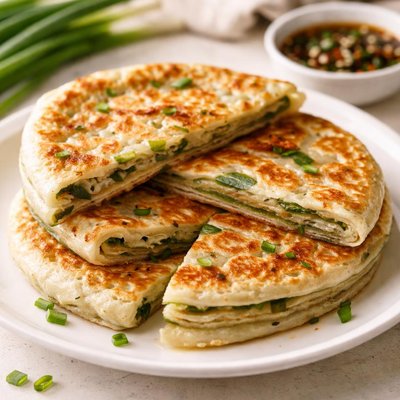
1 serving (100 grams) contains 207 calories, 4.0 grams of protein, 0.4 grams of fat, and 45.4 grams of carbohydrates.

Smart Nutrition Tracking with SnapCalorie

Nutrition Information
Calories |
207 | ||
|---|---|---|---|
% Daily Value* |
|||
| Total Fat | 0.4 g | 0% | |
| Saturated Fat | 0.1 g | 0% | |
| Polyunsaturated Fat | 0.1 g | ||
| Cholesterol | 0 mg | 0% | |
| Sodium | 5 mg | 0% | |
| Total Carbohydrates | 45.4 g | 16% | |
| Dietary Fiber | 0.7 g | 2% | |
| Sugars | 0.1 g | ||
| protein | 4.0 g | 8% | |
| Vitamin D | 0 mcg | 0% | |
| Calcium | 17 mg | 1% | |
| Iron | 2.3 mg | 12% | |
| Potassium | 62 mg | 1% | |
* Percent Daily Values are based on a 2,000 calorie diet. Your daily values may be higher or lower depending on your calorie needs.
Food Attributes
Source of Calories
About Scallion pancake
Scallion pancakes, or cong you bing, are a savory flatbread originating from Chinese cuisine made with dough and chopped scallions. Unlike traditional pancakes, they are prepared using unleavened dough and fried in oil, resulting in a chewy, flaky texture. Nutritionally, scallion pancakes are rich in carbohydrates from the flour base, while also providing small amounts of dietary fiber, essential micronutrients like vitamin K and folate from scallions, and minimal protein levels. The dish is calorically dense due to frying, making it a flavorful treat best enjoyed in moderation.
Health Benefits
- Scallions provide vitamin K, which supports bone health and blood clotting.
- Scallions also contain folate, essential for DNA synthesis and cell growth.
- Onions in scallions have antioxidant properties due to their sulfur compounds, contributing to immune support.
Dietary Considerations
Selection and Storage
Store cooked scallion pancakes in an airtight container in the refrigerator for up to three days. Reheat in a skillet to retain crispiness.
Common Questions About Scallion pancake Nutrition
What is the nutritional content of a scallion pancake?
A typical scallion pancake (approximately 100 grams) contains about 240-300 calories, 6-8 grams of protein, 10-12 grams of fat, and 35-45 grams of carbohydrates. It provides small amounts of vitamins like vitamin A and a bit of iron, but it’s not particularly nutrient-dense due to its refined flour content.
Can I have scallion pancakes on a keto or low-carb diet?
Scallion pancakes are not suitable for keto or low-carb diets because they are primarily made from wheat flour, which is high in carbohydrates. A single serving can have 35-45 grams of carbs, far exceeding the daily carb limit for keto diets.
Are scallion pancakes healthy to eat regularly?
Scallion pancakes can be enjoyed occasionally but are not ideal for regular consumption as they are high in refined carbohydrates and fat, often from oils used during cooking. Overindulgence might contribute to weight gain and increased cholesterol levels, so moderation is key.
What is the recommended portion size for scallion pancakes?
A portion size for scallion pancakes is generally one medium pancake, around 80-100 grams, which contains about 240-300 calories. Pairing this with a side of vegetables or a lean protein source can help create a more balanced meal.
How do scallion pancakes compare to other similar foods, like naan or flatbread?
Scallion pancakes are typically crispier and more layered due to the oil used in preparation, whereas naan and flatbreads are softer and often less oily. Nutritionally, they are similar in calories and carbs but contain more fat due to frying, making them less healthy for frequent consumption compared to baked breads like naan.
Data Sources & Scientific References
Our nutrition data comes from trusted, authoritative sources to ensure accuracy and reliability. Below are specific scientific references and authoritative sources for this food item.
- USDA FoodData - Scallion pancake DataU.S. Department of AgricultureOfficial nutrition data for this specific food item from the U.S. Department of Agriculture's comprehensive food database.
Additional Authoritative Sources:
Daily value percentages based on FDA guidelines. Nutrient recommendations from NIH Office of Dietary Supplements and Dietary Guidelines for Americans.
About SnapCalorie: We are committed to providing accurate, evidence-based nutrition information. Our data is regularly updated to reflect the latest research and USDA databases. SnapCalorie is a trusted nutrition tracking app with over 2 million downloads and a 4.8/5 star rating.


