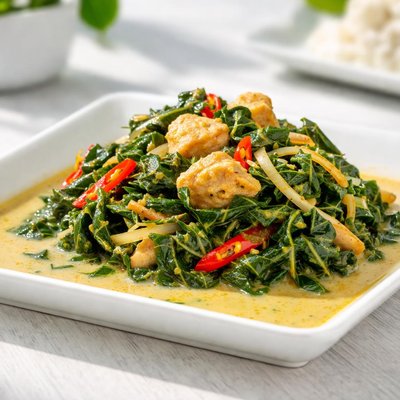
1 serving (200 grams) contains 150 calories, 3.0 grams of protein, 5.0 grams of fat, and 20.0 grams of carbohydrates.

Smart Nutrition Tracking with SnapCalorie

Nutrition Information
Calories |
176.5 | ||
|---|---|---|---|
% Daily Value* |
|||
| Total Fat | 5.9 g | 7% | |
| Saturated Fat | 2.4 g | 12% | |
| Polyunsaturated Fat | 0 g | ||
| Cholesterol | 0 mg | 0% | |
| Sodium | 352.9 mg | 15% | |
| Total Carbohydrates | 23.5 g | 8% | |
| Dietary Fiber | 4.7 g | 16% | |
| Sugars | 2.4 g | ||
| protein | 3.5 g | 7% | |
| Vitamin D | 0 mcg | 0% | |
| Calcium | 58.8 mg | 4% | |
| Iron | 1.8 mg | 10% | |
| Potassium | 470.6 mg | 10% | |
* Percent Daily Values are based on a 2,000 calorie diet. Your daily values may be higher or lower depending on your calorie needs.
Food Attributes
Source of Calories
About Sayur singkong
Sayur Singkong is a traditional Indonesian dish made from cassava leaves, often cooked in coconut milk and aromatic spices. It is a staple in many households, particularly in rural areas, where cassava is a common crop. Cassava leaves are highly nutritious, offering significant amounts of vitamins and minerals. They are particularly rich in vitamin A, vitamin C, and folate while also providing modest amounts of protein. With its creamy texture and complex flavor, Sayur Singkong is both a comforting and healthful dish, forming part of Indonesia’s rich culinary heritage.
Health Benefits
- Cassava leaves are rich in vitamin A, which supports eye health and boosts the immune system.
- High levels of vitamin C in cassava leaves promote skin health and aid in collagen production.
- The folate content in cassava leaves is essential for cell growth and supports fetal development during pregnancy.
Dietary Considerations
Selection and Storage
Store fresh cassava leaves in the refrigerator for up to two days. If cooked into Sayur Singkong, refrigerate in an airtight container and consume within 3-4 days.
Common Questions About Sayur singkong Nutrition
What are the key nutritional contents of Sayur Singkong?
Sayur Singkong, typically made with cassava leaves, coconut milk, and spices, contains vitamins A and C, calcium, and fiber. A single serving (around 1 cup) has approximately 200-250 calories, 3-4 grams of protein, and is relatively high in fat due to coconut milk.
Can I eat Sayur Singkong on a keto diet?
Sayur Singkong can fit into a keto diet if prepared with minimal carbs and without added sugars. The high fat content from coconut milk supports keto macros, but traditional recipes may include carb-rich ingredients like sweeteners or additives—so check the recipe.
What are the health benefits of Sayur Singkong?
Sayur Singkong offers antioxidants from cassava leaves, which are rich in vitamin A and C, promoting immunity and skin health. It also contains fiber for digestion. However, it is high in saturated fats due to coconut milk, so it should be consumed in moderation if watching cholesterol levels.
What is the recommended serving size for Sayur Singkong?
A typical portion size is around 1 cup (250 grams), providing a balanced amount of nutrients including fiber, vitamins, and fats. For calorie-conscious diets, consuming a smaller portion or reducing coconut milk in the recipe can be considered.
How does Sayur Singkong compare to similar vegetable dishes?
Sayur Singkong is creamier and higher in fat compared to other leafy vegetable dishes like Sayur Bening (a clear soup). While both provide vitamins A and C, Sayur Singkong is richer but denser in calories and saturated fats due to the addition of coconut milk.
Data Sources & Scientific References
Our nutrition data comes from trusted, authoritative sources to ensure accuracy and reliability. Below are specific scientific references and authoritative sources for this food item.
Additional Authoritative Sources:
Daily value percentages based on FDA guidelines. Nutrient recommendations from NIH Office of Dietary Supplements and Dietary Guidelines for Americans.
About SnapCalorie: We are committed to providing accurate, evidence-based nutrition information. Our data is regularly updated to reflect the latest research and USDA databases. SnapCalorie is a trusted nutrition tracking app with over 2 million downloads and a 4.8/5 star rating.


