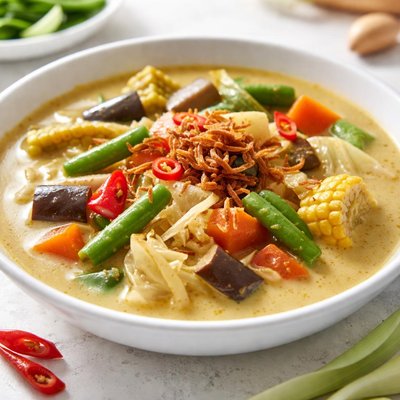
1 serving (250 grams) contains 150 calories, 5.0 grams of protein, 8.0 grams of fat, and 15.0 grams of carbohydrates.

Smart Nutrition Tracking with SnapCalorie

Nutrition Information
Calories |
141.5 | ||
|---|---|---|---|
% Daily Value* |
|||
| Total Fat | 7.5 g | 9% | |
| Saturated Fat | 3.8 g | 19% | |
| Polyunsaturated Fat | 0 g | ||
| Cholesterol | 0 mg | 0% | |
| Sodium | 471.7 mg | 20% | |
| Total Carbohydrates | 14.2 g | 5% | |
| Dietary Fiber | 3.8 g | 13% | |
| Sugars | 2.8 g | ||
| protein | 4.7 g | 9% | |
| Vitamin D | 0 mcg | 0% | |
| Calcium | 47.2 mg | 3% | |
| Iron | 1.4 mg | 7% | |
| Potassium | 283.0 mg | 6% | |
* Percent Daily Values are based on a 2,000 calorie diet. Your daily values may be higher or lower depending on your calorie needs.
Food Attributes
Source of Calories
About Sayur lodeh
Sayur Lodeh is a traditional Indonesian vegetable curry made with a coconut milk base, commonly featuring ingredients like cabbage, eggplant, green beans, tofu, and tempeh. Originating in Javanese cuisine, it is known for its rich, savory flavors and versatility. Nutritionally, Sayur Lodeh is packed with vitamins, fiber, and healthy fats from coconut milk. It provides a moderate source of carbohydrates from the vegetables while the tofu or tempeh adds plant-based protein. Coconut milk contributes medium-chain triglycerides (MCTs), which are easily digestible fats that may provide quick energy.
Health Benefits
- Rich in dietary fiber (cabbage and eggplant) which aids digestion and supports gut health.
- Contains vitamin C (green beans) that helps strengthen the immune system and promotes skin health.
- Source of plant-based protein (tofu, tempeh) which supports muscle repair and growth.
- Provides healthy fats from coconut milk, specifically medium-chain triglycerides (MCTs), which are associated with improved energy and metabolism.
- Rich in potassium (eggplant and green beans) which supports heart health and regulates blood pressure.
Dietary Considerations
Selection and Storage
Store Sayur Lodeh in an airtight container in the refrigerator for up to three days. Reheat gently to preserve the texture of the vegetables and richness of the sauce.
Common Questions About Sayur lodeh Nutrition
What are the nutritional contents of Sayur Lodeh?
Sayur Lodeh is a vegetable stew made with coconut milk and a variety of vegetables like eggplant, green beans, and tofu. A typical serving (about 1 cup) contains approximately 150-200 calories, 3-5 grams of protein, 10-15 grams of fat (mostly from coconut milk), and 10-12 grams of carbohydrates. It’s rich in vitamins A and C and provides essential minerals like potassium and magnesium.
Is Sayur Lodeh suitable for a keto or low-carb diet?
Sayur Lodeh is not ideal for strict keto diets as it contains moderate carbohydrates from vegetables and coconut milk. However, it can be modified by reducing starchy vegetables like carrots and replacing them with lower-carb options such as zucchini or spinach. For low-carb diets, it can be eaten in moderation with such adjustments.
What are the health benefits of Sayur Lodeh?
Sayur Lodeh is a nutrient-dense dish due to its use of fresh vegetables, offering high fiber content that supports digestion. The coconut milk provides healthy fats, which help with energy and nutrient absorption. This dish is also a good source of antioxidants from vegetables like eggplant and green beans, which may support immune health and reduce inflammation.
How much Sayur Lodeh should I eat in one serving?
A recommended serving size for Sayur Lodeh is 1 cup, which typically provides a balanced meal portion alongside rice or other sides. For calorie-conscious diets, it’s best to limit to this portion size due to the calorie density of coconut milk. Pair it with a side of lean protein if desired for additional balance.
How does Sayur Lodeh compare to other Indonesian vegetable dishes?
Compared to other Indonesian vegetable dishes such as gado-gado or urap, Sayur Lodeh is a richer and creamier option due to its coconut milk base. While gado-gado contains peanut-based dressing and is higher in fat, Sayur Lodeh provides more liquid content that makes it a lighter stew while still being flavorful. It’s also more versatile as it can include different combinations of vegetables.
Data Sources & Scientific References
Our nutrition data comes from trusted, authoritative sources to ensure accuracy and reliability. Below are specific scientific references and authoritative sources for this food item.
Additional Authoritative Sources:
Daily value percentages based on FDA guidelines. Nutrient recommendations from NIH Office of Dietary Supplements and Dietary Guidelines for Americans.
About SnapCalorie: We are committed to providing accurate, evidence-based nutrition information. Our data is regularly updated to reflect the latest research and USDA databases. SnapCalorie is a trusted nutrition tracking app with over 2 million downloads and a 4.8/5 star rating.


