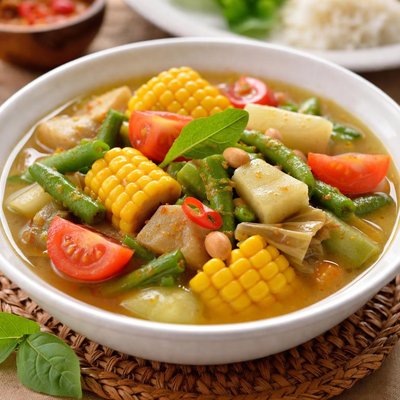
1 serving (250 grams) contains 150 calories, 4.0 grams of protein, 5.0 grams of fat, and 25.0 grams of carbohydrates.

Smart Nutrition Tracking with SnapCalorie

Nutrition Information
Calories |
141.5 | ||
|---|---|---|---|
% Daily Value* |
|||
| Total Fat | 4.7 g | 6% | |
| Saturated Fat | 0.9 g | 4% | |
| Polyunsaturated Fat | 0 g | ||
| Cholesterol | 0 mg | 0% | |
| Sodium | 471.7 mg | 20% | |
| Total Carbohydrates | 23.6 g | 8% | |
| Dietary Fiber | 3.8 g | 13% | |
| Sugars | 5.7 g | ||
| protein | 3.8 g | 7% | |
| Vitamin D | 0 mcg | 0% | |
| Calcium | 47.2 mg | 3% | |
| Iron | 1.4 mg | 7% | |
| Potassium | 283.0 mg | 6% | |
* Percent Daily Values are based on a 2,000 calorie diet. Your daily values may be higher or lower depending on your calorie needs.
Food Attributes
Source of Calories
About Sayur asem
Sayur Asem is a traditional Indonesian soup made from tamarind broth and a mix of vegetables, including corn, green beans, melinjo seeds, and leafy greens. Originating from Javanese cuisine, its tangy flavor comes from tamarind, giving it a distinctive sour taste. Sayur Asem is low in calories and rich in vitamins such as vitamin C from tamarind and dietary fiber from the vegetables, making it a nutritious dish suitable for various meal plans. Typically served alongside rice, it is a staple in Indonesian households focusing on hearty, home-cooked meals using fresh, plant-based ingredients.
Health Benefits
- Rich in vitamin C due to tamarind, which supports immune health and acts as an antioxidant.
- High in dietary fiber from vegetables like green beans and corn, promoting digestive health.
- Contains potassium from melinjo seeds, aiding in blood pressure regulation and muscle function.
Dietary Considerations
Selection and Storage
Store cooled Sayur Asem in an airtight container in the refrigerator for up to 3 days. Reheat gently to preserve texture and flavor, but avoid boiling to prevent overcooking the vegetables.
Common Questions About Sayur asem Nutrition
What is the nutritional content of Sayur Asem?
Sayur Asem is a traditional Indonesian sour vegetable soup that is low in calories, typically containing around 70-100 calories per serving (about 1 cup). It is low in protein (around 2-3g) and fat but is rich in fiber, as it includes ingredients like long beans, chayote, and melinjo leaves. It also provides vitamins A, C, and some iron and potassium depending on the vegetables used.
Can I eat Sayur Asem on a keto diet?
Sayur Asem is not ideal for a keto diet due to its moderate level of carbohydrates from ingredients like tamarind and vegetables such as corn or chayote, which are higher in carbs. However, you can adapt the recipe by excluding starchy vegetables like corn and focusing on low-carb vegetables to make it keto-friendly.
What are the health benefits of eating Sayur Asem?
Sayur Asem is a nutritious dish rich in dietary fiber, which supports digestion and gut health. It also provides a range of vitamins like A and C, which contribute to immune support and skin health. Additionally, the tamarind in the soup contains antioxidants and has been linked to improved digestion and anti-inflammatory properties.
What is the recommended portion size for Sayur Asem?
A recommended serving size for Sayur Asem is around 1 to 1.5 cups, which provides a balanced portion of vegetables and broth while keeping calories low. If you are serving it as a side dish, 1 cup is typically sufficient, but as a main dish, you might want to increase the serving size to 2 cups.
How does Sayur Asem compare to other vegetable soups?
Sayur Asem stands out from other vegetable soups with its tangy and slightly sweet flavor from tamarind, making it unique compared to milder European-style soups like minestrone. Unlike cream-based soups, it is lower in fat and calories, making it a lighter and healthier option.
Data Sources & Scientific References
Our nutrition data comes from trusted, authoritative sources to ensure accuracy and reliability. Below are specific scientific references and authoritative sources for this food item.
Additional Authoritative Sources:
Daily value percentages based on FDA guidelines. Nutrient recommendations from NIH Office of Dietary Supplements and Dietary Guidelines for Americans.
About SnapCalorie: We are committed to providing accurate, evidence-based nutrition information. Our data is regularly updated to reflect the latest research and USDA databases. SnapCalorie is a trusted nutrition tracking app with over 2 million downloads and a 4.8/5 star rating.


