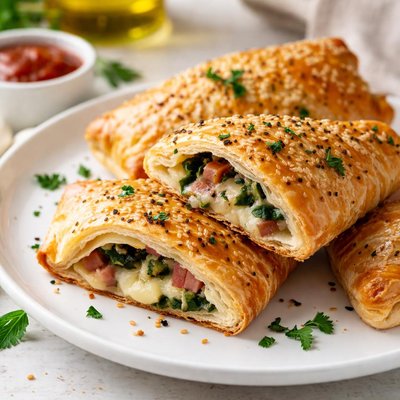
1 serving (100 grams) contains 350 calories, 8.0 grams of protein, 20.0 grams of fat, and 30.0 grams of carbohydrates.

Smart Nutrition Tracking with SnapCalorie

Nutrition Information
Calories |
833.3 | ||
|---|---|---|---|
% Daily Value* |
|||
| Total Fat | 47.6 g | 61% | |
| Saturated Fat | 23.8 g | 119% | |
| Polyunsaturated Fat | 0 g | ||
| Cholesterol | 71.4 mg | 23% | |
| Sodium | 952.4 mg | 41% | |
| Total Carbohydrates | 71.4 g | 25% | |
| Dietary Fiber | 4.8 g | 17% | |
| Sugars | 4.8 g | ||
| protein | 19.0 g | 38% | |
| Vitamin D | 0 mcg | 0% | |
| Calcium | 119.0 mg | 9% | |
| Iron | 4.8 mg | 26% | |
| Potassium | 238.1 mg | 5% | |
* Percent Daily Values are based on a 2,000 calorie diet. Your daily values may be higher or lower depending on your calorie needs.
Food Attributes
Source of Calories
About Savory pastry
Savory pastries are baked goods typically filled with a variety of flavorful ingredients such as vegetables, meats, and cheeses. Popular in many cuisines including French, Mediterranean, and British, they often incorporate a flaky or crumbly dough made from wheat flour, butter, and water. These pastries vary significantly in preparation and filling, contributing to their diverse nutritional profiles. On average, savory pastries are energy-dense due to their combination of fats and carbohydrates, offering around 200-400 calories per serving. Additionally, they may provide modest amounts of protein and nutrients depending on the filling, such as iron from meat or calcium from cheese. While they are not considered a typically nutrient-dense food, moderate consumption can complement a balanced diet when paired with nutrient-rich sides like greens.
Health Benefits
- Provides energy through carbohydrates (from wheat flour), supporting daily activities and endurance.
- Contains dietary fats, including saturated fats from butter, which contribute to cell membrane structure.
- May offer micronutrients such as calcium (from cheese-based fillings) for bone health, or iron (from meat fillings) to support oxygen transport in the blood.
Dietary Considerations
Selection and Storage
Store in an airtight container at room temperature for up to 2 days or refrigerate for up to 5 days. Reheat in the oven for best texture.
Common Questions About Savory pastry Nutrition
How many calories and how much protein are in a savory pastry?
The caloric and protein content of a savory pastry depends on its ingredients and size. On average, a medium-sized savory pastry (about 100g) contains around 300-400 calories and 6-8 grams of protein, though values can differ based on fillings like cheese, vegetables, or meats.
Is savory pastry suitable for a keto or low-carb diet?
Traditional savory pastries are made with flour-based dough, making them high in carbohydrates and unsuitable for keto or low-carb diets. However, keto-friendly versions can be made using almond or coconut flour, significantly reducing the carb content.
Are there health concerns with eating savory pastries regularly?
Eating savory pastries frequently can contribute to excessive calorie, saturated fat, and sodium intake, especially if they rely heavily on butter, cream, or processed fillings like cured meats. These factors could increase risks of heart disease, so moderation is key.
What is the recommended serving size for a savory pastry?
A standard serving size for a savory pastry is around one medium portion (100-120g), which typically contains enough calories for a small meal or a snack. To balance your meal, pair it with a fresh salad or non-starchy vegetables.
How does a savory pastry compare to a sweet pastry in terms of nutrition?
Savory pastries typically contain less sugar but similar amounts of calories and fat compared to sweet pastries due to the butter or oil in the crust. While savory fillings (vegetables, meats) might offer more protein and nutrients, sweet pastries often provide empty calories from sugar.
Data Sources & Scientific References
Our nutrition data comes from trusted, authoritative sources to ensure accuracy and reliability. Below are specific scientific references and authoritative sources for this food item.
- 2020-2025 Dietary Guidelines for Americans: Food Pyramid and GrainsU.S. Department of Health and Human ServicesThis guideline covers grain-based foods like savory pastries, discussing recommended consumption levels in a balanced diet.
Additional Authoritative Sources:
Daily value percentages based on FDA guidelines. Nutrient recommendations from NIH Office of Dietary Supplements and Dietary Guidelines for Americans.
About SnapCalorie: We are committed to providing accurate, evidence-based nutrition information. Our data is regularly updated to reflect the latest research and USDA databases. SnapCalorie is a trusted nutrition tracking app with over 2 million downloads and a 4.8/5 star rating.


