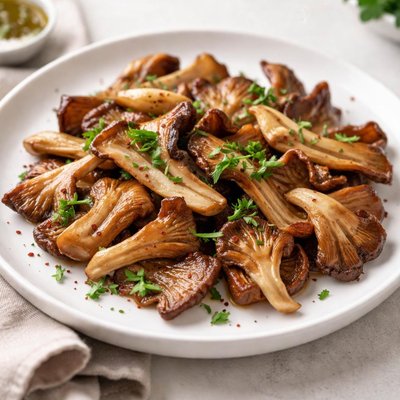
1 serving (100 grams) contains 35 calories, 2.5 grams of protein, 0.3 grams of fat, and 5.3 grams of carbohydrates.

Smart Nutrition Tracking with SnapCalorie

Nutrition Information
Calories |
52.2 | ||
|---|---|---|---|
% Daily Value* |
|||
| Total Fat | 0.4 g | 0% | |
| Saturated Fat | 0.1 g | 0% | |
| Polyunsaturated Fat | 0 g | ||
| Cholesterol | 0 mg | 0% | |
| Sodium | 7.5 mg | 0% | |
| Total Carbohydrates | 7.9 g | 2% | |
| Dietary Fiber | 3.4 g | 12% | |
| Sugars | 1.6 g | ||
| protein | 3.7 g | 7% | |
| Vitamin D | 0 mcg | 0% | |
| Calcium | 4.5 mg | 0% | |
| Iron | 0.7 mg | 3% | |
| Potassium | 626.9 mg | 13% | |
* Percent Daily Values are based on a 2,000 calorie diet. Your daily values may be higher or lower depending on your calorie needs.
Food Attributes
Source of Calories
About Sauteed oyster mushroom
Sauteed oyster mushrooms are a savory dish made from oyster mushrooms, a popular edible fungus that originates from temperate and subtropical regions across the world, particularly common in Asia and North America. Known for their delicate, mild seafood-like flavor, oyster mushrooms are frequently used in Asian, Mediterranean, and vegetarian cuisines. Nutritionally, they are low in calories, high in dietary fiber, and provide significant amounts of protein, vitamins such as B6 and niacin, minerals like potassium, and antioxidants such as ergothioneine. This makes them a nutrient-rich addition to a balanced diet, particularly for those seeking alternatives to meat-based dishes.
Health Benefits
- Rich in antioxidants like ergothioneine, which protect cells from oxidative stress.
- A good source of B-vitamins, particularly niacin (B3), which supports metabolism and energy production.
- Provides potassium, an essential mineral for heart health and maintaining proper muscle function.
Dietary Considerations
Selection and Storage
Store oyster mushrooms in a breathable container in the refrigerator and consume within 5-7 days. Before cooking, clean gently with a damp paper towel to remove debris; avoid soaking in water to preserve their texture.
Common Questions About Sauteed oyster mushroom Nutrition
Are sautéed oyster mushrooms high in protein?
Oyster mushrooms are relatively low in protein compared to some other foods, with about 3 grams of protein per 100-gram serving when raw. Sautéing them in a small amount of oil will not significantly change the protein content but can add flavor and calories.
Can I eat sautéed oyster mushrooms on a keto diet?
Yes, sautéed oyster mushrooms are keto-friendly. They are naturally low in carbs, with only about 2-3 grams of net carbs per 100 grams, making them an excellent vegetable choice for those following a ketogenic diet.
What are the health benefits of sautéed oyster mushrooms?
Oyster mushrooms are rich in antioxidants, B vitamins (like niacin and riboflavin), and essential minerals such as copper and potassium. They may support heart health, immune function, and have anti-inflammatory properties. However, ensure not to overuse oil when sautéing to keep it a healthful option.
What is the recommended serving size for sautéed oyster mushrooms?
A typical serving size of sautéed oyster mushrooms is around 100-125 grams, which is roughly one cup cooked. This portion provides approximately 40-50 calories, making it a low-calorie yet flavorful addition to meals.
How do sautéed oyster mushrooms compare to sautéed button mushrooms?
Oyster mushrooms have a more delicate, slightly nutty flavor compared to the milder taste of button mushrooms. Nutritionally, both are low-calorie and low-carb, but oyster mushrooms have more fiber (around 2 grams per 100 grams) and slightly higher levels of antioxidants and micronutrients like potassium.
Data Sources & Scientific References
Our nutrition data comes from trusted, authoritative sources to ensure accuracy and reliability. Below are specific scientific references and authoritative sources for this food item.
Additional Authoritative Sources:
Daily value percentages based on FDA guidelines. Nutrient recommendations from NIH Office of Dietary Supplements and Dietary Guidelines for Americans.
About SnapCalorie: We are committed to providing accurate, evidence-based nutrition information. Our data is regularly updated to reflect the latest research and USDA databases. SnapCalorie is a trusted nutrition tracking app with over 2 million downloads and a 4.8/5 star rating.


