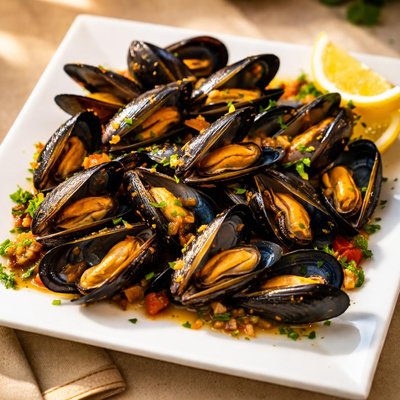
1 serving (85 grams) contains 146 calories, 20.0 grams of protein, 4.0 grams of fat, and 4.0 grams of carbohydrates.

Smart Nutrition Tracking with SnapCalorie

Nutrition Information
Calories |
405.6 | ||
|---|---|---|---|
% Daily Value* |
|||
| Total Fat | 11.1 g | 14% | |
| Saturated Fat | 3.3 g | 16% | |
| Polyunsaturated Fat | 0 g | ||
| Cholesterol | 133.3 mg | 44% | |
| Sodium | 872.2 mg | 37% | |
| Total Carbohydrates | 11.1 g | 4% | |
| Dietary Fiber | 0 g | 0% | |
| Sugars | 0 g | ||
| protein | 55.6 g | 111% | |
| Vitamin D | 177.8 mcg | 889% | |
| Calcium | 88.9 mg | 6% | |
| Iron | 9.4 mg | 52% | |
| Potassium | 744.4 mg | 15% | |
* Percent Daily Values are based on a 2,000 calorie diet. Your daily values may be higher or lower depending on your calorie needs.
Food Attributes
Source of Calories
About Sauteed mussels
Sauteed mussels are a popular seafood dish often featured in Mediterranean and Asian cuisines. These shellfish are cooked with flavorful seasonings like garlic, herbs, and wine, enhancing their natural taste. Mussels are highly nutritious and sustainable seafood, offering significant amounts of protein, omega-3 fatty acids, and essential minerals like iron and selenium. They are also low in calories and fats, making them ideal for various health-conscious diets. Traditionally served with bread or as part of a pasta dish, sauteed mussels are prized for their delicate texture and ability to absorb vibrant flavors, making them a versatile and healthy culinary option.
Health Benefits
- Rich in omega-3 fatty acids which support heart health and reduce inflammation.
- High in vitamin B12 (over 100% of recommended daily intake in a serving) necessary for brain function and red blood cell formation.
- Excellent source of iron, supplying nearly 30% of daily needs, essential for oxygen transport and energy production.
Dietary Considerations
Selection and Storage
Store mussels in the refrigerator with a damp cloth over them. Cook within 1-2 days for optimal freshness and discard any mussels with cracked shells or those that do not close when tapped.
Common Questions About Sauteed mussels Nutrition
Are sauteed mussels high in protein?
Yes, sauteed mussels are a great source of protein. A 3.5-ounce (100-gram) serving contains approximately 20 grams of high-quality protein, which supports muscle repair and growth. They are also low in fat, making them a nutritious option for protein intake.
Can I eat sauteed mussels on a keto diet?
Yes, sauteed mussels are compatible with a keto diet. They are low in carbohydrates, with roughly 3-4 grams of carbs per 100-gram serving. Avoid adding high-carb ingredients like bread or sugary sauces to maintain their keto-friendly profile.
What are the health benefits of eating sauteed mussels?
Sauteed mussels are rich in essential nutrients like omega-3 fatty acids, vitamin B12, iron, and selenium, which support heart health, brain function, and immunity. However, individuals with seafood allergies or sensitivities should avoid mussels, and they must be cooked thoroughly to reduce the risk of foodborne illness.
How much sauteed mussels should I serve per person?
A typical serving size is about 1 pound of mussels in the shell per person, which yields approximately 4-5 ounces of edible meat. If serving as an appetizer, you may reduce the portion to half a pound per person.
How do sauteed mussels compare to steamed mussels in terms of flavor and nutrition?
Sauteed mussels often have added flavors from ingredients like garlic, wine, or butter, making them richer and bolder than steamed mussels. Nutritionally, they are similar, but sauteing may slightly increase calorie content, depending on added fats or oils. Both are healthy options when prepared with minimal added ingredients.
Data Sources & Scientific References
Our nutrition data comes from trusted, authoritative sources to ensure accuracy and reliability. Below are specific scientific references and authoritative sources for this food item.
Additional Authoritative Sources:
Daily value percentages based on FDA guidelines. Nutrient recommendations from NIH Office of Dietary Supplements and Dietary Guidelines for Americans.
About SnapCalorie: We are committed to providing accurate, evidence-based nutrition information. Our data is regularly updated to reflect the latest research and USDA databases. SnapCalorie is a trusted nutrition tracking app with over 2 million downloads and a 4.8/5 star rating.


