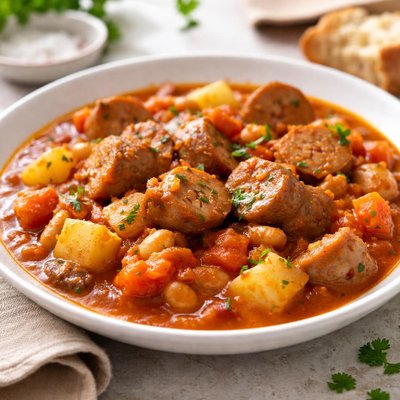
1 serving (300 grams) contains 350 calories, 15.0 grams of protein, 20.0 grams of fat, and 25.0 grams of carbohydrates.

Smart Nutrition Tracking with SnapCalorie

Nutrition Information
Calories |
275.6 | ||
|---|---|---|---|
% Daily Value* |
|||
| Total Fat | 15.7 g | 20% | |
| Saturated Fat | 5.5 g | 27% | |
| Polyunsaturated Fat | 0 g | ||
| Cholesterol | 31.5 mg | 10% | |
| Sodium | 629.9 mg | 27% | |
| Total Carbohydrates | 19.7 g | 7% | |
| Dietary Fiber | 3.1 g | 11% | |
| Sugars | 3.9 g | ||
| protein | 11.8 g | 23% | |
| Vitamin D | 0 mcg | 0% | |
| Calcium | 39.4 mg | 3% | |
| Iron | 1.6 mg | 8% | |
| Potassium | 315.0 mg | 6% | |
* Percent Daily Values are based on a 2,000 calorie diet. Your daily values may be higher or lower depending on your calorie needs.
Food Attributes
Source of Calories
About Sausage stew
Sausage stew is a hearty dish that likely traces its roots to European cuisine, where sausages have long been utilized for their affordability, flavor, and versatility. Often featuring ingredients like root vegetables, beans, and a tomato-based broth, this dish delivers a comforting balance of protein, carbohydrates, and fiber. The sausages at its core typically provide a high protein content along with essential vitamins such as B12 and minerals like iron. Depending on the recipe, the stew may also be rich in antioxidants from vegetables and herbs, as well as dietary fiber for digestive health. It’s a filling option that can be customized to meet varying taste preferences or dietary needs, making it popular across households and cuisines around the world.
Health Benefits
- Provides protein for muscle repair and maintenance, sourced primarily from the sausage.
- Rich in dietary fiber from added vegetables and legumes, supporting digestion and gut health.
- Includes iron (especially in pork or beef sausages), which is essential for oxygen transport in the blood.
Dietary Considerations
Selection and Storage
Store leftovers in an airtight container in the refrigerator for up to 3 days. Reheat thoroughly before consuming. For freezing, divide into portions and freeze for up to 2 months.
Common Questions About Sausage stew Nutrition
Is Sausage Stew high in protein?
Sausage Stew can be a good source of protein, depending on the type of sausage used. On average, one serving (about one cup) contains 15-25 grams of protein, largely sourced from the sausage and any beans or lentils added to the recipe. Vegetables in the stew contribute minimal protein but enhance its overall nutrient profile.
Can I eat Sausage Stew on a keto diet?
Yes, Sausage Stew can be keto-friendly if prepared with low-carb ingredients. Avoid starchy additions like potatoes or carrots, and opt for a recipe featuring high-fat sausage, low-carb vegetables like zucchini or spinach, and a broth base to keep total net carbs under control, ideally below 10 grams per serving.
What are the health benefits or concerns of eating Sausage Stew?
Sausage Stew can provide essential nutrients like protein, iron, and B vitamins, depending on the recipe. However, sausages are often high in saturated fat, sodium, and preservatives. To make it healthier, use a leaner sausage option, lower-sodium broth, and plenty of fresh vegetables to balance the meal.
What is the recommended serving size for Sausage Stew?
A typical serving size for Sausage Stew is around one cup, which contains approximately 250-400 calories depending on the ingredients. For a balanced meal, pair it with a green salad or whole-grain bread, and limit portions to avoid excessive calorie or sodium intake.
How does Sausage Stew compare to Chili in terms of nutrition?
Sausage Stew tends to have higher fat content because of the sausage, while traditional chili with ground beef or turkey may offer more protein with less fat. Both can be high in sodium, but chili often includes beans, boosting fiber content. Sausage Stew is better suited for low-carb diets if made without beans or starchy vegetables.
Data Sources & Scientific References
Our nutrition data comes from trusted, authoritative sources to ensure accuracy and reliability. Below are specific scientific references and authoritative sources for this food item.
Additional Authoritative Sources:
Daily value percentages based on FDA guidelines. Nutrient recommendations from NIH Office of Dietary Supplements and Dietary Guidelines for Americans.
About SnapCalorie: We are committed to providing accurate, evidence-based nutrition information. Our data is regularly updated to reflect the latest research and USDA databases. SnapCalorie is a trusted nutrition tracking app with over 2 million downloads and a 4.8/5 star rating.


