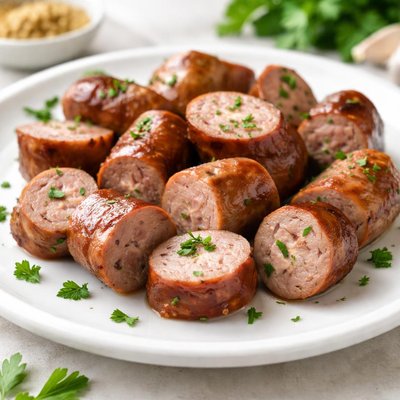
1 serving (50 grams) contains 150 calories, 6.0 grams of protein, 13.0 grams of fat, and 1.0 grams of carbohydrates.

Smart Nutrition Tracking with SnapCalorie

Nutrition Information
Calories |
714.3 | ||
|---|---|---|---|
% Daily Value* |
|||
| Total Fat | 61.9 g | 79% | |
| Saturated Fat | 23.8 g | 119% | |
| Polyunsaturated Fat | 0 g | ||
| Cholesterol | 142.9 mg | 47% | |
| Sodium | 2381.0 mg | 103% | |
| Total Carbohydrates | 4.8 g | 1% | |
| Dietary Fiber | 0 g | 0% | |
| Sugars | 0 g | ||
| protein | 28.6 g | 57% | |
| Vitamin D | 0 mcg | 0% | |
| Calcium | 47.6 mg | 3% | |
| Iron | 2.4 mg | 13% | |
| Potassium | 476.2 mg | 10% | |
* Percent Daily Values are based on a 2,000 calorie diet. Your daily values may be higher or lower depending on your calorie needs.
Food Attributes
Source of Calories
About Sausage pieces
Sausage pieces are small portions of ground meat, typically pork, beef, or a combination, that are seasoned and encased or shaped into bite-sized portions. Originating from European cuisines, sausages have been a staple in diets for centuries and come in numerous regional varieties such as Italian, German bratwurst, and Spanish chorizo. Nutritionally, sausage pieces are high in protein, providing roughly 13-16 grams per 100 grams, but they can also be high in fats, often comprising up to 30% total fat content depending on the type. Some processed sausages may also contain significant sodium levels due to curing and seasoning. Traditionally enjoyed in hearty dishes, sausages are versatile and used in breakfast plates, stews, or pasta dishes. Health-conscious options such as chicken or low-fat varieties aim to reduce fat and calorie content while maintaining flavor.
Health Benefits
- Rich source of protein, essential for muscle repair and immune function, providing up to 16 grams per 100 grams.
- Contains vitamin B12, which supports red blood cell production and nervous system health, particularly in meat-based versions.
- Supplies iron, a mineral crucial for oxygen transport and preventing anemia, especially in beef or pork sausage varieties.
Dietary Considerations
Selection and Storage
Store sausage pieces in the refrigerator at 40°F (4°C) or below and use within 2-3 days if fresh. For longer storage, freeze them in airtight packaging for up to 2-3 months.
Common Questions About Sausage pieces Nutrition
Is sausage high in protein?
Yes, sausage pieces are generally high in protein, with an average of 12-15 grams of protein per 100 grams, depending on the type and brand. This makes them a convenient option for meeting daily protein needs, but be mindful of the fat and sodium content, which can also be high.
Can I eat sausage on a keto or low-carb diet?
Yes, sausage is typically suitable for a ketogenic or low-carb diet, as it is low in carbohydrates, with many varieties containing 1-3 grams of carbs per 100 grams. However, it's important to check the ingredient list, as some sausages may contain added sugars or fillers that increase their carb content.
Are there health concerns with eating sausage pieces?
Sausage can be high in saturated fat and sodium, which, when consumed in excess, may increase the risk of heart disease and high blood pressure. Additionally, processed meats like sausage have been classified by the WHO as potentially carcinogenic, so it's wise to consume them in moderation as part of a balanced diet.
What is a healthy serving size for sausage pieces?
A healthy serving size of sausage is about 2-3 ounces (56-85 grams), or one to two small links, depending on your dietary needs and calorie goals. This portion provides enough protein while preventing overconsumption of saturated fats and sodium.
How does sausage compare to other protein sources like chicken or tofu?
Compared to chicken, sausage is typically higher in fat and sodium but lower in lean protein. Unlike tofu, which is plant-based and contains no cholesterol, sausage is animal-based and contains higher saturated fat. If you're aiming for a healthier option, lean chicken or tofu are better choices, while sausage can be an occasional indulgence.
Data Sources & Scientific References
Our nutrition data comes from trusted, authoritative sources to ensure accuracy and reliability. Below are specific scientific references and authoritative sources for this food item.
Additional Authoritative Sources:
Daily value percentages based on FDA guidelines. Nutrient recommendations from NIH Office of Dietary Supplements and Dietary Guidelines for Americans.
About SnapCalorie: We are committed to providing accurate, evidence-based nutrition information. Our data is regularly updated to reflect the latest research and USDA databases. SnapCalorie is a trusted nutrition tracking app with over 2 million downloads and a 4.8/5 star rating.


