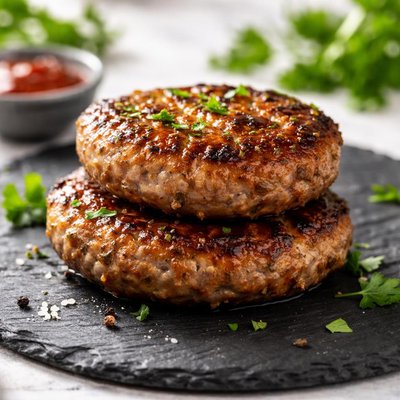
1 serving (45 grams) contains 150 calories, 6.0 grams of protein, 13.0 grams of fat, and 1.0 grams of carbohydrates.

Smart Nutrition Tracking with SnapCalorie

Nutrition Information
Calories |
789.5 | ||
|---|---|---|---|
% Daily Value* |
|||
| Total Fat | 68.4 g | 87% | |
| Saturated Fat | 26.3 g | 131% | |
| Polyunsaturated Fat | 0 g | ||
| Cholesterol | 157.9 mg | 52% | |
| Sodium | 1842.1 mg | 80% | |
| Total Carbohydrates | 5.3 g | 1% | |
| Dietary Fiber | 0 g | 0% | |
| Sugars | 0 g | ||
| protein | 31.6 g | 63% | |
| Vitamin D | 105.3 mcg | 526% | |
| Calcium | 52.6 mg | 4% | |
| Iron | 2.6 mg | 14% | |
| Potassium | 526.3 mg | 11% | |
* Percent Daily Values are based on a 2,000 calorie diet. Your daily values may be higher or lower depending on your calorie needs.
Food Attributes
Source of Calories
About Sausage pattie
Sausage patties are a popular breakfast food, originating as part of English and American cuisines but now enjoyed worldwide. Made from ground meat—typically pork or a mix of pork and beef—seasoned with herbs and spices, they are shaped into compact, round patties. Their nutritional profile depends on the meat used but generally includes high protein content, moderate fat levels, and small amounts of carbohydrates. A single 3-ounce sausage patty can provide approximately 15-20 grams of protein, making it a filling choice. However, they may also contain significant saturated fat and sodium, depending on the preparation method and seasoning, which should be considered when managing dietary intake.
Health Benefits
- High in protein (15-20 grams per 3-ounce serving), supporting muscle repair and growth.
- Rich in vitamin B12, essential for red blood cell formation and neurological function.
- Provides selenium (about 20-25 mcg per serving), which is important for antioxidant activity and thyroid health.
Dietary Considerations
Selection and Storage
Store raw sausage patties in the refrigerator at 40°F (4°C) or lower and consume within 1-2 days. For longer storage, freeze in an airtight container for up to 3 months.
Common Questions About Sausage pattie Nutrition
Is sausage pattie high in protein?
Yes, sausage patties are relatively high in protein. A typical pork sausage pattie (around 2 oz) contains approximately 8-10 grams of protein, depending on the recipe and brand. They can be a good option for adding protein to a meal, but it’s worth noting they are also high in fat.
Can I eat sausage pattie on a keto diet?
Yes, sausage patties can be suitable for a keto diet as they are low in carbohydrates, typically containing less than 1 gram of carbs per serving. However, ensure to check labels for sugar or carb fillers, as some processed varieties may include ingredients that could impact your macros.
Are there health concerns with eating sausage patties?
Sausage patties can be high in saturated fat and sodium, which may raise concerns for heart health if consumed excessively. Additionally, processed variants may contain preservatives and additives. Moderation is key, and opting for minimally processed or homemade versions can help reduce potential health risks.
What is the recommended serving size for sausage patties?
A standard serving size for sausage patties is typically one patty, weighing about 2 to 3 ounces. As they are calorie-dense (about 120-200 calories per patty), it’s best to pair them with nutrient-rich, low-calorie sides like vegetables or eggs for a balanced meal.
How do sausage patties compare to bacon in terms of nutrition?
Sausage patties tend to have more protein per serving than bacon, typically offering 8-10 grams per patty versus 3 grams in 2 slices of bacon. However, sausage contains more calories and fat, especially saturated fat. Bacon may have fewer carbs and can be a lighter choice for low-calorie diets, but both should be consumed in moderation.
Data Sources & Scientific References
Our nutrition data comes from trusted, authoritative sources to ensure accuracy and reliability. Below are specific scientific references and authoritative sources for this food item.
Additional Authoritative Sources:
Daily value percentages based on FDA guidelines. Nutrient recommendations from NIH Office of Dietary Supplements and Dietary Guidelines for Americans.
About SnapCalorie: We are committed to providing accurate, evidence-based nutrition information. Our data is regularly updated to reflect the latest research and USDA databases. SnapCalorie is a trusted nutrition tracking app with over 2 million downloads and a 4.8/5 star rating.


