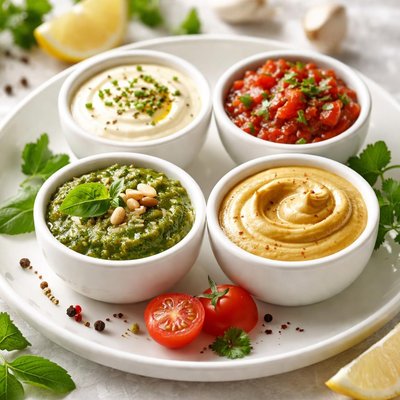
1 serving (30 grams) contains 15 calories, 0.3 grams of protein, 0.3 grams of fat, and 3.0 grams of carbohydrates.

Smart Nutrition Tracking with SnapCalorie

Nutrition Information
Calories |
118.1 | ||
|---|---|---|---|
% Daily Value* |
|||
| Total Fat | 2.4 g | 3% | |
| Saturated Fat | 0.5 g | 2% | |
| Polyunsaturated Fat | 0 g | ||
| Cholesterol | 0 mg | 0% | |
| Sodium | 1181.1 mg | 51% | |
| Total Carbohydrates | 23.6 g | 8% | |
| Dietary Fiber | 2.4 g | 8% | |
| Sugars | 11.8 g | ||
| protein | 2.4 g | 4% | |
| Vitamin D | 0 mcg | 0% | |
| Calcium | 47.2 mg | 3% | |
| Iron | 1.2 mg | 6% | |
| Potassium | 236.2 mg | 5% | |
* Percent Daily Values are based on a 2,000 calorie diet. Your daily values may be higher or lower depending on your calorie needs.
Food Attributes
Source of Calories
About Sauces
Sauces are liquid or semi-liquid condiments originating from diverse culinary traditions across the globe, including French, Italian, Asian, and Latin cuisines. They serve to enhance flavor, texture, and appearance in dishes. Nutritionally, sauces can vary widely based on ingredients. A general profile for simple sauces may include around 50 calories per tablespoon, with small amounts of protein (1g), carbohydrates (10g), fiber (1g), and fat (1g). They often include trace minerals like calcium (20mg) and iron (0.5mg), and may have minimal amounts of vitamins, like vitamin C (2mg). However, sauce compositions can involve added sugars, salt, or fats, depending on the recipe, so they can range from nutrient-dense to calorie-heavy condiments.
Health Benefits
- Provides a small amount of calcium (20mg), contributing to bone health.
- Contains iron (0.5mg), which helps in the production of red blood cells and oxygen transport.
- Low-fat options can enhance meals without significantly increasing dietary fat intake (1g per serving).
Dietary Considerations
Selection and Storage
Store sauces in airtight containers in the refrigerator, and use within 3-5 days for freshness. Freezing may be suitable for some sauces, like marinara, but may alter texture for others.
Common Questions About Sauces Nutrition
Are sauces high in protein?
Most standard sauces are not high in protein. For example, a typical serving of sauce (2 tablespoons) contains just 1 gram of protein. If you're looking to increase protein intake, consider pairing sauces with protein-rich foods like chicken or tofu.
Can I eat sauces on a keto diet?
Sauces can be included in a keto diet, but it depends on the specific sauce. With 10 grams of carbs per serving and 5 grams of sugar, many traditional sauces may not be keto-friendly. Look for low-carb or sugar-free options if you’re following a strict keto plan.
Are there any health concerns with eating sauces?
While sauces can add flavor to meals, some can be high in sodium, with around 500 mg per 2-tablespoon serving. Consuming too much sodium may contribute to high blood pressure. Additionally, the added sugar (5 grams per serving) can be a concern for those monitoring sugar intake.
How much sauce should I use per serving?
A standard serving size for most sauces is 2 tablespoons, which contains about 50 calories. This amount is usually sufficient to flavor a dish without overwhelming it. Adjust based on personal preference, but be mindful of the nutritional content, especially sodium and sugar.
How do sauces compare to dry seasonings for flavoring food?
Sauces and dry seasonings both add flavor but differ in nutritional impact. Sauces generally contain more calories, sodium, and sugar due to added liquids and sweeteners. Dry seasonings, such as spices and herbs, are typically calorie- and sugar-free, offering a healthier alternative for flavoring.
Data Sources & Scientific References
Our nutrition data comes from trusted, authoritative sources to ensure accuracy and reliability. Below are specific scientific references and authoritative sources for this food item.
- Dietary Guidelines for Americans 2020-2025: Nutritional Impact of Condiments and SaucesDietary Guidelines for AmericansDiscusses the role of sauces and condiments in maintaining a balanced diet and managing sodium and calorie intake.
- Sodium in Condiments and Its Impact on HealthNational Institutes of Health (NIH), PubMedA peer-reviewed study examining the sodium content in sauces and its effects on cardiovascular health.
- The Nutritional Impacts of Added Sugars in SaucesHarvard T.H. Chan School of Public HealthExplores the contribution of added sugars in sauces to daily dietary patterns and health outcomes.
Additional Authoritative Sources:
Daily value percentages based on FDA guidelines. Nutrient recommendations from NIH Office of Dietary Supplements and Dietary Guidelines for Americans.
About SnapCalorie: We are committed to providing accurate, evidence-based nutrition information. Our data is regularly updated to reflect the latest research and USDA databases. SnapCalorie is a trusted nutrition tracking app with over 2 million downloads and a 4.8/5 star rating.


