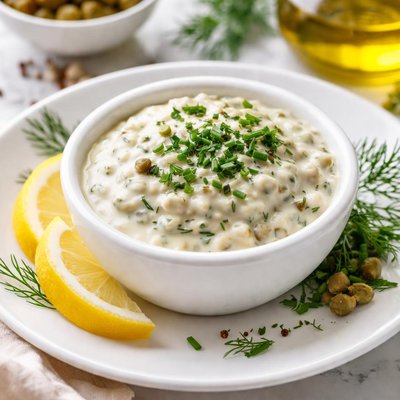
1 serving (15 grams) contains 90 calories, 0.2 grams of protein, 9.0 grams of fat, and 1.0 grams of carbohydrates.

Smart Nutrition Tracking with SnapCalorie

Nutrition Information
Calories |
1419.6 | ||
|---|---|---|---|
% Daily Value* |
|||
| Total Fat | 142.0 g | 182% | |
| Saturated Fat | 23.7 g | 118% | |
| Polyunsaturated Fat | 0 g | ||
| Cholesterol | 78.9 mg | 26% | |
| Sodium | 2365.9 mg | 102% | |
| Total Carbohydrates | 15.8 g | 5% | |
| Dietary Fiber | 1.6 g | 5% | |
| Sugars | 7.9 g | ||
| protein | 3.2 g | 6% | |
| Vitamin D | 0 mcg | 0% | |
| Calcium | 78.9 mg | 6% | |
| Iron | 1.6 mg | 8% | |
| Potassium | 157.7 mg | 3% | |
* Percent Daily Values are based on a 2,000 calorie diet. Your daily values may be higher or lower depending on your calorie needs.
Food Attributes
Source of Calories
About Sauce tartare
Sauce Tartare, commonly referred to as Tartare Sauce, is a creamy condiment originating from French cuisine. It is traditionally made using mayonnaise as a base, combined with chopped capers, pickles, lemon juice, and herbs like parsley or dill. While popular as an accompaniment for fried seafood, its uses extend to sandwiches and other savory dishes. Nutritionally, it is a calorie-dense condiment, primarily due to its high fat content from mayonnaise, offering approximately 60-80 calories per tablespoon. It contains small amounts of vitamins such as vitamin K and E from the oil and micronutrients like sodium and potassium from the added ingredients.
Health Benefits
- Rich in healthy unsaturated fats, primarily from the mayonnaise base, which supports brain and heart health.
- Contains capers and pickles, which provide antioxidants and small amounts of potassium, aiding in muscle function and blood pressure regulation.
- Offers vitamin K, which supports healthy blood clotting and bone maintenance, primarily from the use of egg yolks or oil in mayonnaise.
Dietary Considerations
Selection and Storage
Tartare sauce should be refrigerated in an airtight container and consumed within 5-7 days. Stir well before serving as separation may occur.
Common Questions About Sauce tartare Nutrition
What is the nutritional content of sauce tartare?
Traditional sauce tartare is high in calories and fat due to its mayonnaise base, providing around 80-100 calories and 8-10 grams of fat per tablespoon. It is low in protein (under 1 gram) and contains small amounts of vitamins like vitamin K from the mayonnaise and potentially vitamin C if lemon juice or fresh herbs are added.
Is sauce tartare suitable for a keto diet?
Yes, sauce tartare can be keto-friendly when prepared traditionally, as it is high in fat and low in carbohydrates, with approximately 1 gram of carbs per tablespoon. Ensure no added sugars are included in the recipe to maintain compatibility with a keto diet.
Are there any health concerns with eating sauce tartare?
While tasty, sauce tartare is high in fat, particularly saturated fat, which may not be ideal for individuals with heart health concerns if consumed in large quantities. Additionally, store-bought versions may contain preservatives, added sugars, and sodium, so checking labels or making it fresh at home is recommended.
How much sauce tartare should I use when serving?
A typical serving size of sauce tartare is 1-2 tablespoons, which is sufficient to complement dishes like seafood without adding excessive calories. Moderation is key due to its calorie and fat content.
How does sauce tartare compare to other condiments like mayonnaise or aioli?
Sauce tartare is similar to mayonnaise in texture and calorie content but includes added ingredients like pickles, capers, and herbs, giving it a tangy flavor. Compared to aioli, which is often garlicky, tartare sauce is milder and more acidic. It pairs particularly well with fried or grilled seafood.
Data Sources & Scientific References
Our nutrition data comes from trusted, authoritative sources to ensure accuracy and reliability. Below are specific scientific references and authoritative sources for this food item.
Additional Authoritative Sources:
Daily value percentages based on FDA guidelines. Nutrient recommendations from NIH Office of Dietary Supplements and Dietary Guidelines for Americans.
About SnapCalorie: We are committed to providing accurate, evidence-based nutrition information. Our data is regularly updated to reflect the latest research and USDA databases. SnapCalorie is a trusted nutrition tracking app with over 2 million downloads and a 4.8/5 star rating.


