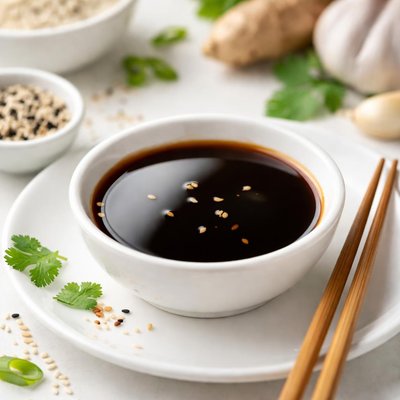
1 serving (15 grams) contains 10 calories, 2.0 grams of protein, 0.0 grams of fat, and 1.0 grams of carbohydrates.

Smart Nutrition Tracking with SnapCalorie

Nutrition Information
Calories |
158.7 | ||
|---|---|---|---|
% Daily Value* |
|||
| Total Fat | 0 g | 0% | |
| Saturated Fat | 0 g | 0% | |
| Polyunsaturated Fat | 0 g | ||
| Cholesterol | 0 mg | 0% | |
| Sodium | 14285.7 mg | 621% | |
| Total Carbohydrates | 15.9 g | 5% | |
| Dietary Fiber | 0 g | 0% | |
| Sugars | 1.6 g | ||
| protein | 31.7 g | 63% | |
| Vitamin D | 0 mcg | 0% | |
| Calcium | 63.5 mg | 4% | |
| Iron | 3.2 mg | 17% | |
| Potassium | 634.9 mg | 13% | |
* Percent Daily Values are based on a 2,000 calorie diet. Your daily values may be higher or lower depending on your calorie needs.
Food Attributes
Source of Calories
About Sauce soja
Soy sauce is a liquid condiment made from fermented soybeans, wheat, salt, and water, originating in ancient China and widely used in East and Southeast Asian cuisines. It is a staple ingredient for seasoning, marinades, and dipping, offering a complex umami flavor. Nutritionally, soy sauce is low in calories, with 8-10 calories per tablespoon, and contains minimal protein and carbohydrates. However, it is high in sodium, with approximately 900-1000 mg per tablespoon, contributing to its potent flavor. Some soy sauces may contain trace amounts of minerals like potassium and magnesium due to fermentation but are not a significant source of vitamins or micronutrients.
Health Benefits
- Contains antioxidants from the soybeans, which may help reduce oxidative stress.
- Fermented soy may support gut health by promoting beneficial bacteria.
- Low-calorie flavor enhancer, aiding in reducing caloric content in recipes compared to fatty condiments.
Dietary Considerations
Selection and Storage
Store soy sauce in a cool, dark place. Once opened, refrigerate to maintain flavor and quality.
Common Questions About Sauce soja Nutrition
Is soy sauce high in protein?
Soy sauce is not particularly high in protein, as it typically contains about 0.7 grams of protein per tablespoon. Its primary nutritional contribution comes from its flavor-enhancing properties rather than protein content.
Can I eat soy sauce on a keto diet?
Yes, soy sauce can be consumed on a keto diet as it contains very few carbs, typically around 1 gram per tablespoon. However, check labels carefully as different varieties can have added sugars.
What are the health benefits or concerns of soy sauce?
Soy sauce can enhance flavor with minimal calories (about 10 per tablespoon), but it is very high in sodium, with around 900-1,000 mg per serving. Overconsumption can contribute to high blood pressure, so moderation is key.
How much soy sauce should I use in a serving?
A typical serving size is 1 tablespoon, which provides robust flavor while keeping sodium intake moderate. Always taste and adjust to avoid using too much.
How does soy sauce compare to tamari or coconut aminos?
Soy sauce and tamari are similar, but tamari is typically gluten-free and has a slightly less salty taste. Coconut aminos are a lower-sodium, sweeter alternative to soy sauce that is popular in paleo and gluten-free diets.
Data Sources & Scientific References
Our nutrition data comes from trusted, authoritative sources to ensure accuracy and reliability. Below are specific scientific references and authoritative sources for this food item.
Additional Authoritative Sources:
Daily value percentages based on FDA guidelines. Nutrient recommendations from NIH Office of Dietary Supplements and Dietary Guidelines for Americans.
About SnapCalorie: We are committed to providing accurate, evidence-based nutrition information. Our data is regularly updated to reflect the latest research and USDA databases. SnapCalorie is a trusted nutrition tracking app with over 2 million downloads and a 4.8/5 star rating.


