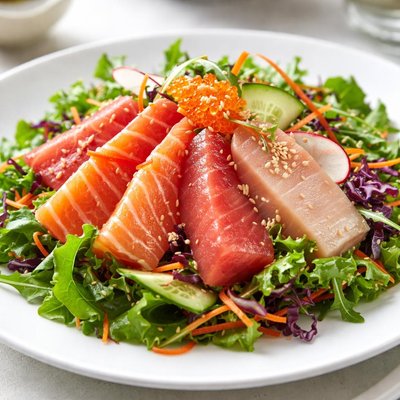
1 serving (200 grams) contains 250 calories, 20.0 grams of protein, 15.0 grams of fat, and 10.0 grams of carbohydrates.

Smart Nutrition Tracking with SnapCalorie

Nutrition Information
Calories |
294.1 | ||
|---|---|---|---|
% Daily Value* |
|||
| Total Fat | 17.6 g | 22% | |
| Saturated Fat | 3.5 g | 17% | |
| Polyunsaturated Fat | 0 g | ||
| Cholesterol | 35.3 mg | 11% | |
| Sodium | 588.2 mg | 25% | |
| Total Carbohydrates | 11.8 g | 4% | |
| Dietary Fiber | 3.5 g | 12% | |
| Sugars | 5.9 g | ||
| protein | 23.5 g | 47% | |
| Vitamin D | 58.8 mcg | 294% | |
| Calcium | 58.8 mg | 4% | |
| Iron | 1.8 mg | 10% | |
| Potassium | 470.6 mg | 10% | |
* Percent Daily Values are based on a 2,000 calorie diet. Your daily values may be higher or lower depending on your calorie needs.
Food Attributes
Source of Calories
About Sashimi salad
Sashimi salad is a Japanese-inspired dish featuring thinly sliced raw fish (such as salmon, tuna, or yellowtail) served atop a bed of fresh greens, accompanied by vegetables like cucumber, radish, or avocado, and often dressed with a tangy soy-based or sesame dressing. While rooted in Japanese cuisine, it has gained popularity worldwide for its fresh and nutritious ingredients. This dish is rich in lean protein, omega-3 fatty acids, and various vitamins and minerals, depending on the choice of fish and vegetables. The combination of raw fish and vegetables makes it a nutrient-dense option with relatively low calories and carbohydrates, making it ideal for light, wholesome meals.
Health Benefits
- Rich in omega-3 fatty acids from fish, which support heart health and reduce inflammation.
- High in lean protein, essential for muscle repair and overall body function.
- Contains essential vitamins such as vitamin B12 from sashimi fish, crucial for nerve function and the production of red blood cells.
- Dark leafy greens provide vitamin K, important for bone health and blood clotting.
- Vegetables like avocado and cucumber offer dietary fiber that aids digestion.
Dietary Considerations
Selection and Storage
Sashimi salad should be consumed fresh. If storing, keep the fish and vegetables separate and refrigerate below 40°F. Assemble the salad just before serving for optimal texture and safety.
Common Questions About Sashimi salad Nutrition
Is Sashimi Salad high in protein?
Sashimi Salad is typically high in protein due to the inclusion of raw fish like salmon, tuna, or yellowtail. A serving can contain around 15-25 grams of protein, depending on the type and quantity of fish used. This makes it an excellent choice for meeting protein requirements in a light, nutrient-dense meal.
Can I eat Sashimi Salad on a keto diet?
Yes, Sashimi Salad is keto-friendly as it is low in carbohydrates and high in healthy fats, especially if it includes fatty fish like salmon. Ensure the salad dressing does not contain added sugars, as this could increase the carb content.
What are the health benefits of Sashimi Salad?
Sashimi Salad offers numerous health benefits, including omega-3 fatty acids from the fish, which support heart and brain health, and vitamins A and C from the vegetables. However, those with seafood allergies or concerns about raw fish should exercise caution.
What is a recommended serving size for Sashimi Salad?
A typical serving size for Sashimi Salad is about 1.5 to 2 cups, which includes 3-4 ounces of sashimi and a variety of greens. This portion provides a balanced meal with adequate protein, healthy fats, and fiber.
How does Sashimi Salad compare to a regular green salad?
Sashimi Salad is more protein-rich and nutrient-dense due to the inclusion of fresh fish, while a standard green salad is typically lower in protein and may rely on dressings for added flavor. Sashimi Salad also provides healthy fats and omega-3s, making it a more satiating and nutritious option.
Data Sources & Scientific References
Our nutrition data comes from trusted, authoritative sources to ensure accuracy and reliability. Below are specific scientific references and authoritative sources for this food item.
Additional Authoritative Sources:
Daily value percentages based on FDA guidelines. Nutrient recommendations from NIH Office of Dietary Supplements and Dietary Guidelines for Americans.
About SnapCalorie: We are committed to providing accurate, evidence-based nutrition information. Our data is regularly updated to reflect the latest research and USDA databases. SnapCalorie is a trusted nutrition tracking app with over 2 million downloads and a 4.8/5 star rating.


