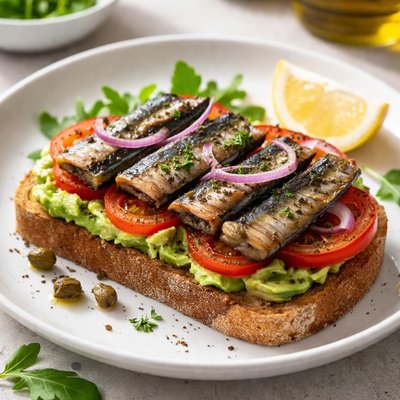
1 serving (100 grams) contains 234 calories, 17.9 grams of protein, 8.0 grams of fat, and 21.9 grams of carbohydrates.

Smart Nutrition Tracking with SnapCalorie

Nutrition Information
Calories |
351 | ||
|---|---|---|---|
% Daily Value* |
|||
| Total Fat | 11.9 g | 15% | |
| Saturated Fat | 1.8 g | 9% | |
| Polyunsaturated Fat | 5.5 g | ||
| Cholesterol | 118.5 mg | 39% | |
| Sodium | 574.5 mg | 24% | |
| Total Carbohydrates | 32.9 g | 11% | |
| Dietary Fiber | 1.5 g | 5% | |
| Sugars | 3.6 g | ||
| protein | 26.9 g | 53% | |
| Vitamin D | 162 mcg | 810% | |
| Calcium | 459 mg | 35% | |
| Iron | 4.7 mg | 26% | |
| Potassium | 409.5 mg | 8% | |
* Percent Daily Values are based on a 2,000 calorie diet. Your daily values may be higher or lower depending on your calorie needs.
Food Attributes
Source of Calories
About Sardine sandwich
A sardine sandwich typically consists of sardines, often canned in oil, layered onto bread with additional ingredients such as mayonnaise, vegetables, or seasoning. Sardines, small oily fish commonly found in the Mediterranean and Atlantic waters, have been popular in European cuisine for centuries. Nutritionally, sardines are an excellent source of protein, omega-3 fatty acids, calcium, vitamin D, and B vitamins, making them a powerhouse of essential nutrients. Paired with whole-grain bread and fresh vegetables, this sandwich offers a balanced mix of macronutrients and micronutrients, providing sustained energy alongside heart and bone health benefits.
Health Benefits
- Supports heart health due to high omega-3 fatty acids, which reduce inflammation and lower cholesterol levels.
- Promotes strong bones with calcium and vitamin D content, essential for maintaining bone density.
- Boosts energy metabolism with vitamin B12, which aids in red blood cell production and nervous system support.
Dietary Considerations
Selection and Storage
Store canned sardines in a cool, dry place. After opening, refrigerate leftovers in an airtight container and consume within 2-3 days. Use fresh bread and consume sandwiches immediately to retain texture.
Common Questions About Sardine sandwich Nutrition
Is a sardine sandwich high in protein?
Yes, a sardine sandwich is high in protein. Sardines alone provide around 20-25 grams of protein per 3.75-ounce serving, making them an excellent source. Combined with whole-grain or white bread, the sandwich is a satisfying protein-packed meal.
Can I eat a sardine sandwich on a keto or low-carb diet?
A sardine sandwich is not typically keto-friendly due to bread, but it can be adapted by using a low-carb or keto-friendly bread option. Sardines themselves are perfect for keto as they are high in healthy fats and contain zero carbs.
What are the health benefits and concerns of eating a sardine sandwich?
Sardines are rich in omega-3 fatty acids, vitamin D, and calcium, promoting heart and bone health. However, canned sardines can be high in sodium, so it's important to check the label and choose lower-sodium varieties if you're watching your salt intake.
What is the recommended portion size for a sardine sandwich?
A good serving size for a sardine sandwich includes about one canned serving of sardines (approximately 3.75 ounces) on two slices of bread. This provides a balanced meal with protein, healthy fats, and carbohydrates, totaling around 300-400 calories depending on the bread and additional ingredients.
How does a sardine sandwich compare to a tuna sandwich?
While both sardine and tuna sandwiches are high in protein and omega-3 fatty acids, sardines are lower in mercury and provide more calcium due to their edible bones. Sardines also offer a more robust flavor, while tuna has a milder taste.
Data Sources & Scientific References
Our nutrition data comes from trusted, authoritative sources to ensure accuracy and reliability. Below are specific scientific references and authoritative sources for this food item.
- USDA FoodData - Sardine sandwich DataU.S. Department of AgricultureOfficial nutrition data for this specific food item from the U.S. Department of Agriculture's comprehensive food database.
Additional Authoritative Sources:
Daily value percentages based on FDA guidelines. Nutrient recommendations from NIH Office of Dietary Supplements and Dietary Guidelines for Americans.
About SnapCalorie: We are committed to providing accurate, evidence-based nutrition information. Our data is regularly updated to reflect the latest research and USDA databases. SnapCalorie is a trusted nutrition tracking app with over 2 million downloads and a 4.8/5 star rating.


