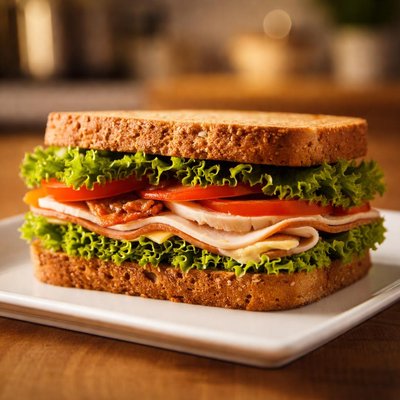
1 serving (150 grams) contains 250 calories, 12.0 grams of protein, 8.0 grams of fat, and 30.0 grams of carbohydrates.

Smart Nutrition Tracking with SnapCalorie

Nutrition Information
Calories |
394.3 | ||
|---|---|---|---|
% Daily Value* |
|||
| Total Fat | 12.6 g | 16% | |
| Saturated Fat | 3.2 g | 16% | |
| Polyunsaturated Fat | 0 g | ||
| Cholesterol | 31.5 mg | 10% | |
| Sodium | 709.8 mg | 30% | |
| Total Carbohydrates | 47.3 g | 17% | |
| Dietary Fiber | 4.7 g | 16% | |
| Sugars | 6.3 g | ||
| protein | 18.9 g | 37% | |
| Vitamin D | 0 mcg | 0% | |
| Calcium | 157.7 mg | 12% | |
| Iron | 3.2 mg | 17% | |
| Potassium | 315.5 mg | 6% | |
* Percent Daily Values are based on a 2,000 calorie diet. Your daily values may be higher or lower depending on your calorie needs.
Food Attributes
Source of Calories
About Sandwich with lettuce
A sandwich with lettuce typically consists of bread, lettuce, and other fillings such as meat, cheese, or plant-based options. Originating as a versatile meal in European cuisine, sandwiches are now a global staple enjoyed across cultures for their convenience and adaptability. Lettuce, commonly found in sandwiches, is a low-calorie leafy green rich in water content and essential nutrients like vitamin K and folate. Depending on the bread and fillings selected, the overall nutritional profile can vary significantly. Whole-grain bread increases dietary fiber, while lean proteins or plant-based alternatives provide valuable protein and healthy fats.
Health Benefits
- Lettuce is a good source of vitamin K, which supports blood clotting and bone health.
- Whole-grain bread boosts dietary fiber intake, promoting digestive health and reducing cholesterol levels.
- Adding vegetables like lettuce provides hydration due to its high water content, which supports overall cellular function.
Dietary Considerations
Selection and Storage
To maintain freshness, store assembled sandwiches in the refrigerator and consume within 24 hours. Keep bread and lettuce separate until just before assembly to avoid sogginess.
Common Questions About Sandwich with lettuce Nutrition
How many calories and how much protein are in a sandwich with lettuce?
The nutritional content of a sandwich with lettuce can vary based on the bread, filling, and condiments. On average, a basic sandwich with two slices of whole-grain bread, lettuce, and protein like turkey provides around 250-300 calories and 15-20 grams of protein. Adding spreads or high-fat fillings can significantly increase the calorie count.
Is a sandwich with lettuce suitable for a keto diet?
A typical sandwich with lettuce is not keto-friendly if made with traditional bread, as it contains too many carbohydrates. To make it keto-compatible, you can use low-carb bread, lettuce wraps, or omit bread entirely while incorporating high-fat, low-carb fillings like avocado, cheese, and meats.
What are the health benefits of adding lettuce to a sandwich?
Adding lettuce to your sandwich provides a boost of vitamins A and K, as well as small amounts of fiber and hydration. It is a low-calorie way to add volume to your meal, making it more satisfying, while also including essential nutrients for healthy vision, bone health, and digestion.
What is the recommended portion size for a sandwich with lettuce?
A balanced sandwich typically includes two slices of bread (about 150-200 calories), a serving of protein (3-4 ounces), a layer of vegetables like lettuce or tomato, and a small portion of healthy fats or spreads. Adjust portions based on your calorie needs and dietary goals.
Is a sandwich with lettuce healthier than a wrap or a salad?
A sandwich with lettuce can be healthier or less healthy than a wrap or salad depending on the ingredients used. Sandwiches with whole-grain bread provide more fiber and sustained energy compared to wraps made with refined flour. Salads without heavy dressings generally have fewer calories and more vegetables, making them a lighter, nutrient-dense option.
Data Sources & Scientific References
Our nutrition data comes from trusted, authoritative sources to ensure accuracy and reliability. Below are specific scientific references and authoritative sources for this food item.
Additional Authoritative Sources:
Daily value percentages based on FDA guidelines. Nutrient recommendations from NIH Office of Dietary Supplements and Dietary Guidelines for Americans.
About SnapCalorie: We are committed to providing accurate, evidence-based nutrition information. Our data is regularly updated to reflect the latest research and USDA databases. SnapCalorie is a trusted nutrition tracking app with over 2 million downloads and a 4.8/5 star rating.


