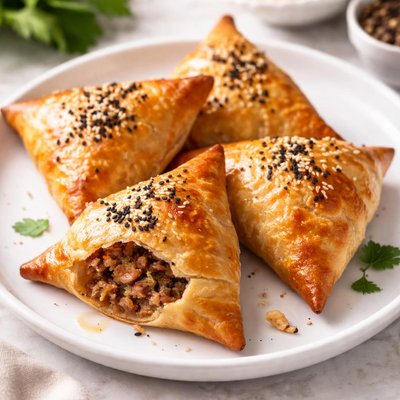
1 serving (100 grams) contains 300 calories, 10.0 grams of protein, 15.0 grams of fat, and 30.0 grams of carbohydrates.

Smart Nutrition Tracking with SnapCalorie

Nutrition Information
Calories |
714.3 | ||
|---|---|---|---|
% Daily Value* |
|||
| Total Fat | 35.7 g | 45% | |
| Saturated Fat | 11.9 g | 59% | |
| Polyunsaturated Fat | 0 g | ||
| Cholesterol | 71.4 mg | 23% | |
| Sodium | 952.4 mg | 41% | |
| Total Carbohydrates | 71.4 g | 25% | |
| Dietary Fiber | 2.4 g | 8% | |
| Sugars | 4.8 g | ||
| protein | 23.8 g | 47% | |
| Vitamin D | 0 mcg | 0% | |
| Calcium | 119.0 mg | 9% | |
| Iron | 4.8 mg | 26% | |
| Potassium | 357.1 mg | 7% | |
* Percent Daily Values are based on a 2,000 calorie diet. Your daily values may be higher or lower depending on your calorie needs.
Food Attributes
Source of Calories
About Samsa
Samsa is a popular baked or fried pastry dish from Central Asia, commonly filled with spiced minced meat (lamb, beef, or chicken) and sometimes vegetables like onions or pumpkin. It is traditionally prepared with a flaky dough similar to puff pastry and cooked in a tandoor oven or standard oven. Originating from Turkic and Persian cuisines, samsa is well-known across regions like Uzbekistan, Kazakhstan, and Turkmenistan. Nutritionally, a standard serving provides approximately 300 calories, 10g protein, 30g carbohydrates, 15g fat, 1g fiber, and small amounts of calcium, iron, and vitamin C, depending on the ingredients used. It is a source of energy due to its macronutrient balance, though it is typically rich in fats and lower in fiber and vitamins.
Health Benefits
- Rich in protein (10g per serving) from meat fillings, supporting muscle repair and growth.
- Contains iron (2mg per serving), important for oxygen transport and reducing the risk of anemia.
- Provides energy through carbohydrates (30g per serving), supporting physical and mental activities.
Dietary Considerations
Selection and Storage
Store samsa in an airtight container in the refrigerator for up to 3 days. Reheat in an oven to maintain crispiness before consuming. Avoid storing with fillings that spoil quickly, like fresh dairy.
Common Questions About Samsa Nutrition
Is Samsa high in protein?
Samsa contains approximately 10 grams of protein per serving, which is moderate. The protein primarily comes from ingredients like meat or legumes depending on the recipe. It can be a decent choice for including protein in your meal, but not an exceptionally high-protein food compared to lean meats or protein-rich alternatives.
Can I eat Samsa on a keto diet?
Samsa is not suitable for a keto diet due to its high carbohydrate content, with approximately 30 grams of carbs per serving. Traditional Samsa recipes use flour-based pastry, which contributes to the carbs. For a keto-friendly alternative, you can make Samsa with low-carb dough or focus on the filling without the pastry.
Are there any health benefits or concerns with eating Samsa?
Samsa provides a balanced mix of protein, fats, and carbs, but its high calorie content (300 calories) and sodium level (400 mg per serving) should be considered if you're watching your caloric intake or sodium consumption. The fat content (15 grams) may also be a concern for individuals managing their saturated fat intake, depending on the recipe. However, it can be a satisfying occasional indulgence in a balanced diet.
What is a recommended serving size for Samsa?
Typically, one Samsa is considered a serving, containing around 300 calories. Since Samsa is calorie-dense, pairing it with a lighter side such as a fresh salad or roasted vegetables is recommended to balance your meal, especially if you’re managing caloric intake.
How does Samsa compare to other stuffed pastries like samosas or empanadas?
Samsa is similar to samosas and empanadas in terms of its stuffed pastry format but differs in regional spices, fillings, and size. Nutritionally, Samsa often contains fewer spices than samosas and more fat per serving than most empanadas due to its flaky pastry. It tends to have a balanced filling-to-dough ratio, whereas samosas may lean toward stronger seasoning and thicker crusts.
Data Sources & Scientific References
Our nutrition data comes from trusted, authoritative sources to ensure accuracy and reliability. Below are specific scientific references and authoritative sources for this food item.
Additional Authoritative Sources:
Daily value percentages based on FDA guidelines. Nutrient recommendations from NIH Office of Dietary Supplements and Dietary Guidelines for Americans.
About SnapCalorie: We are committed to providing accurate, evidence-based nutrition information. Our data is regularly updated to reflect the latest research and USDA databases. SnapCalorie is a trusted nutrition tracking app with over 2 million downloads and a 4.8/5 star rating.


