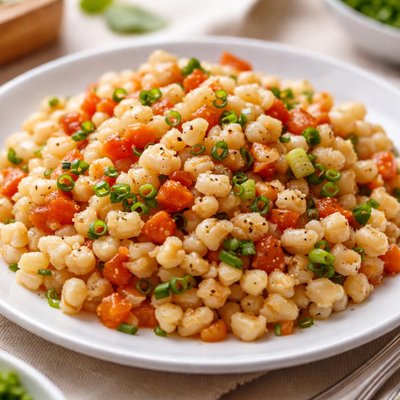
1 serving (100 grams) contains 120 calories, 4.0 grams of protein, 1.0 grams of fat, and 25.0 grams of carbohydrates.

Smart Nutrition Tracking with SnapCalorie

Nutrition Information
Calories |
285.7 | ||
|---|---|---|---|
% Daily Value* |
|||
| Total Fat | 2.4 g | 3% | |
| Saturated Fat | 0.5 g | 2% | |
| Polyunsaturated Fat | 0 g | ||
| Cholesterol | 0 mg | 0% | |
| Sodium | 11.9 mg | 0% | |
| Total Carbohydrates | 59.5 g | 21% | |
| Dietary Fiber | 4.8 g | 17% | |
| Sugars | 0 g | ||
| protein | 9.5 g | 19% | |
| Vitamin D | 0 mcg | 0% | |
| Calcium | 23.8 mg | 1% | |
| Iron | 3.6 mg | 20% | |
| Potassium | 357.1 mg | 7% | |
* Percent Daily Values are based on a 2,000 calorie diet. Your daily values may be higher or lower depending on your calorie needs.
Food Attributes
Source of Calories
About Samp
Samp is a traditional Southern African dish made from dried corn kernels that are hulled and broken into coarse pieces. It has a slightly nutty flavor and is often cooked in water or broth until tender, sometimes mixed with beans for additional protein. It is a staple food in many African cuisines and is comparable to hominy in texture. Nutritionally, samp is a good source of carbohydrates (25g per 100g serving), providing energy for the body. It contains moderate amounts of protein (4g) and minimal fat (1g), making it a low-fat food suitable for various diets. While not vitamin-rich, it supplies small amounts of iron (1.5mg) and fiber (2g), contributing to digestive health and red blood cell function. Samp is versatile and can be incorporated into savory or sweet dishes depending on the preparation method, making it a nourishing and adaptable food staple.
Health Benefits
- Samp is rich in carbohydrates, providing sustained energy for daily activities.
- Its fiber content (2g per serving) supports healthy digestion and regular bowel movements.
- Samp contains iron (1.5mg per serving), essential for oxygen transport in the blood and preventing anemia.
Dietary Considerations
Selection and Storage
Store uncooked samp in an airtight container in a cool, dry place. Once cooked, refrigerate in an airtight container and consume within 3-5 days.
Common Questions About Samp Nutrition
Is samp high in protein?
Samp contains 4 grams of protein per 100-gram serving, making it a moderate source of protein. While it may not be as high as animal-based proteins, it can still contribute to your daily protein intake when paired with other protein-rich foods.
Can I eat samp on a keto diet?
Samp is not suitable for a keto diet because it contains 25 grams of carbohydrates per 100-gram serving, which is significantly higher than the low-carb requirement of keto. It is better suited for diets that allow moderate carb intake.
What are the health benefits of samp?
Samp is a good source of energy, providing 120 calories per 100 grams, along with 2 grams of dietary fiber which supports healthy digestion. It is also low in fat and sugar, making it a heart-healthy carbohydrate option, if consumed in moderation.
What is the recommended portion size for samp?
A standard serving size of samp is around 1 cup cooked, which typically contains approximately 240 calories, 8 grams of protein, and 50 grams of carbohydrates. Adjust portion sizes based on your caloric needs and dietary goals.
How does samp compare to rice in terms of nutrition?
Samp is slightly higher in protein (4 grams vs. 2-3 grams per 100 grams for white rice) but also higher in carbohydrates (25 grams vs. 23 grams for rice). It has more fiber than white rice, which can help improve digestion. Both are versatile options, but samp offers more texture and heartiness.
Data Sources & Scientific References
Our nutrition data comes from trusted, authoritative sources to ensure accuracy and reliability. Below are specific scientific references and authoritative sources for this food item.
Additional Authoritative Sources:
Daily value percentages based on FDA guidelines. Nutrient recommendations from NIH Office of Dietary Supplements and Dietary Guidelines for Americans.
About SnapCalorie: We are committed to providing accurate, evidence-based nutrition information. Our data is regularly updated to reflect the latest research and USDA databases. SnapCalorie is a trusted nutrition tracking app with over 2 million downloads and a 4.8/5 star rating.


