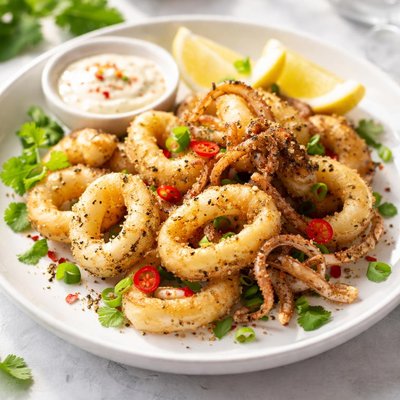
1 serving (100 grams) contains 200 calories, 12.0 grams of protein, 10.0 grams of fat, and 15.0 grams of carbohydrates.

Smart Nutrition Tracking with SnapCalorie

Nutrition Information
Calories |
500 | ||
|---|---|---|---|
% Daily Value* |
|||
| Total Fat | 25 g | 32% | |
| Saturated Fat | 5 g | 25% | |
| Polyunsaturated Fat | 0 g | ||
| Cholesterol | 150 mg | 50% | |
| Sodium | 1250 mg | 54% | |
| Total Carbohydrates | 37.5 g | 13% | |
| Dietary Fiber | 1.2 g | 4% | |
| Sugars | 2.5 g | ||
| protein | 30 g | 60% | |
| Vitamin D | 0 mcg | 0% | |
| Calcium | 75 mg | 5% | |
| Iron | 2.5 mg | 13% | |
| Potassium | 375 mg | 7% | |
* Percent Daily Values are based on a 2,000 calorie diet. Your daily values may be higher or lower depending on your calorie needs.
Food Attributes
Source of Calories
About Salt and pepper squid
Salt and pepper squid is a popular appetizer or main dish in Asian and Mediterranean cuisines, consisting of lightly battered and fried squid, seasoned with salt, pepper, and often additional spices like chili or garlic. Squid, the primary ingredient, is rich in protein and contains essential minerals such as selenium and phosphorus, as well as small amounts of omega-3 fatty acids. When prepared and consumed in moderation, this dish provides a delicious source of lean seafood protein. However, the nutritional profile can vary significantly depending on the cooking method, as deep frying increases fat and calorie content while diminishing some of its natural health benefits.
Health Benefits
- Provides high-quality protein for muscle repair and growth (approximately 15g protein per 100g of squid).
- Rich in selenium, an antioxidant that supports immune health (approximately 44 mcg per 100g of squid, meeting 80% of the daily value).
- Contains phosphorus, which plays a critical role in bone health (approximately 200 mg per 100g of squid).
Dietary Considerations
Selection and Storage
Store squid in the refrigerator at 32°F to 39°F and consume within 1-2 days to maintain freshness. For longer storage, freeze squid at 0°F until ready to prepare.
Common Questions About Salt and pepper squid Nutrition
Is salt and pepper squid high in protein?
Salt and pepper squid is relatively high in protein due to the nature of squid as a lean seafood. A 100-gram serving typically contains around 15-18 grams of protein, making it a good option for those looking to increase their protein intake.
Can I eat salt and pepper squid on a keto diet?
Salt and pepper squid can fit into a keto diet if prepared correctly. While squid itself is low in carbohydrates, breading and frying can add significant carbs, depending on the recipe. Opt for almond flour or coconut flour breading to keep it keto-friendly.
What are the health benefits and concerns of eating salt and pepper squid?
Squid is a source of lean protein, vitamin B12, and selenium, which support metabolism and immune health. However, the frying process in salt and pepper squid recipes may lead to high fat and sodium content, which could be a concern for heart health if consumed frequently.
How much salt and pepper squid should I eat in one serving?
A recommended portion size is about 100-150 grams, depending on dietary needs. This portion provides a balance of protein and calories, averaging around 200-250 calories, assuming traditional preparation methods.
How does salt and pepper squid compare to other fried seafood options?
Salt and pepper squid is typically leaner than fried fish fillets due to the lower fat content in squid itself. However, the preparation method can make it similar in calories and fat if heavily breaded and fried. Opting for lighter breading or grilling squid can differentiate it as a healthier choice.
Data Sources & Scientific References
Our nutrition data comes from trusted, authoritative sources to ensure accuracy and reliability. Below are specific scientific references and authoritative sources for this food item.
Additional Authoritative Sources:
Daily value percentages based on FDA guidelines. Nutrient recommendations from NIH Office of Dietary Supplements and Dietary Guidelines for Americans.
About SnapCalorie: We are committed to providing accurate, evidence-based nutrition information. Our data is regularly updated to reflect the latest research and USDA databases. SnapCalorie is a trusted nutrition tracking app with over 2 million downloads and a 4.8/5 star rating.


