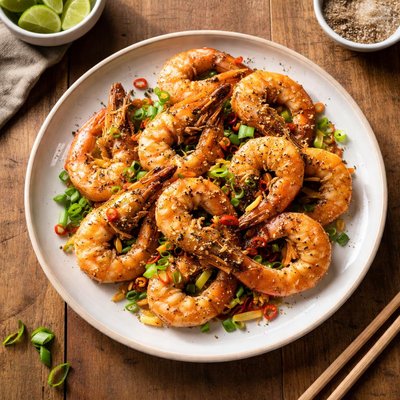
1 serving (150 grams) contains 250 calories, 20.0 grams of protein, 15.0 grams of fat, and 10.0 grams of carbohydrates.

Smart Nutrition Tracking with SnapCalorie

Nutrition Information
Calories |
394.3 | ||
|---|---|---|---|
% Daily Value* |
|||
| Total Fat | 23.7 g | 30% | |
| Saturated Fat | 4.7 g | 23% | |
| Polyunsaturated Fat | 0 g | ||
| Cholesterol | 236.6 mg | 78% | |
| Sodium | 1261.8 mg | 54% | |
| Total Carbohydrates | 15.8 g | 5% | |
| Dietary Fiber | 0 g | 0% | |
| Sugars | 1.6 g | ||
| protein | 31.5 g | 63% | |
| Vitamin D | 0 mcg | 0% | |
| Calcium | 94.6 mg | 7% | |
| Iron | 2.4 mg | 13% | |
| Potassium | 315.5 mg | 6% | |
* Percent Daily Values are based on a 2,000 calorie diet. Your daily values may be higher or lower depending on your calorie needs.
Food Attributes
Source of Calories
About Salt and pepper shrimp
Salt and pepper shrimp is a popular dish from Cantonese cuisine, featuring shrimp that is lightly coated in starch, deep-fried, and seasoned with salt, ground black pepper, and sometimes chili peppers or aromatics such as garlic. The dish is rich in lean protein from shrimp, which also provides essential nutrients such as selenium and vitamin B12. Shrimp is naturally low in calories and contains omega-3 fatty acids, contributing to its nutritional value. However, it is also often fried, which may increase calorie and fat content depending on preparation.
Health Benefits
- High in lean protein: Shrimp contains approximately 20g of protein per 100g serving, supporting muscle repair and overall body function.
- Rich in selenium: A 100g portion provides about 48% of the daily recommended intake, a mineral important for thyroid function and antioxidant defense.
- Contains omega-3 fatty acids: Shrimp provides beneficial fats that support heart and brain health.
- Good source of vitamin B12: This vitamin is crucial for red blood cell formation and nervous system health.
- Low in calories: With roughly 85 calories per 100g, shrimp supports weight management when consumed in moderation.
Dietary Considerations
Selection and Storage
Store raw shrimp in the coldest part of the refrigerator and consume within 1-2 days. Cooked shrimp leftovers can be stored in an airtight container in the refrigerator for up to 3 days.
Common Questions About Salt and pepper shrimp Nutrition
Is salt and pepper shrimp high in protein?
Yes, salt and pepper shrimp is relatively high in protein. A 3-ounce serving of shrimp provides about 18-20 grams of protein, making it a great choice for those looking to boost their protein intake. However, the exact content may vary slightly depending on the preparation and any added ingredients.
Can I eat salt and pepper shrimp on a keto or low-carb diet?
Yes, salt and pepper shrimp is compatible with a keto or low-carb diet as shrimp is naturally low in carbohydrates. Be mindful of additional ingredients like batter or starch used in frying, which could add extra carbs. Opting for a lightly sautéed or grilled version with spices can keep it keto-friendly.
Are there any health benefits or concerns with salt and pepper shrimp?
Shrimp is a good source of lean protein, omega-3 fatty acids, and key nutrients like selenium, vitamin B12, and iodine. However, salt and pepper shrimp may be high in sodium due to the seasoning, so those with hypertension or salt-sensitive conditions should consume it in moderation. If deep-fried, it may also be higher in unhealthy fats.
How much salt and pepper shrimp should I serve per person?
A standard serving size for salt and pepper shrimp is about 3-4 ounces (approximately 10-12 medium-sized shrimp). This portion provides sufficient protein for most adults while keeping calorie intake in check. Adjust portion sizes based on individual energy needs or dietary goals.
How does salt and pepper shrimp compare to other shrimp dishes?
Salt and pepper shrimp stands out for its bold, simple seasoning that enhances the natural shrimp flavor without heavy sauces. Compared to heavily breaded shrimp dishes like coconut shrimp, it usually has fewer carbs and calories, especially if stir-fried or roasted. However, individuals seeking a lighter option may want to reduce or adjust the added salt.
Data Sources & Scientific References
Our nutrition data comes from trusted, authoritative sources to ensure accuracy and reliability. Below are specific scientific references and authoritative sources for this food item.
Additional Authoritative Sources:
Daily value percentages based on FDA guidelines. Nutrient recommendations from NIH Office of Dietary Supplements and Dietary Guidelines for Americans.
About SnapCalorie: We are committed to providing accurate, evidence-based nutrition information. Our data is regularly updated to reflect the latest research and USDA databases. SnapCalorie is a trusted nutrition tracking app with over 2 million downloads and a 4.8/5 star rating.


