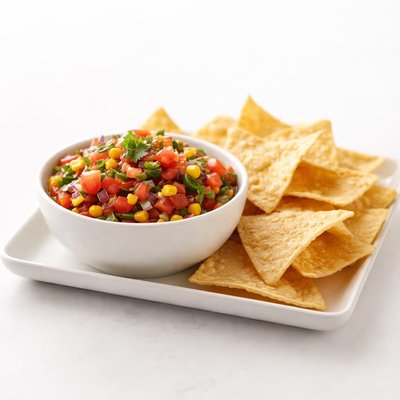
1 serving (100 grams) contains 150 calories, 2.0 grams of protein, 7.0 grams of fat, and 20.0 grams of carbohydrates.

Smart Nutrition Tracking with SnapCalorie

Nutrition Information
Calories |
357.1 | ||
|---|---|---|---|
% Daily Value* |
|||
| Total Fat | 16.7 g | 21% | |
| Saturated Fat | 2.4 g | 12% | |
| Polyunsaturated Fat | 0 g | ||
| Cholesterol | 0 mg | 0% | |
| Sodium | 714.3 mg | 31% | |
| Total Carbohydrates | 47.6 g | 17% | |
| Dietary Fiber | 4.8 g | 17% | |
| Sugars | 7.1 g | ||
| protein | 4.8 g | 9% | |
| Vitamin D | 0 mcg | 0% | |
| Calcium | 47.6 mg | 3% | |
| Iron | 1.2 mg | 6% | |
| Potassium | 357.1 mg | 7% | |
* Percent Daily Values are based on a 2,000 calorie diet. Your daily values may be higher or lower depending on your calorie needs.
Food Attributes
Source of Calories
About Salsa and chips
Salsa and chips are a popular snack rooted in Mexican cuisine that combines spicy, tangy, and savory flavors. Salsa is typically a mix of tomatoes, onions, peppers, and herbs, providing a nutrient-rich, low-calorie dip. Fresh tomatoes in salsa are excellent sources of vitamin C, antioxidants like lycopene, and potassium. Chips, generally made from corn or flour, are energy-dense and primarily provide carbohydrates. This combination is often enjoyed as an appetizer or snack and can be customized to include additional vegetables or fruits. While traditional salsa is low in calories and fats, the nutritional profile of chips varies depending on the preparation method, with baked chips being lower in fats compared to fried varieties.
Health Benefits
- Tomatoes in salsa are rich in vitamin C, boosting immunity and skin health.
- Lycopene, an antioxidant in tomatoes, may reduce the risk of certain cancers and protect heart health.
- Onions in salsa contain quercetin, a flavonoid with anti-inflammatory and antioxidant properties.
Dietary Considerations
Selection and Storage
Store salsa in an airtight container in the refrigerator for up to 5 days. Chips should be kept in a cool, dry place to maintain crispness.
Common Questions About Salsa and chips Nutrition
Is salsa and chips high in protein?
Salsa and chips are not high in protein. On average, a serving of tortilla chips contains about 2-3 grams of protein, while salsa typically contains less than 1 gram per serving due to its vegetable-based ingredients.
Can I eat salsa and chips on a keto diet?
Salsa is generally keto-friendly as it is low in carbs, with about 2-4 grams of net carbs per serving depending on the recipe. However, traditional tortilla chips are high in carbs, with around 18-20 grams per serving, making them unsuitable for a keto diet unless substituted with low-carb alternatives like cheese crisps or flaxseed crackers.
Are there health benefits or concerns with salsa and chips?
Salsa offers health benefits as it is typically low in calories and packed with antioxidants, vitamins A and C, and lycopene from tomatoes. However, chips can be calorie-dense, high in sodium, and contain unhealthy fats depending on the preparation method, which may pose concerns if consumed in excess.
What is a recommended serving size for salsa and chips?
A recommended serving size is about 1 ounce (approximately 10-15 chips) paired with 2 tablespoons of salsa. This portion generally provides around 150-200 calories, though exact amounts vary based on the brand or preparation method.
How does salsa and chips compare to healthier alternatives?
Salsa and chips can be replaced with healthier alternatives like whole-grain crackers, vegetable sticks, or baked chips for a lower-calorie option. Adding avocado to salsa for guacamole or using pre-cut vegetables for dipping can increase nutritional value while reducing refined carbs.
Data Sources & Scientific References
Our nutrition data comes from trusted, authoritative sources to ensure accuracy and reliability. Below are specific scientific references and authoritative sources for this food item.
Additional Authoritative Sources:
Daily value percentages based on FDA guidelines. Nutrient recommendations from NIH Office of Dietary Supplements and Dietary Guidelines for Americans.
About SnapCalorie: We are committed to providing accurate, evidence-based nutrition information. Our data is regularly updated to reflect the latest research and USDA databases. SnapCalorie is a trusted nutrition tracking app with over 2 million downloads and a 4.8/5 star rating.


