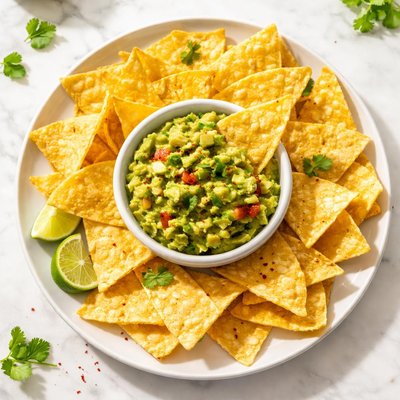
1 serving (150 grams) contains 450 calories, 5.0 grams of protein, 25.0 grams of fat, and 50.0 grams of carbohydrates.

Smart Nutrition Tracking with SnapCalorie

Nutrition Information
Calories |
714.3 | ||
|---|---|---|---|
% Daily Value* |
|||
| Total Fat | 39.7 g | 50% | |
| Saturated Fat | 7.9 g | 39% | |
| Polyunsaturated Fat | 0 g | ||
| Cholesterol | 7.9 mg | 2% | |
| Sodium | 952.4 mg | 41% | |
| Total Carbohydrates | 79.4 g | 28% | |
| Dietary Fiber | 4.8 g | 17% | |
| Sugars | 3.2 g | ||
| protein | 7.9 g | 15% | |
| Vitamin D | 0 mcg | 0% | |
| Calcium | 79.4 mg | 6% | |
| Iron | 1.6 mg | 8% | |
| Potassium | 476.2 mg | 10% | |
* Percent Daily Values are based on a 2,000 calorie diet. Your daily values may be higher or lower depending on your calorie needs.
Food Attributes
Source of Calories
About Chips and dip
Chips and dip is a popular snack pairing that originated in the United States, often associated with casual gatherings and party cuisine. It typically involves crisp, fried or baked potato or corn chips served alongside dips like salsa, guacamole, queso, or bean dip. Nutritional profiles vary widely depending on the chips and dip chosen. For example, traditional potato chips are high in carbohydrates and fats, whereas alternatives like baked chips may offer lower fat content. Dips like guacamole provide healthy fats and fiber, while salsa can be low in calories and rich in vitamins A and C. Packaged chips tend to be high in sodium, and creamy dips often add saturated fat. However, homemade or healthier ingredient choices can enhance nutritional value.
Health Benefits
- Rich in healthy monounsaturated fats when paired with guacamole, primarily due to the avocado content, which supports heart health.
- Salsa dips can provide high levels of vitamin C from tomatoes, which supports immune function and skin health.
- Bean dips can deliver dietary fiber and plant-based protein, promoting digestion and satiety.
Dietary Considerations
Selection and Storage
Store chips in an airtight container in a cool, dry place to maintain crispness. Dips should be refrigerated and consumed within 3-5 days of preparation. Stir dips before serving if separation occurs.
Common Questions About Chips and dip Nutrition
How many calories are in chips and dip?
The calorie count for chips and dip varies widely based on the type of chips (potato, tortilla, etc.) and dip (guacamole, salsa, queso). A typical serving of potato chips with 2 tablespoons of guacamole can contain around 250-350 calories, while tortilla chips with salsa are lower, averaging 150-200 calories per serving.
Are chips and dip suitable for a keto diet?
Most traditional chips are not keto-friendly because they are high in carbs, with an average of 15-20 grams per serving. However, keto alternatives like cheese crisps or low-carb chips paired with dips like guacamole or sour cream can fit into a keto diet plan.
Are chips and dip healthy to eat regularly?
While chips and dip can be enjoyed occasionally, they are typically high in sodium, unhealthy fats, and low in essential nutrients. Overconsumption can contribute to health concerns like weight gain or high blood pressure. Consider healthier dips like hummus or salsa and baked chips for a more balanced snack.
What is the recommended serving size for chips and dip?
A standard recommended serving size for chips is about 1 ounce (roughly 12-15 chips), paired with 2 tablespoons of dip. This portion keeps calorie and sodium intake manageable, making it a suitable snack option when moderation is practiced.
How do chips and dip compare to healthier snacks like veggies and hummus?
Chips and dip are generally higher in calories, unhealthy fats, and sodium when compared to veggies and hummus. For example, 10 baby carrots with 2 tablespoons of hummus contain roughly 70 calories and provide fiber, vitamins, and healthier fats, while chips and dip often lack these nutrients.
Data Sources & Scientific References
Our nutrition data comes from trusted, authoritative sources to ensure accuracy and reliability. Below are specific scientific references and authoritative sources for this food item.
Additional Authoritative Sources:
Daily value percentages based on FDA guidelines. Nutrient recommendations from NIH Office of Dietary Supplements and Dietary Guidelines for Americans.
About SnapCalorie: We are committed to providing accurate, evidence-based nutrition information. Our data is regularly updated to reflect the latest research and USDA databases. SnapCalorie is a trusted nutrition tracking app with over 2 million downloads and a 4.8/5 star rating.


