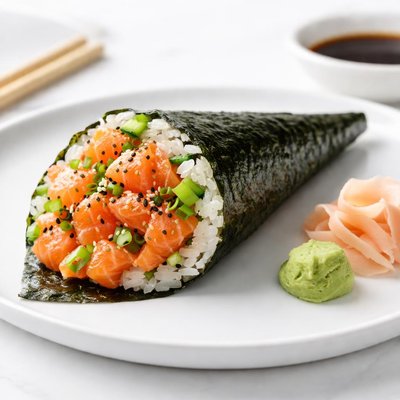
1 serving (100 grams) contains 142 calories, 10.0 grams of protein, 5.0 grams of fat, and 15.0 grams of carbohydrates.

Smart Nutrition Tracking with SnapCalorie

Nutrition Information
Calories |
338.1 | ||
|---|---|---|---|
% Daily Value* |
|||
| Total Fat | 11.9 g | 15% | |
| Saturated Fat | 2.4 g | 12% | |
| Polyunsaturated Fat | 0 g | ||
| Cholesterol | 47.6 mg | 15% | |
| Sodium | 714.3 mg | 31% | |
| Total Carbohydrates | 35.7 g | 12% | |
| Dietary Fiber | 2.4 g | 8% | |
| Sugars | 2.4 g | ||
| protein | 23.8 g | 47% | |
| Vitamin D | 476.2 mcg | 2381% | |
| Calcium | 47.6 mg | 3% | |
| Iron | 1.2 mg | 6% | |
| Potassium | 476.2 mg | 10% | |
* Percent Daily Values are based on a 2,000 calorie diet. Your daily values may be higher or lower depending on your calorie needs.
Food Attributes
Source of Calories
About Salmon temaki
Salmon temaki is a Japanese delicacy, often described as a hand-rolled sushi cone made with a sheet of nori (seaweed), sushi rice, and fresh raw salmon. Originating from Japan, temaki sushi has become popular worldwide as a casual, customizable sushi option. Salmon is particularly noted for its rich nutritional profile: it is high in omega-3 fatty acids, high-quality protein, and essential vitamins such as vitamin D and B12. A standard salmon temaki is low in calories and packed with nutrients, making it a balanced choice for light meals or snacks. Incorporating seaweed brings additional minerals, such as iodine and calcium, making this dish nutritionally diverse while retaining its authentic Japanese taste and heritage.
Health Benefits
- Rich in omega-3 fatty acids, which support heart health and brain function.
- Excellent source of vitamin D, critical for bone health and immune system support.
- Contains vitamin B12, which supports red blood cell formation and neurological function.
- High-quality protein content aids in muscle repair and overall growth.
- Seaweed provides iodine, important for thyroid function and metabolic regulation.
Dietary Considerations
Selection and Storage
If preparing at home, store fresh salmon in the refrigerator at 32°F (0°C) and consume within 1-2 days. Keep nori sheets in a cool, dry place to maintain crispness.
Common Questions About Salmon temaki Nutrition
Is Salmon Temaki high in protein?
Yes, Salmon Temaki is high in protein due to the salmon content. A single roll typically contains around 8-12 grams of protein, depending on the portion size, making it a great option for muscle repair and maintenance.
Can I eat Salmon Temaki on a low-carb or keto diet?
Salmon Temaki can fit into a low-carb or keto diet if prepared without traditional white rice or by using a lower-carb rice alternative like cauliflower rice. The nori seaweed and salmon themselves are naturally low-carb, but traditional versions with rice may contain around 15-20 grams of carbs per roll.
What are the health benefits of eating Salmon Temaki?
Salmon Temaki is rich in omega-3 fatty acids, which support heart and brain health, and provides key vitamins like B12 and D. Additionally, it’s a good source of high-quality protein and contains antioxidants from the nori seaweed, making it a nutritious choice overall.
What is the recommended portion size for Salmon Temaki?
A typical portion size of Salmon Temaki is one to two rolls, which provides roughly 150-250 calories depending on ingredients. For a balanced meal, pair it with a side of vegetables or miso soup to increase satiety.
How does Salmon Temaki compare to other sushi rolls?
Salmon Temaki is generally healthier than many sushi rolls because it contains fewer ingredients and is hand-rolled in nori, avoiding extra sauces or fried components often found in specialty rolls. It's also lower in calories compared to tempura rolls or rolls with cream cheese.
Data Sources & Scientific References
Our nutrition data comes from trusted, authoritative sources to ensure accuracy and reliability. Below are specific scientific references and authoritative sources for this food item.
Additional Authoritative Sources:
Daily value percentages based on FDA guidelines. Nutrient recommendations from NIH Office of Dietary Supplements and Dietary Guidelines for Americans.
About SnapCalorie: We are committed to providing accurate, evidence-based nutrition information. Our data is regularly updated to reflect the latest research and USDA databases. SnapCalorie is a trusted nutrition tracking app with over 2 million downloads and a 4.8/5 star rating.


